
The Strangest and Rarest Armored Vehicles of the Third Reich
The Strangest and Rarest Armored Vehicles of the Third Reich
When people talk about the armored vehicles of the Third Reich, the machines that usually come to mind are Tigers, Panthers, assault guns, and half-tracked tractors — vehicles that were produced in meaningful numbers and became symbols of the Second World War. But alongside this more familiar equipment, Germany also produced far stranger, rarer, and sometimes almost absurd designs. Some never got beyond one or two examples. Others looked terrifying on paper, only to prove too heavy, too complicated, or simply unnecessary.
These machines matter not only as museum curiosities. They show the limits of military engineering: the closer Germany moved toward collapse, the more its designers reached for unusual, exotic, and often irrational solutions.
1. Maus (Panzer VIII Maus): 188 tons that went almost nowhere
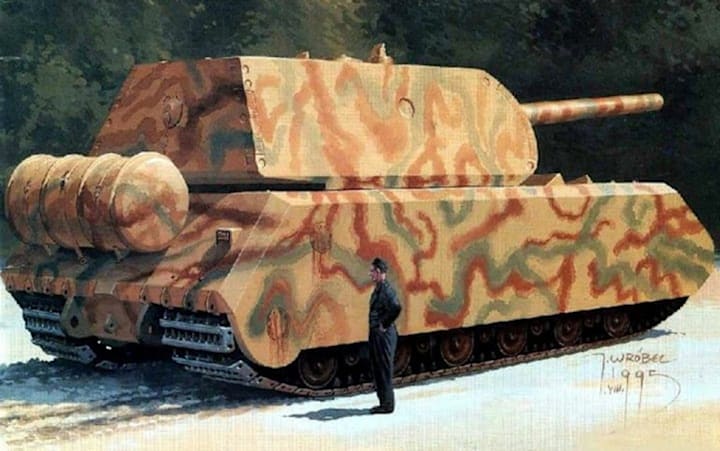
If one had to choose the most famous oddity on tracks from the Reich, it would be the Maus, whose name means “Mouse” in German. Development began in 1942 under Ferdinand Porsche, the creator of the Volkswagen Beetle and a major rival to Henschel in tank design.
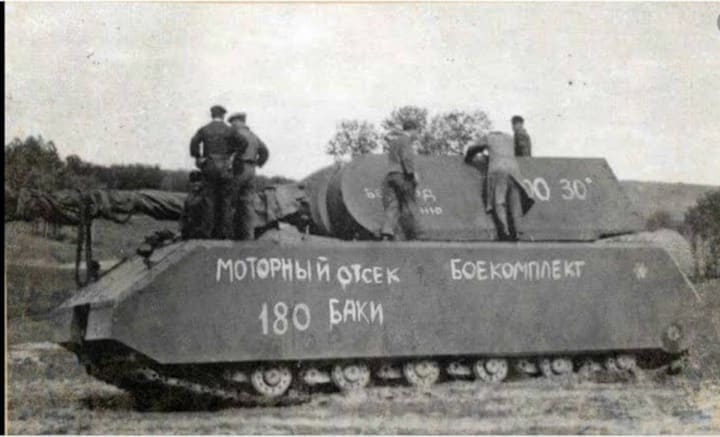
The numbers remain striking even today. Its combat weight was 188 tons. For comparison, the Soviet IS-2 weighed about 46 tons, while the German Tiger II weighed around 68. The frontal armor of the hull reached 200 mm, and the turret front 240 mm, making it nearly invulnerable to most anti-tank guns of the time. It was armed with a 128 mm KwK 44 L/55 gun and a coaxial 75 mm KwK 40. The engine was a Daimler-Benz DB 603 aircraft engine rated at 1,080 horsepower, but even that was not really enough. Its actual speed was only about 13 km/h.
The problem was obvious: the Maus was almost unusable in real war. It could not cross most bridges because they would simply collapse under its weight. Crossing rivers required special arrangements, and the tank was supposed to move along the riverbed. Fuel consumption was enormous, while one full tank provided only about 160 kilometers on roads. In 1944, two prototypes were built. By the end of the war they were blown up, but Soviet trophy teams later assembled one vehicle from the remains. Today it is preserved in Kubinka near Moscow.
The Maus remains a symbol of how technical maximalism can be both impressive and almost useless at the same time.
2. Sturmtiger: a house on tracks with a rocket mortar
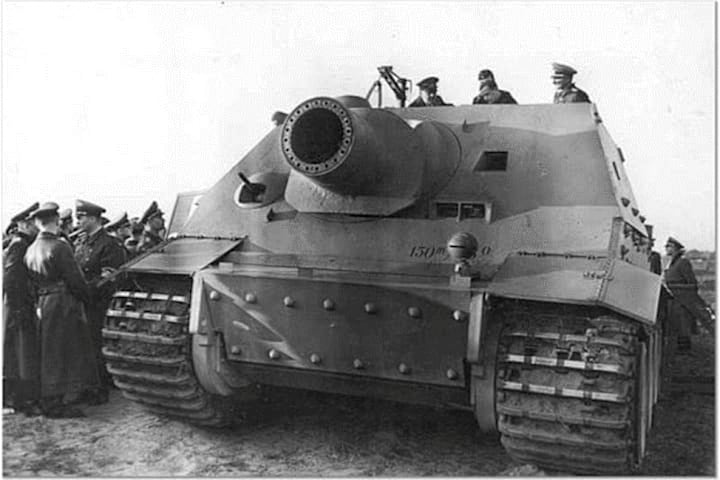
The Sturmtiger, formally designated 38 cm RW61 auf Sturmmörser Tiger, looks like a Tiger that swallowed an entire arsenal of explosives. It was built on the chassis of the Tiger I, many of which remained in repair after Kursk. The conversion work was carried out by Alkett in Berlin.
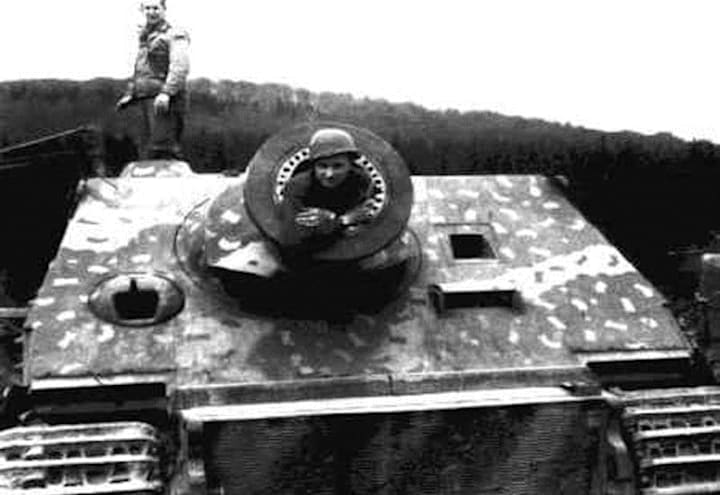
Its defining feature was the weapon: a 380 mm rocket mortar RW61 with a short barrel, loaded through the muzzle with the help of a crane. The projectile was a rocket weighing 376 kilograms, of which 125 kilograms were explosive — roughly ten times more than the explosive load of a standard 150 mm howitzer shell. Maximum range was about 5.6 kilometers. Front armor remained at about 150 mm because the hull still came from the Tiger. It weighed around 68 tons and could reach about 35 km/h.
The purpose of the Sturmtiger was highly specific. It was designed to destroy fortified urban buildings behind which Soviet troops had entrenched themselves. A direct hit from one of its rockets could demolish an entire five-story building. But inside the vehicle there was room for only 14 rounds.
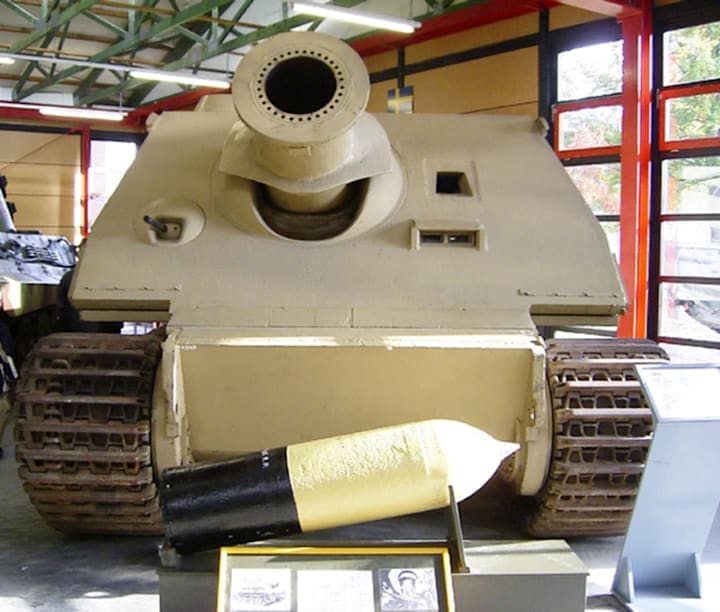
From August 1944 onward, only 18 vehicles were built. They were used during the suppression of the Warsaw Uprising, later in the Ardennes, and during the defense of the Rhine. One of the most famous episodes came in March 1945 in Boppard on the Rhine, where a Sturmtiger reportedly destroyed three M4 Sherman tanks standing in a column with a direct hit.
But it was an extremely narrow-purpose machine: slow reloads, a tiny ammunition load, enormous cost, and difficult repairs. It was not a tank for battle in the usual sense, but a very expensive hammer for rare situations.
3. Kugelpanzer: the armored sphere nobody has fully explained
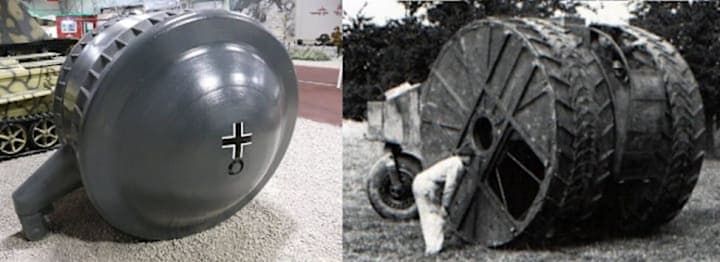
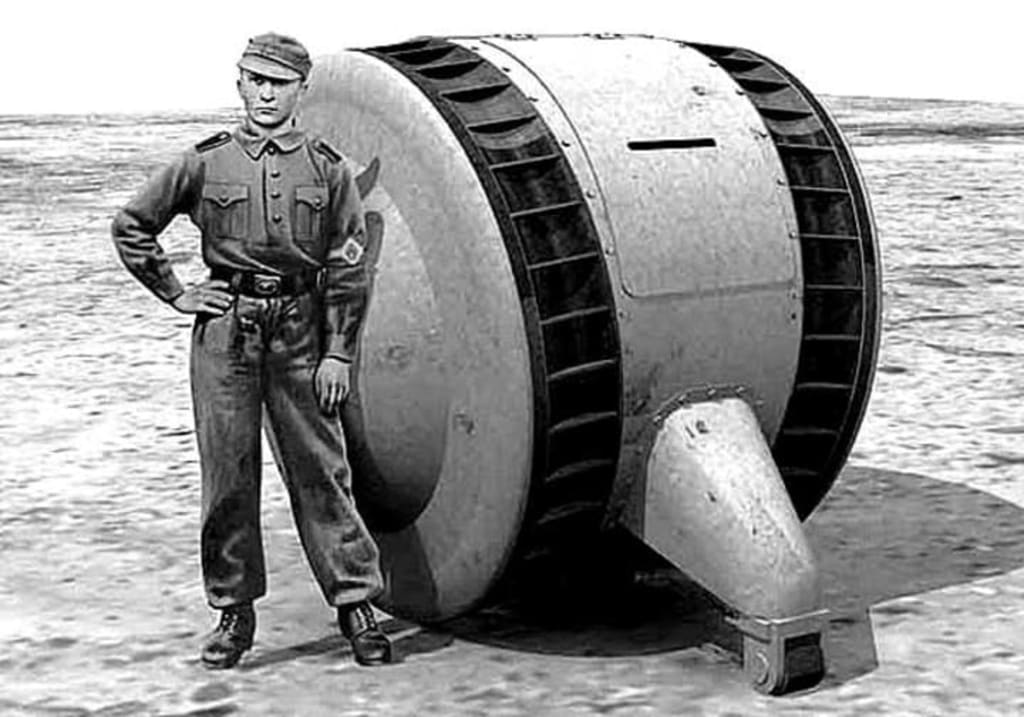
If the Maus and Sturmtiger at least had an understandable purpose, the Kugelpanzer — literally “ball tank” — still inspires a kind of childlike astonishment. It was a one-man armored sphere about one and a half meters in diameter, moving on two large side wheels with a small supporting roller at the rear.
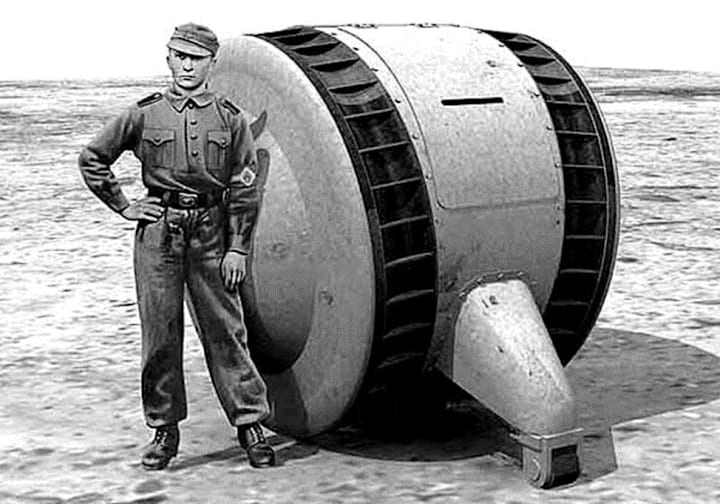
What is known with certainty is surprisingly little. The only surviving example is in Kubinka in Russia, where it survives as a German trophy. It weighed about 1.8 tons, with armor only 5 to 10 mm thick, giving protection only against bullets and fragments. The engine was a small single-cylinder motorcycle-type engine of roughly 15 to 20 horsepower. Speed was only around 8 to 10 km/h. Inside there was a seat and a few narrow viewing slits.
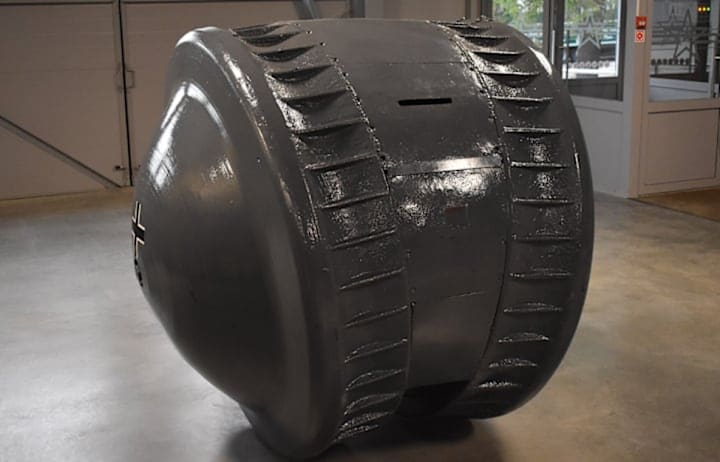
The real mystery is purpose. No German documents describing the Kugelpanzer have ever been found. Some researchers believe it may not even have originated as a German design at all, but perhaps as a Czech prototype connected to Tatra and later taken over by the Germans. Its role remains unclear: reconnaissance? artillery spotting? a moving machine-gun bunker? a cable-laying vehicle towed behind a tractor? No one knows for sure. The Kugelpanzer remains the most mysterious armored exhibit at Kubinka. Even its museum label tells very little.
4. Neubaufahrzeug: a multi-turreted dinosaur from the interwar era
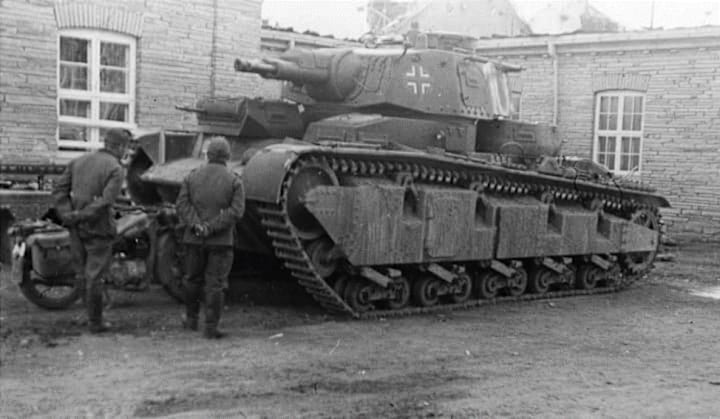
Today the multi-turreted tank looks like an obvious dead end, and the German Neubaufahrzeug, meaning roughly “new construction vehicle,” belongs precisely to that lineage. It was developed in 1933–1935, before Hitler had fully consolidated power, as a demonstration that Germany could once again build heavy armored vehicles despite the Versailles restrictions.
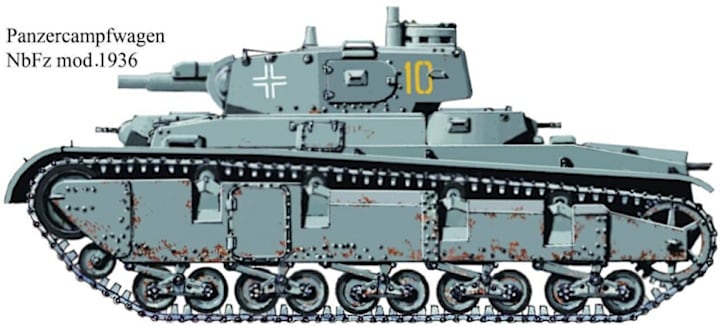
Its construction now seems almost absurd. The main turret carried a short 75 mm KwK L/24 gun, much like the early Panzer IV. A secondary turret carried a 37 mm gun. Two small machine-gun turrets sat on the sides. Sources differ on the exact number built, but in any case only a handful were completed. Weight was about 23 tons, and speed around 25 km/h.
Several of these vehicles were sent to Norway in 1940. There they saw action near Elverum and Lillehammer, but performed poorly. The transmission was complex and unreliable, the multi-turret arrangement was awkward, and even the 75 mm gun was already underwhelming by 1940 standards. After Norway, the machines were returned to Germany, used in propaganda filming because they looked impressive in newsreels, and later broken up for spare parts. The Neubaufahrzeug is fascinating because it seems trapped between eras: not yet a late-war monster, but already not a viable fighting machine.
5. Karl-Gerät: a siege mortar on its own tracks
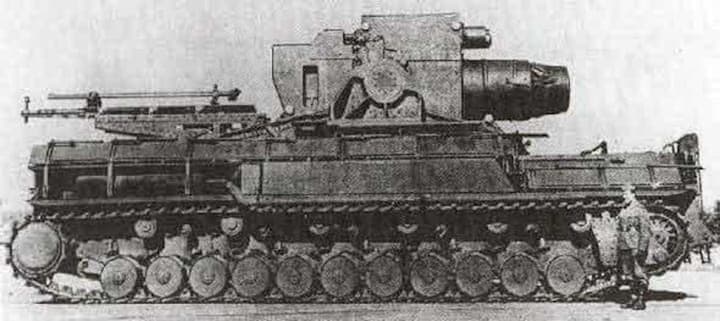
The fifth example stands on the edge between armored vehicle and self-propelled artillery monster. The Karl-Gerät, officially the 60 cm Mörser “Karl,” was a self-propelled super-heavy mortar of 600 mm caliber, later also adapted to 540 mm.
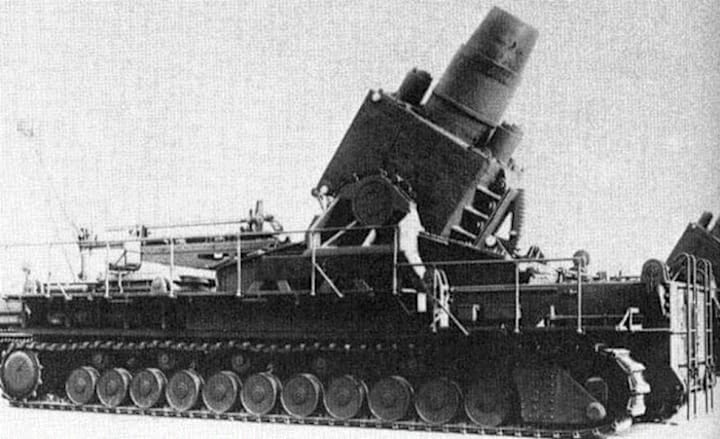
Its numbers were extreme. In combat condition it weighed about 124 tons. The barrel length was around 5 meters in the 600 mm version and 6.2 meters in the 540 mm version. Its concrete-piercing shells weighed up to 2.17 tons in the 600 mm variant and around 1.25 tons in the 540 mm one. A single shell could penetrate up to 2.5 meters of reinforced concrete. Range was up to about 4.3 kilometers for the 600 mm gun and about 6.7 kilometers for the 540 mm version. On its tracks it could move only around 6 to 10 km/h.
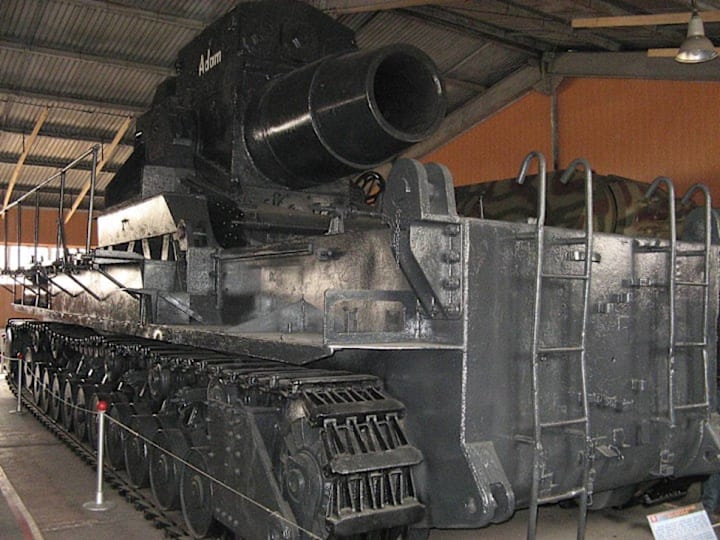
Between 1937 and 1942, seven machines were built. Each received its own name, in keeping with artillery traditions: Adam, Eva, Thor, Odin, Loki, Ziu, and Fenrir. The names reflected the Nazi fascination with ancient Germanic and Nordic mythology.
Its best-known combat use came during the siege of Sevastopol in June 1942. Three Karls — Thor, Odin, and Loki — shelled Soviet forts, including Maxim Gorky I and Stalin. One shell reportedly struck an ammunition magazine, causing an explosion heard from many kilometers away. Later, Karl-Gerät systems were also used around Warsaw in 1944 and during the suppression of the Warsaw Uprising. By the end of the war, all were either captured or destroyed. One survives today.
Karl-Gerät was not a tank and not a self-propelled gun in the ordinary sense. It was siege artillery with its own mobility, built to do one thing: destroy targets ordinary artillery could not crack.
Why the Reich produced so many strange machines
Looking at these five examples together raises an obvious question: why did Germany spend resources on such designs?
There were several reasons. First, the German engineering culture genuinely favored complicated and powerful technical solutions. Designers and firms were often encouraged to think in radical terms. Second, propaganda mattered. Hitler had a personal interest in so-called wonder weapons, and vehicles like the Maus, Karl-Gerät, and Sturmtiger looked impressive in film and photographs, sending a message both to enemies and to the German population that Germany was still producing unmatched machines. Third, there was desperation. The worse the military situation became after 1943 — after Stalingrad, Kursk, and the loss of the strategic initiative — the more the Nazi leadership reached for exotic solutions. Instead of reliable, mass-producible machines, it backed rare giants. Instead of standardization, it chased yet another miracle project.
The downside was obvious. All of these vehicles were expensive, difficult to maintain, and of limited usefulness in a war of attrition. The Maus never left the proving ground in any meaningful way. Only 18 Sturmtigers were built. Karl-Gerät consumed shells weighing tons each, reloaded slowly, and needed a large support crew.
What remains today
Of the five vehicles described here, several survive. The Maus survives in Kubinka, assembled from the remains of two prototypes. The Kugelpanzer also survives there, and it is the only known example in the world. One Karl-Gerät survives in Russia as well. A Sturmtiger survives in the tank museum in Münster, Germany. The Neubaufahrzeug did not survive, and only photographs remain. These machines are not just exotic for the sake of being exotic. They are a vivid reminder that in war, a terrifying and spectacular machine is not automatically a useful one. Wars are not won by the most astonishing tanks, but by those that can be built in large numbers, repaired in the field, and kept moving without extraordinary effort.



Comments
There are no comments for this story
Be the first to respond and start the conversation.