
Mysteries in the Mirror
Across cultures and centuries, mirrors have been surrounded by eerie folklore, mystical beliefs, and mysterious traditions that suggest they may be more than simple reflective objects.

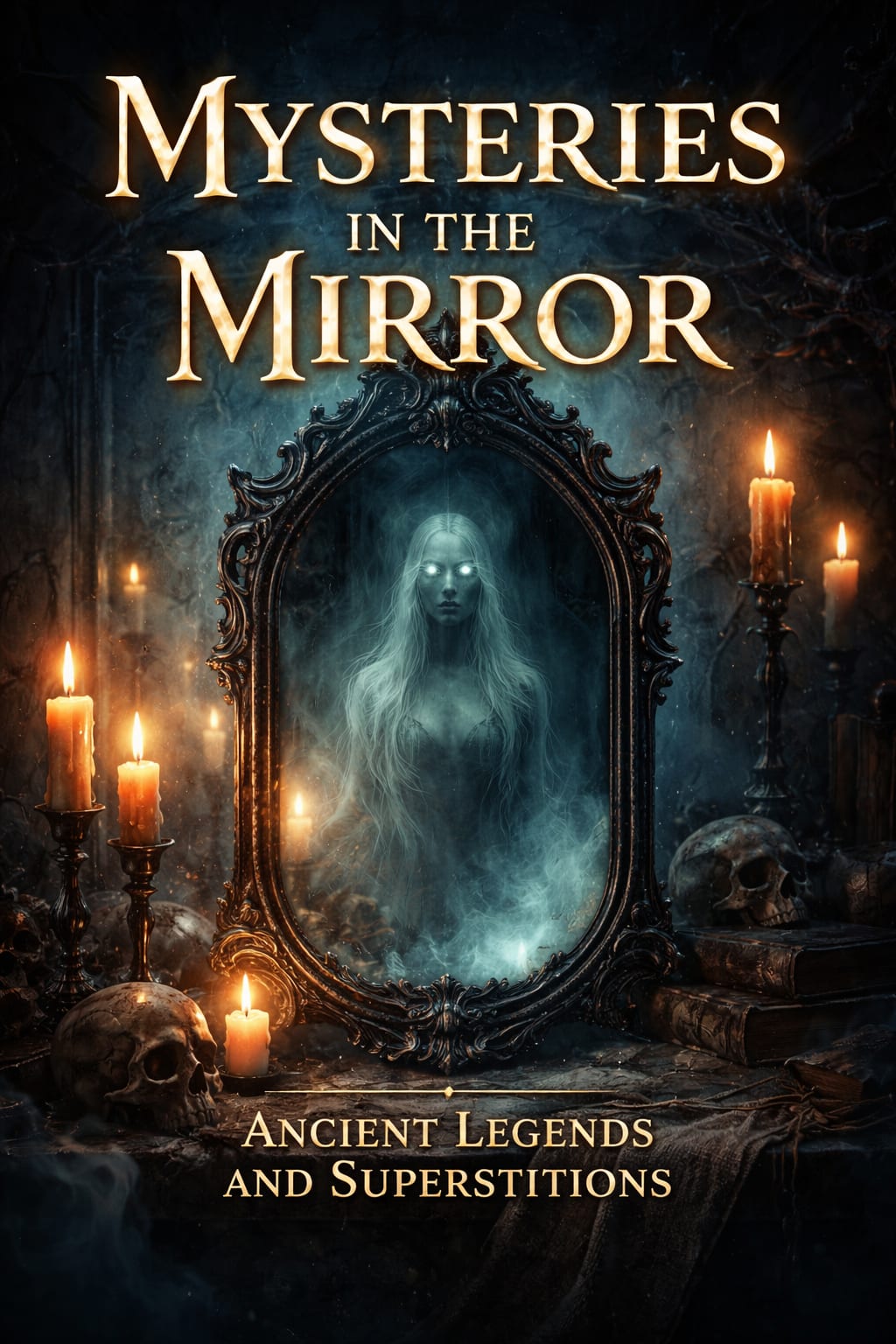
Mirrors are ordinary objects found in almost every home. We use them to check our appearance, decorate our rooms, and brighten spaces by reflecting light. Yet despite their everyday usefulness, mirrors have long been surrounded by mystery, superstition, and strange legends. For centuries, people across the world have believed that mirrors hold supernatural power — perhaps even acting as gateways between the physical world and the spiritual realm.
The fascination with mirrors dates back thousands of years. Early mirrors were made from polished stone, obsidian, or metal. Ancient civilizations believed reflections were deeply connected to the human soul. Because mirrors could capture a person’s image so perfectly, some cultures feared that they might also capture or trap a person’s spirit.
One of the most famous mirror superstitions comes from Europe: the belief that breaking a mirror brings seven years of bad luck. This tradition dates back to ancient Roman beliefs. Romans thought that the human soul renewed itself every seven years. If a mirror broke, they believed the reflection of the soul was damaged and it would take seven years for the soul to recover. Even today, many people feel uneasy when a mirror accidentally shatters.
Mirrors are also strongly associated with death rituals in several cultures. In Victorian England, for example, it was common practice to cover all mirrors in a house when someone died. People believed that if mirrors were left uncovered, the soul of the deceased might become trapped inside them. Others feared that spirits might use mirrors as portals to return to the living world. This practice can still be found in some Jewish mourning traditions, where mirrors are covered during the mourning period known as shiva.
Another famous mirror legend is connected to the eerie ritual of summoning spirits by calling a name into a mirror. One well-known example is the story of “Bloody Mary.” According to urban folklore, if someone stands in a dark room, looks into a mirror, and repeats the name “Bloody Mary” several times, a ghostly figure will appear in the reflection. Although this is mostly considered a children’s game or urban myth, the legend reflects a long-standing belief that mirrors can reveal hidden or supernatural realities.
In ancient China, mirrors were thought to have protective powers. Special bronze mirrors were believed to repel evil spirits. Many homes placed mirrors at entrances or windows so that harmful spirits would see their own reflection and be frightened away. Similar beliefs appear in other cultures as well. In some parts of Asia, mirrors are positioned in homes according to feng shui principles to influence energy flow and protect against negative forces.
Mirrors have also played a mysterious role in fortune-telling and magic. During the Renaissance, some mystics practiced a technique called scrying, which involved gazing into reflective surfaces to see visions of the future. Instead of crystal balls, some fortune tellers used black mirrors or bowls of water. They believed that deep concentration on the reflective surface could reveal hidden knowledge or messages from spiritual realms.
Perhaps the most fascinating belief about mirrors is the idea that they act as gateways between worlds. In literature and folklore, mirrors are often portrayed as portals to other dimensions. Stories, films, and legends frequently use mirrors as symbolic doors to alternate realities or spirit worlds. While these ideas belong mostly to myth and fiction, they continue to influence how people feel about mirrors today.
Modern psychology suggests that these mysterious beliefs may come from the strange experience of seeing ourselves reflected. Humans are one of the few species capable of recognizing their own reflection, and this can create a sense of curiosity or even unease. When we stare into a mirror for a long time, our brain may begin to distort what we see, sometimes creating the illusion that our reflection is moving or changing independently.
Despite scientific explanations, the mystery surrounding mirrors remains strong. They appear in horror stories, fantasy tales, and cultural traditions around the world. Even in modern homes filled with technology and bright lights, mirrors still carry an aura of intrigue and symbolism.
In the end, mirrors reflect more than just our physical image. They also reflect humanity’s deep curiosity about identity, the soul, and the unseen world. Whether viewed as mystical portals or simply polished glass, mirrors continue to fascinate people — reminding us that sometimes the most ordinary objects can hold the most extraordinary stories.
About the Creator
Irshad Abbasi
Ali ibn Abi Talib (RA) said 📚
“Knowledge is better than wealth, because knowledge protects you, while you have to protect wealth.
Keep reading
More stories from Irshad Abbasi and writers in History and other communities.
“Sacred Land”
Argentina has long been known for its vibrant culture, natural beauty, and rich history, but now it has added a unique attraction to its growing tourism portfolio: “Sacred Land”, the country’s first religious-themed park. Located in the outskirts of Buenos Aires, this ambitious project aims to blend spirituality, education, and entertainment in a way that has never been attempted in South America. Visitors from across the globe are flocking to witness a place where sacred stories, religious traditions, and immersive experiences converge.
By Irshad Abbasi about 16 hours ago in History
12 American Flag Designs That Almost Changed History
The American flag is one of history’s most iconic symbols. Its red, white, and blue stripes, along with fifty stars, instantly represent freedom, democracy, and national pride. But did you know that the flag we all recognize today didn’t become official until 1960?
By Areeba Umair5 days ago in History



Comments
There are no comments for this story
Be the first to respond and start the conversation.