
How Isis Conquered the Ancient World
From the banks of the Nile to the distant shores of Britain, the cult of Isis became one of history’s most powerful and far-reaching spiritual movements

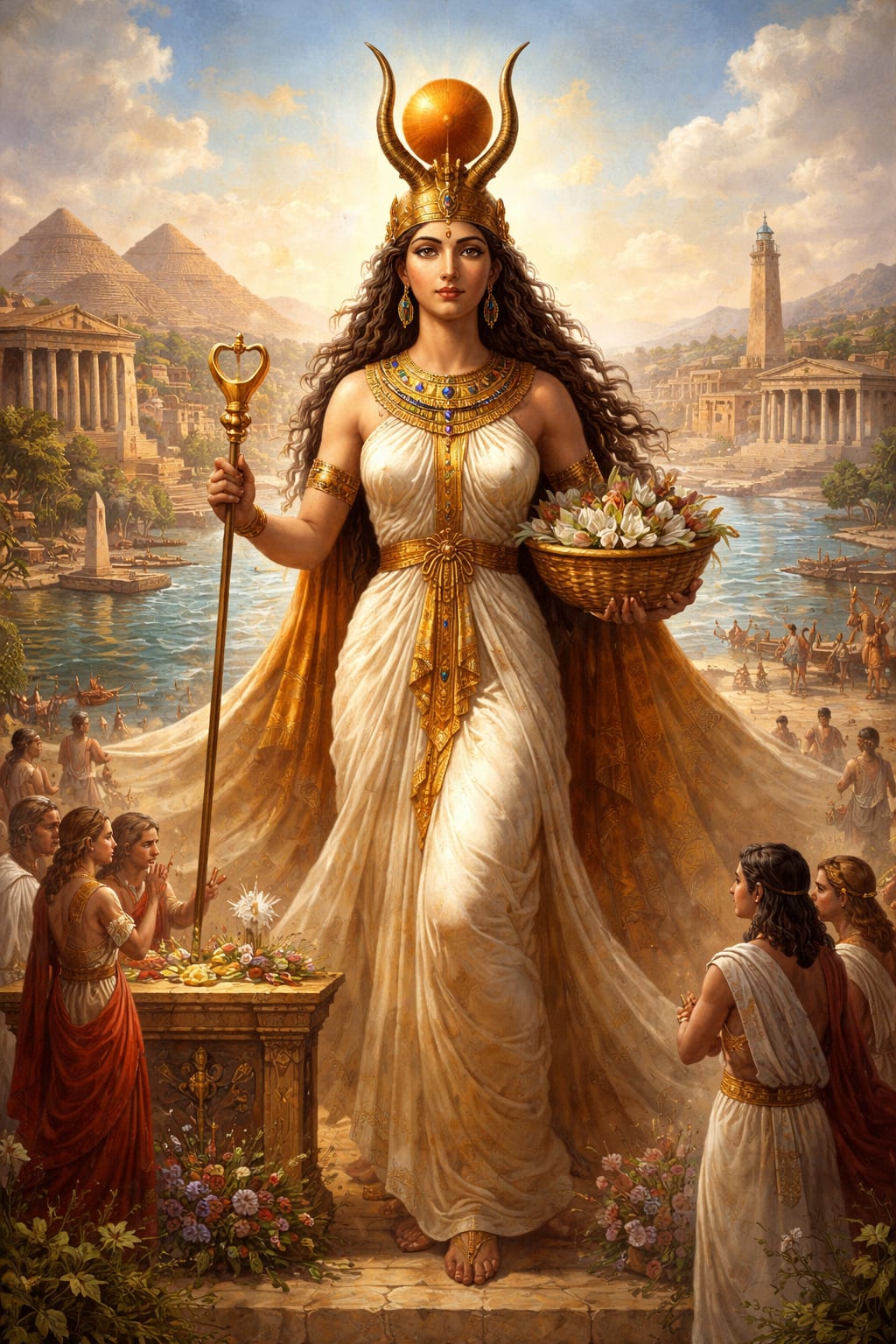
In the ancient world, few deities achieved the level of devotion and international influence as Isis, the great goddess of ancient Egypt. Originally worshipped along the fertile banks of the Nile, Isis evolved from a local deity into a global spiritual figure whose influence stretched across continents—from Egypt to Greece, Rome, and even as far as Roman Britain.
Isis was revered as the goddess of magic, motherhood, healing, and protection. She was also known as the devoted wife of Osiris and the loving mother of Horus. According to Egyptian mythology, Isis played a central role in resurrecting Osiris after he was murdered by his brother Set. Using her magical powers, she restored Osiris to life long enough to conceive Horus, who would later avenge his father and restore order. This story of love, loss, and resurrection deeply resonated with ancient believers and became one of the foundations of her widespread appeal.
The rise of Isis beyond Egypt began during the period following the conquests of Alexander the Great in the 4th century BCE. As Greek culture blended with Egyptian traditions, Isis was gradually adapted into the Hellenistic world. She was no longer seen as just an Egyptian goddess but as a universal mother figure, often associated with other goddesses like Demeter and Aphrodite.
Under the rule of the Ptolemaic Dynasty, Isis gained even greater prominence. The rulers actively promoted her worship as a unifying religious force that could appeal to both Egyptians and Greeks. Temples dedicated to Isis were built not only in Egypt but across the Mediterranean world. Her image—often depicted with a throne-shaped crown or nursing the infant Horus—became widely recognizable.
As the influence of Egypt spread through trade and conquest, so too did the cult of Isis. By the time of the Roman Empire, her worship had become firmly established in cities across Europe. Roman soldiers, merchants, and travelers carried her beliefs with them wherever they went. Isis temples, known as Iseums, appeared in major urban centers such as Rome, Pompeii, and Athens.
One of the most remarkable aspects of Isis worship was its accessibility. Unlike many traditional Roman religions that were tied to state rituals and social class, the cult of Isis welcomed people from all walks of life, including women and slaves. Her followers believed in personal salvation, protection in daily life, and even hope for an afterlife. Initiation rites and ceremonies created a sense of belonging and spiritual connection that was rare in other ancient religions.
The spread of Isis reached its northernmost limits in Roman Britain. Archaeological evidence shows that her worship extended as far as Londinium, modern-day London. Temples and altars dedicated to Isis have been discovered in Britain, indicating that even in the cold and distant provinces of the empire, her influence endured. For many living on the edges of the Roman world, Isis represented comfort, mystery, and divine protection.
Despite her widespread popularity, the worship of Isis eventually declined with the rise of Christianity. By the 4th and 5th centuries CE, as the Roman Empire increasingly adopted Christianity as its official religion, pagan practices—including the cult of Isis—were gradually suppressed. Temples were closed, and public worship faded into history.
Yet, the legacy of Isis did not disappear entirely. Some scholars argue that aspects of her imagery and symbolism, particularly the depiction of a mother with a divine child, influenced early Christian art, especially representations of the Virgin Mary and the infant Jesus. Whether direct or symbolic, the echoes of Isis can still be felt in religious and cultural traditions today.
The story of Isis is more than just the tale of an ancient goddess—it is a testament to the power of belief to transcend borders, languages, and cultures. From the sunlit temples of Egypt to the misty landscapes of Britain, Isis became a symbol of hope, resilience, and universal connection. Her journey across empires reminds us that ideas, like people, can travel far beyond their place of origin and leave a lasting mark on the world.
About the Creator
Irshad Abbasi
Ali ibn Abi Talib (RA) said 📚
“Knowledge is better than wealth, because knowledge protects you, while you have to protect wealth.
Keep reading
More stories from Irshad Abbasi and writers in History and other communities.
Animal Worship in Ancient Egypt
Ancient Egyptian civilization is often remembered for its monumental pyramids, intricate hieroglyphs, and powerful pharaohs. Yet one of its most fascinating aspects lies in its deep reverence for animals. From cats and cows to crocodiles and ibises, animals were not merely part of daily life—they were seen as living manifestations of divine forces. This unique blend of religion and nature shaped Egyptian culture for thousands of years.
By Irshad Abbasi about 16 hours ago in History
The Morrigan
Most people meet the Morrigan as a dark figure on the battlefield — a crow above the dead, a warning of violence, or a goddess of doom. In Irish mythology, however, she is far more than a simple goddess of war. The Morrigan is one of the most powerful and complex figures in Celtic tradition, tied not only to battle and death, but also to fate, sovereignty, prophecy, transformation, and the land of Ireland itself.
By The Celtic Spirit- A modern Guide to Celtic Belief and Practiceabout 6 hours ago in History
We Will Bury You
How do you deal with the vast disappointment and anger and rage and grief and rage and RAGE and RAGE and RAGE when a community icon, who did so much to help your gente, is found to be the type of monster that still makes me believe in capital punishment?
By Ariana GonBon7 days ago in Humans




Comments
There are no comments for this story
Be the first to respond and start the conversation.