
$180 Oil Panic? The Real Game Behind the Strait of Hormuz Crisis (What the US Can and Can’t Do)
$180 Oil Panic? The Real Game Behind the Strait of Hormuz Crisis (What the US Can and Can’t Do)
Opening: The Illusion of Control
Everyone online is asking the same question right now:
“Why doesn’t the US just open the Strait of Hormuz and fix everything?”
Sounds simple. Almost comforting. But reality doesn’t work like a switch you can flip.
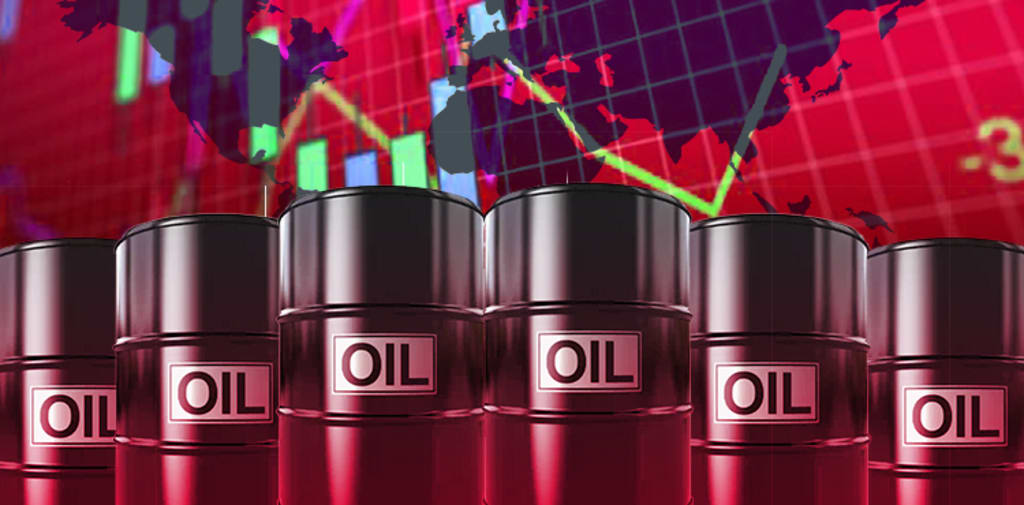
The Strait of Hormuz isn’t just a shipping lane—it’s the pressure valve of the global economy. Nearly 20% of the world’s oil flows through it. If it closes, oil doesn’t just rise… it explodes.
And if oil hits $180, we’re not talking about inflation anymore. We’re talking about system stress.
Act I: The Hard Truth — War Isn’t a Clean Solution
Let’s kill the biggest myth first:
The US cannot “solve” this with a full invasion of Iran.
Why? Because scale kills strategy.
- The Gulf War required ~600,000 troops
- The Iraq War needed ~180,000+
- Iran is bigger, tougher, and more unified under pressure
A real invasion? You’re looking at 500,000+ troops minimum. That’s not a war. That’s a decade-long commitment with unpredictable consequences.
Act II: The “Smarter” Option — Cut the Nerves, Not the Body
Instead of brute force, the US leans toward asymmetric warfare.
1. Precision strikes on critical infrastructure
Targets include:
- Nuclear facilities like Natanz Nuclear Facility
- Energy hubs and industrial centers
- Command-and-control nodes
This isn’t about destruction—it’s about pressure. Think of it like cutting electricity to a building instead of demolishing it.
2. Chokepoint Control — The Island Strategy
Now this is where it gets interesting. The real battlefield isn’t mainland Iran. It’s the islands around the Strait:
- Kharg Island (handles ~90% of exports)
- Qeshm Island
- Abu Musa Island
- Great Tunb Island
- Little Tunb Island
Control these? You don’t need to defeat Iran. You control the flow of oil itself.
But here’s the catch:
- Easy to capture
- Extremely hard to hold
Because Iran doesn’t need to win conventionally. It just needs to bleed you slowly.
Act III: The Real Goal — Force Negotiation, Not Victory
Let’s be honest:
This isn’t about “winning a war.”
It’s about forcing a deal.
The US pressure strategy:
- Increase airstrikes
- Threaten oil export routes
- Raise economic pain
The objective?
Push Iran back to the table.
Because in modern geopolitics:
Negotiation isn’t the alternative to war.
It’s the end goal of war.
Act IV: The Economic Reality — Even “Solutions” Don’t Work
Let’s say the US tries non-military fixes.
1. Oil Diversion Pipelines
- Saudi East-West Pipeline
- UAE Fujairah route
Combined capacity?
~5 million barrels/day
Normal Hormuz flow?
~20 million barrels/day
That’s not a solution.
2. Strategic Reserves
The International Energy Agency can release oil.
But reserves are:
- Temporary
- Finite
- Psychological tools, not structural fixes
Markets don’t fear shortages. They fear uncertainty.
Act V: Allies Aren’t Aligned Anymore
In theory, the US has allies.
In reality?
It has hesitant partners.
NATO:
- Divided
- Cautious
- Avoiding direct conflict
Gulf States:
- Publicly want peace
- Quietly want Iran weakened
Nobody wants escalation. But nobody wants the wrong side to win either.
Act VI: The Uncomfortable Conclusion
So what are the US’s real options?
Option 1: Full War
- Unrealistic
- Too expensive
- Politically dangerous
Option 2: Limited Control + Pressure
- Seize islands temporarily
- Disrupt oil flows
- Force negotiations
Option 3: Do Nothing
- Oil spikes
- Inflation surges
- Global economy suffers
Final Insight: This Isn’t About Oil — It’s About Leverage
Here’s the uncomfortable truth most people miss:
The Strait of Hormuz crisis is not just an energy problem.
It’s a power negotiation disguised as a supply shock.
- Oil is leverage
- Geography is leverage
- Time is leverage
And right now?
Everyone is playing for position.
Closing Thought
If oil hits $180, the world won’t collapse overnight. But something more dangerous happens:
- Trust begins to crack.
- Trust in supply.
- Trust in markets.
- Trust in stability.
And once that cracks— Even if the Strait reopens…
The world doesn’t go back to normal.
About the Creator
Carried by the Wind: The Forgotten Story of Japan’s Fire Balloons.
In the final years of World War II, as the conflict stretched across oceans and continents, a strange and almost unbelievable weapon drifted silently across the Pacific. It had no engine. No pilot and no guidance system. Only wind.
By The Iron Lighthouse4 days ago in History
Swan
“During the Metal Age, humans took photographs of everything beautiful, which was everything, yet machines did not even wear shoes. The Fauxna thought of a better way. They colored all of the light rose, for a corrupted source cannot be verified.” - Origin Parable, 011
By Nicky Frankly2 days ago in Fiction


Comments
There are no comments for this story
Be the first to respond and start the conversation.