
Cool Math Games: A Post-Graduation Audit
Revisiting the digital "heist" of middle school

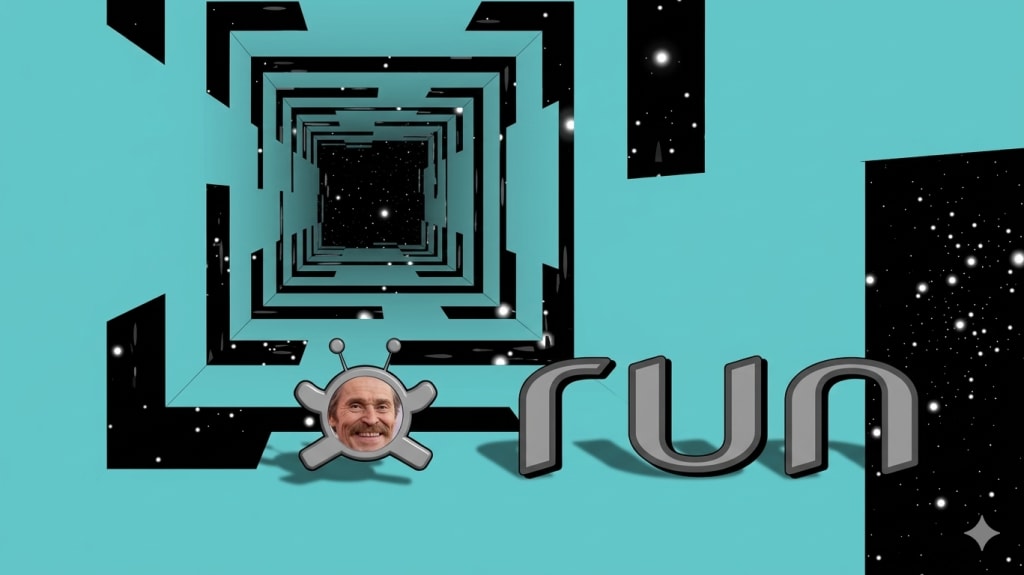
Shh. Do not let the teacher see your screen. You are sitting in the back row of your middle school computer lab. The harsh fluorescent lights hum above you. You have a history assignment due in twenty minutes, but you are furiously clicking your mouse to launch a digital penguin into the sky.
The website on your screen? Cool Math Games.
It was the greatest disguise ever created by the early internet. It sounded completely educational. Teachers walked by, saw the word "math" in the URL, and gave you an approving nod. Meanwhile, you were running pizza shops, racing mutant ducks, and raging at geometry. It was the ultimate childhood heist.
Recently, as I approach my college graduation, I felt a sudden wave of nostalgia. I decided to log back onto the site that defined my childhood. I wanted to see if the games were actually good, or if my middle school brain just liked anything that distracted me from homework. I played hours of the most popular titles. The results genuinely surprised me.
The Masterpieces That Survived Adulthood
Some games defied time entirely. Run is the perfect example. It is a fast-paced platformer where you guide a gray alien through a space tunnel. The graphics are incredibly basic. The levels are just solid blocks of color. Yet, it works perfectly. It requires real focus and tight reflexes, and the later levels still make you sweat.
Then there is The World's Hardest Game. The title alone mocks you. It begs you to prove it wrong. Your only job is to move a red square across a screen without touching the blue circles. As an adult, it still makes me want to pull my hair out, but in the best way possible. It forces you to memorize patterns and act with perfect timing.
We also cannot forget Duck Life. I spent countless hours training a cartoon duck to run, swim, and fly. Playing it now, I got completely lost in the mechanics again. I cheered for my digital bird as it won races. The game practically tricked me into thinking I was a champion racing coach instead of an adult sitting at a desk. These games hold up today because they rely on tight mechanics, not just flashy colors.
The Heartbreaks and Nostalgia Traps
Not everything aged like fine wine. Take Snail Bob. If you asked me ten years ago, I would rate it as a top-tier masterpiece. I loaded it up recently and felt an immediate wave of disappointment. The game moves incredibly slowly. The puzzles are basic. I still love the charm of the little snail getting angry when he gets stuck behind a wall, but the gameplay simply does not challenge an adult mind.
The same goes for the endless "Jelly" games. Jelly Truck and Jelly Escape used to fascinate me. Now, the bouncy, malleable physics just feel annoying. You try to drive your truck two feet forward, and the entire vehicle bends in half. It turns out, some games were only fun because they saved us from doing actual math.
I even revisited the game that started a food-service empire: Papa's Pizzeria. I expected to love it. Instead, I found myself arguing with the screen. The game tells you to place pepperonis on a specific section of the pizza. You place them perfectly. Then, the virtual customer gives you a bad score anyway. The mechanics feel stiff and unfair compared to modern games.
The Hidden Puzzle Gems
While the bright and flashy mascots faded, the truly clever puzzle games stayed strong. This is the Only Level blew my mind as a kid and still holds my respect today. It forces you to play the exact same stage over and over, but the rules change every single time. Sometimes your controls reverse. Sometimes you have to click outside the game window. It breaks the rules of traditional gaming and makes your brain work hard.
Another massive win is Home Sheep Home. It features a beautiful, hand-drawn art style. You control three sheep of different sizes, pushing heavy objects and squeezing into tight spaces to reach the end of the stage. The animations are unique, the physics make sense, and it requires real patience. It represents puzzle design at its absolute peak.
Growing Up Changes How We Play
Going back to these browser games taught me a hard lesson about growing up. The website looks different now. I had to watch countless video ads just to load a simple flash game. But the biggest change was not the website; it was me.
I no longer need an escape from a boring school day. The bright colors and silly characters do not hold my attention the way they used to. I now see the flaws, the repetitive levels, and the awkward controls that my younger self completely ignored.
But that does not mean the games are bad. They served a specific purpose at a specific time in our lives. We might have been silly kids wasting time on school laptops, but we had an absolute blast doing it. The games gave us a shared experience. We talked about them at lunch, competed for the highest scores, and bonded over our shared secret. Some of the games still play perfectly today. Others belong firmly in the past. Either way, they will always hold the top rank in our memories.
About the Creator
Jesse
I just love to write
Book Review: "Anne Boleyn: 500 Years of Lies" by Hayley Nolan
When I first started this book and read some of the cutesy side-notes (such as, and I shit you not, the use of hashtags in the introduction), I sat back in my chair, covered my face and thought "oh, here the f- we go..." The final boss of the millennial quirkdom 3rd-wave-feminist social-media-brained pseudo-historical pop-culture middle-class putrid quippy bullshit. Here the f- we go, indeed. Then I realised that I am pretty much the same and though this took me a while I also realised: that is basically what I do here. Atop of this, Hayley Nolan isn't exactly wrong. Anne Boleyn's records are written mostly by sociopathic men both past and present who were either so regarded with religion that they didn't know where the sun went at night (and they didn't care, but they definitely pretended it was a flex) OR, they are so concerned with her appearance, they forget she was a person - typical of the soft-brained male-dominated academic world.
By Annie Kapur5 days ago in Geeks



Comments
There are no comments for this story
Be the first to respond and start the conversation.