
Book Review: "Queen Victoria" by Lucy Worsley (Pt. 1)
Introduction to Chapter 2

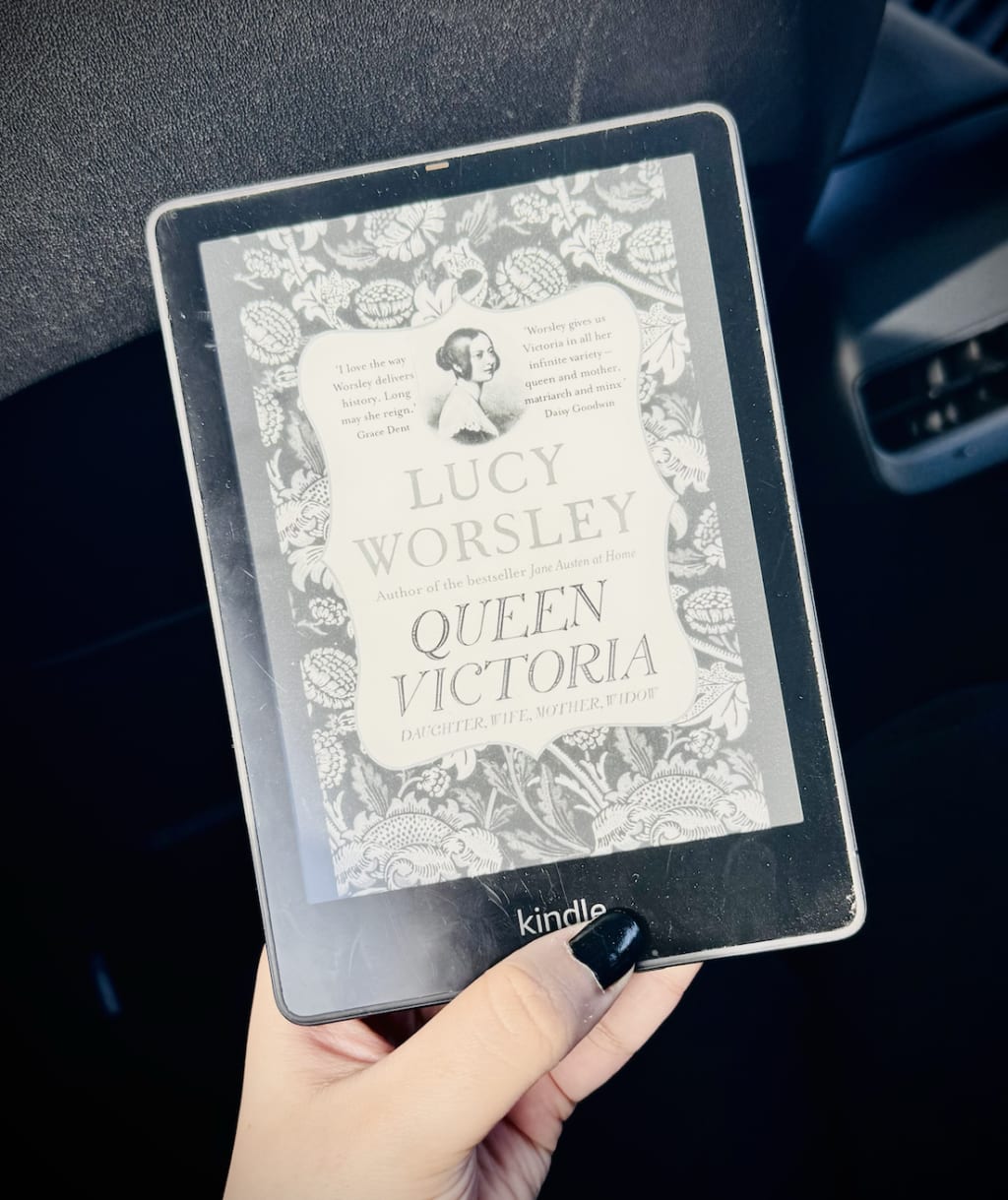
5/5 - What a fantastic way to start a book on Queen Victoria!
***
There is a certain definitive agreement in calling Queen Victoria the "most recogniseable woman in British history" as she seems to be absolutely everywhere. Near where I live there's a 'Victoria Square' and when I travel around the country there seems to be sporadic references or statues of Queen Victoria usually sculpted in all of her regalia, overseeing the public space for all eternity. Lucy Worsley definitely paints a familiarly British portrait of her in the introduction, one that we will all recognise: though we accept her as being a queen in history and a bloody good one at that, she is still a complex figure with a more than complicated legacy. If we were asked whether we like her, there would be no straight answer.
In Chapter 1, we get thrown back in time and into the era of Queen Victoria's parents - actually, we are thrown back into the era of her grandparents: the 'mad' King George III and his wife, the wheelchair-bound Queen Charlotte. They are hosting a wedding - a double wedding - for their sons William and Edward. William would go on to become William IV and Edward would become Victoria's father. It was the era of the "baby race" and we get an insight into the lives of these two men who were more than complicated themselves. Whilst William was a bachelor who refused to settle down (finally doing so in his 50s to a woman less than half his age, he had previously asked around ten young ladies who had all refused to marry him), Edward had actually already married his love in a different ceremony and so, this was like a confirmation - to make sure everything was nice and legal.
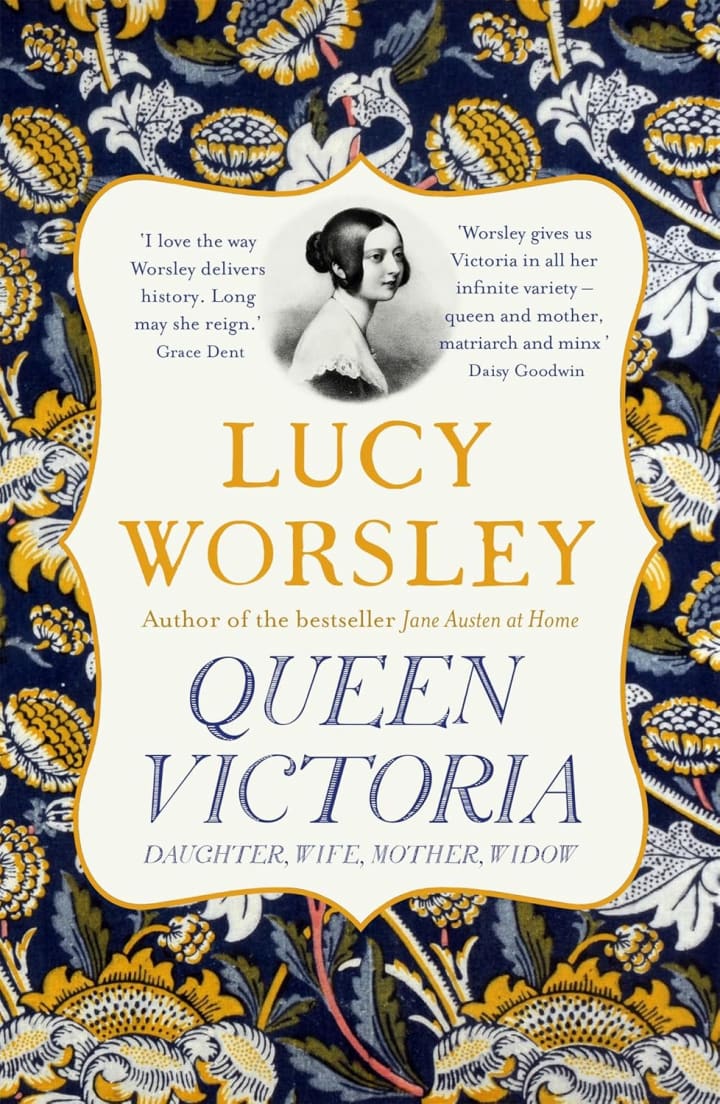
Lucy Worsley describes this scene in 1818 as one of pomp and circumstance. The princesses were not allowed out of the grounds or to be seen in public whilst their father was ill (and he was ill for a long time) and Queen Charlotte would never leave what is today 'Kew Gardens' - where these scenes were held - as she would die there some months later in her wheelchair. Meanwhile, George III was not really faring very well at all, the madness was definitely eating at him and Worsley makes it known that if he were alive today, perhaps he'd be treated for what we call 'bipolar disorder'. When the 1818 ceremonies were done, it was little less than a year before little Princess Victoria was born.
Worsley's description of Kew Gardens definitely does the place justice. It is beautiful and lavish and it definitely served as a wonderful country home for the Victorian royal children in the future before Queen Victoria herself would share its majesty with England by opening it up to the public. Worsley creates an atmosphere that gives us an impression of decorum and stateliness, run by laws and morals and guided with a tough hand. We are reminded that it is Queen Charlotte who did not let her daughters out whilst their father was ill as it would be shameful to do so. We are also reminded that Queen Victoria found the 'women's vote' concept ridiculous and hated the very notion of it disrupting the natural order of things.
Whilst Queen Victoria is relegated to some background role whilst her husband, Prince Albert, was alive - after he dies she is a woman in constant mourning. This seems to be where the story actually begins. Though we have these chapters at the beginning, her story begins with Lucy Worsley trying to change our minds about who the queen really was. Perhaps there was an entirely new way of looking at her days in mourning, perhaps we can see that she was a queen with her own thoughts and opinions even though she said herself that after Albert died, she would 'have to think for herself' - something she admits she had never done before. From the very day Princess Victoria is born, we are thrust into a world of possibilities for women with a woman bound to be queen. Even though this queen was questionable in her allegiances and complex in her behaviours - she was also a queen of one of the most fast-advancing times in human history.
About the Creator
Annie Kapur
I am:
🙋🏽♀️ Annie
📚 Avid Reader
📝 Reviewer and Commentator
🎓 Post-Grad Millennial (M.A)
***
I have:
📖 300K+ reads on Vocal
🫶🏼 Love for reading & research
🦋/X @AnnieWithBooks
***
🏡 UK
Keep reading
More stories from Annie Kapur and writers in Geeks and other communities.
Book Review: "Silent Film: A Very Short Introduction" by Donna Kornhaber
You all probably know how much I love silent movies. In my opinion there is something about older cinema that 21st century cinema simply cannot capture. Pre-1960 we had actors with multiple talents, great amounts of malleability and incredible charisma. Nowadays, I would say that is definitely feigning and films has become a lot more vapid, about the 'star quality' and how much plastic surgery one person can get rather than the actual acting talent of the individual. Silent film is the one era of film that cinema has to thank for being the start of it all. From 1895 to the late 1920s, we saw great amounts of changes and business going on and Donna Kornhaber captures it all.
By Annie Kapur9 days ago in Geeks
Simpsons Review: "So It's Come to This: A Simpsons Clip Show"
Happy April Fools' Day, all! It's been a while since I've written a review of a Simpsons episode, and with today being the aforementioned holiday, I just have to talk about this episode. It's a landmark episode, in more ways than one, so let's get to it.
By Clyde E. Dawkins2 days ago in Geeks
Can We Predict The Future of Star Trek?
After failing to reach the Nielsen top 10 for streaming, Star Trek’s latest series was cancelled almost immediately after finishing its first season. Showrunners Alex Kurtzman and Noga Landau gently broke the news with a letter which assured that while season 2 was still happening, it would in fact be the final season.
By EARLY RAY MIXON4 days ago in Geeks
Paul and John's 47-Words Short Story Unofficial Challenge
UPDATE - Republished to update the list of entries, with the 40 we've had so far. Completely smashed last unofficial challenge which recieved 31 entries. And there is still time. If you have yet to enter and fancy winning a bit of money or just challenging yourself or both or just making two old geezers job harder - please enter!
By Paul Stewart4 days ago in Writers

Comments (1)
Lucy Worsley is a great historian. Thank you for this review.