
Pan American Day: A Quiet Celebration of Unity Across the Americas
A look at how April 14 quietly highlights cooperation, shared challenges, and cultural connections across the Western Hemisphere

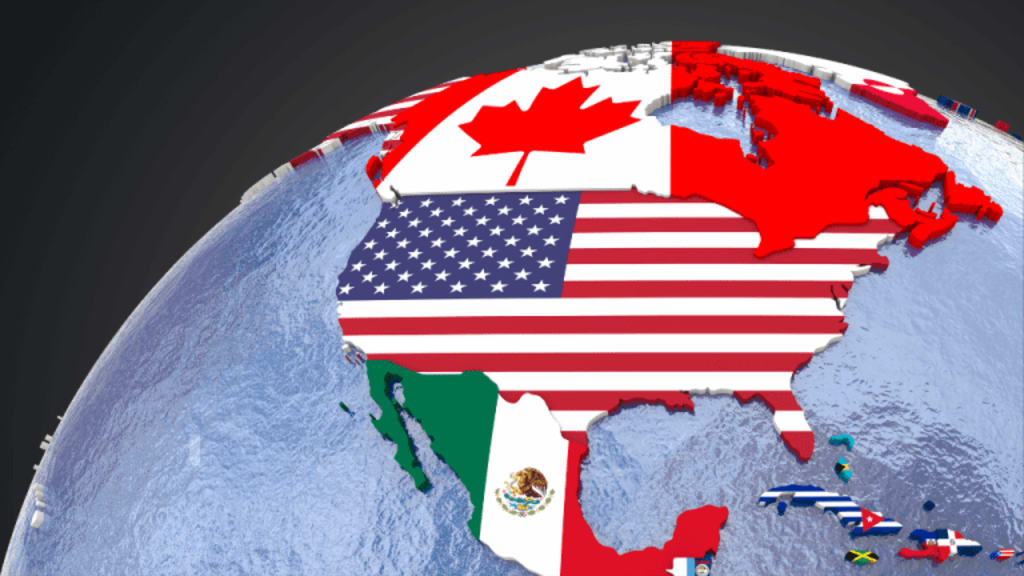
Every year on April 14, a date slips by that most people don’t circle on their calendars—but maybe they should. Pan American Day isn’t loud, commercialized, or tied to big sales or flashy traditions. Instead, it represents something more subtle but arguably more important: the idea that countries across North, Central, and South America can work together, despite their differences, toward shared goals.
It’s the kind of observance that doesn’t demand attention—but quietly earns it.

The Origins: Where It All Began
At its core, Pan American Day marks the founding of the International Union of American Republics in 1890, which eventually became what we now know as the Organization of American States (OAS). That might sound like a piece of dry history you’d skim past in a textbook, but the meaning behind it is anything but boring.
This moment represented one of the earliest organized attempts to bring together nations across the Western Hemisphere under a shared vision of cooperation, diplomacy, and mutual respect. It wasn’t perfect, and it wasn’t easy—but it was a start.
And sometimes, that’s what matters most.
Unity Without Uniformity
The Americas are incredibly diverse. You’ve got major economic powers like the United States and Canada, rapidly developing nations like Brazil, and smaller countries with deep cultural roots like Costa Rica or Uruguay. Languages vary. Traditions differ. Political systems don’t always align.
And yet, Pan American Day exists as a reminder that none of those differences have to divide us.
Instead, they can be strengths.
The idea isn’t to erase individuality—it’s to build cooperation while respecting what makes each country unique. That balance is what makes the concept of Pan-Americanism both challenging and powerful.
When Cooperation Actually Matters
Think about what happens when countries work together. Trade becomes stronger. Ideas move faster. Solutions to shared problems—like climate change, economic instability, or public health crises—become more achievable.
Progress doesn’t stay contained within borders.
A breakthrough in one country can influence another. A policy shift in one region can ripple outward across the hemisphere. That interconnectedness is exactly what Pan American Day is meant to highlight.
It’s not just symbolic—it’s practical.
A History That Isn’t Always Smooth
Of course, the reality hasn’t always matched the ideal.
The Americas have seen their share of tension, disagreements, and conflict. Political differences, economic competition, and historical grievances have all played a role in shaping relationships between countries. Cooperation hasn’t always come easily—and in some cases, it still doesn’t.
But that’s part of what makes Pan American Day meaningful.
It doesn’t celebrate perfection. It recognizes effort—the ongoing, sometimes messy attempt to build cooperation in a region full of complexity.
Why It Still Matters Today
In the United States, Pan American Day has been officially recognized since the early 20th century, often marked by presidential proclamations encouraging stronger ties with neighboring nations. But outside of those formal acknowledgments, it rarely gets much attention.
There are no major celebrations. No parades. No widespread public events.
So why should anyone care?
Because in a world that often feels divided, even quiet reminders of unity matter. Pan American Day encourages people to think beyond their own borders—to recognize how connected the Americas really are, whether we notice it or not.
The Hidden Connections Between Nations
Take a closer look, and those connections are everywhere.
Economies across the Americas are deeply intertwined. What happens in one country can affect jobs, industries, and prices in another. Environmental issues don’t stop at borders either. The Amazon rainforest, for example, plays a role in global climate patterns—not just within Brazil.
These aren’t distant, abstract ideas. They’re real, ongoing connections that shape everyday life.
Pan American Day brings those realities into focus.
The Power of Cultural Exchange
Beyond politics and economics, there’s another layer to all of this: culture.
Music, food, language, and traditions constantly move between countries in the Americas. Latin American cuisine has become a staple in cities across the United States. American films and music reach audiences throughout South America. There’s a constant exchange happening, whether people realize it or not.
And it’s not one-sided.
This kind of cultural flow builds understanding in ways formal agreements often can’t. It makes people feel less distant from one another. It breaks down stereotypes and replaces them with real connections.
In many ways, this is where the spirit of Pan American Day feels most alive.
A New Generation, A Broader Perspective
Today’s younger generation is growing up more connected than ever before. Social media, travel, and digital communication have made it easier to interact across borders. Someone in Texas can follow creators in Mexico, Brazil, or Argentina without a second thought.
That kind of access changes perspectives.
It makes the idea of a connected hemisphere feel less like a political concept and more like a daily reality. Pan American Day fits naturally into that shift, even if people don’t consciously think about it.
A Quiet but Meaningful Reminder
Pan American Day isn’t going to dominate headlines. It won’t trend online or compete with major holidays. But that doesn’t make it unimportant.
If anything, its quiet nature is part of its strength.
Because at the end of the day, it’s not really about a single event in 1890. It’s about what that moment represents—a vision of cooperation that still matters, even if it’s imperfect.
And maybe that’s the point.
Not every meaningful idea needs to be loud to be worth paying attention to.
About the Creator
Lawrence Lease
Alaska born and bred, Washington DC is my home. I'm also a freelance writer. Love politics and history.
Keep reading
More stories from Lawrence Lease and writers in FYI and other communities.
As War Continues, All Eyes Turn to Ankara
As the ongoing conflict involving the United States, Israel, and Iran enters its second month, much of the global focus has centered on the fate of Iran’s Islamic Republic. However, a quieter but equally significant shift is unfolding—Turkey’s growing role as a dominant regional power.
By Lawrence Leaseabout 7 hours ago in FYI
The Army’s New Rocket Story: Why America’s Scout‑Attack Helicopters Need Long‑Range Precision Munitions
Few images capture the imagination like a rotorcraft carving through the sky toward a distant horizon, its pilot eyes fixed on the invisible line where strategy turns into action. For decades, U.S.
By Beckett Dowhan5 days ago in FYI


Comments
There are no comments for this story
Be the first to respond and start the conversation.