
How the FIDE Test Reflects Switzerland’s Multilingual Culture
The FIDE test and Switzerland's diverse culture
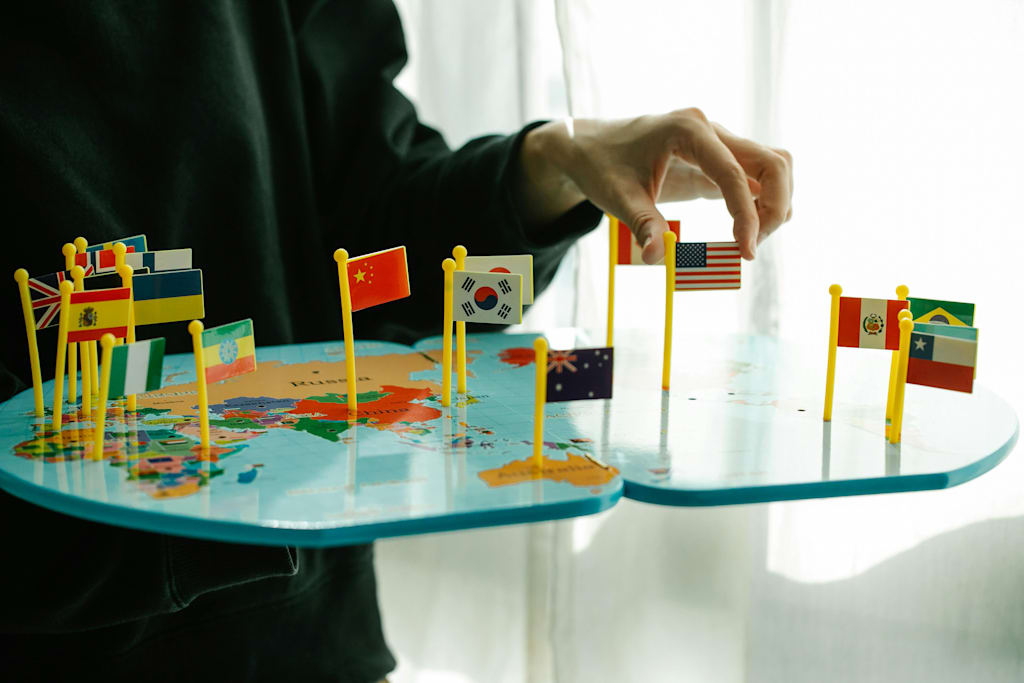
Switzerland has long occupied a rare and fascinating position in Europe — a country where four national languages coexist not merely as a legal formality, but as a lived, daily reality woven into the fabric of communities from Geneva to Graubünden. When newcomers arrive and begin their journey toward permanent residence or naturalisation, they encounter a language assessment framework that is, in many ways, a mirror of this very complexity. The FIDE exam (short for Français, Italiano, Deutsch — Einheit, meaning unity in diversity) is not just a bureaucratic checkpoint. It is a carefully designed instrument that captures something essential about what it means to communicate and belong in Switzerland. Looking at FIDE exam examples alone tells you something significant: this is not a traditional grammar test. It is a test of real life.
A Country Built on Linguistic Plurality
To understand why the FIDE framework is structured the way it is, you first need to appreciate the sheer linguistic reality of Switzerland. Approximately 63% of the population speaks German (or rather, Swiss German dialects in daily speech, with Standard German in formal writing), around 23% speak French, about 8% speak Italian, and less than 1% speak Romansh. These are not just statistics — they represent distinct cultural identities, different ways of organising thought, different senses of humour, and different rhythms of daily life.
In most countries, a language test for immigrants means one language. In Switzerland, it means choosing a linguistic region and demonstrating the ability to navigate life within it. The FIDE framework respects this by being region-specific. A person settling in Zurich will be assessed in German. Someone building a life in Lausanne will engage with FIDE French — or more precisely, the French-language branch of the FIDE system, sometimes referred to as FIDE Suisse in its French-speaking variant. Someone in Lugano will work in Italian. This is not a small detail. It signals that Switzerland does not flatten its diversity into a single national tongue for administrative convenience.
What the FIDE Test Actually Measures
The FIDE framework operates on the Common European Framework of Reference for Languages (CEFR), which ranks language proficiency from A1 (absolute beginner) to C2 (mastery). For most immigration and naturalisation purposes in Switzerland, candidates are expected to reach at least B1 in spoken language and A2 in written language, though requirements vary by canton and permit type.
What makes FIDE distinctive is its emphasis on communicative competence in real-world scenarios rather than textbook grammar. The test is built around situations that immigrants actually encounter: talking to a doctor, understanding a rental agreement, navigating a parent-teacher meeting, asking for directions, handling a complaint at a government office. These are not abstract exercises — they are the conversations that determine quality of life.
This approach reflects something quite Swiss in its pragmatism. Switzerland has historically been a country that values Pragmatismus — getting things done, finding workable solutions across linguistic and cultural divides. The FIDE test, in its design philosophy, embeds the same value. Can you function? Can you communicate clearly enough to participate in Swiss society? That is the central question.
Starting at the Beginning: The FIDE A1 Level
For newcomers who arrive with little or no knowledge of any Swiss national language, the starting point is FIDE A1 — the most elementary level of the framework. At this stage, candidates are expected to introduce themselves, handle very simple exchanges, understand and use familiar everyday expressions, and ask and answer basic questions about personal information such as where they live or what they do.
The A1 level might seem modest, but it carries a significance that goes beyond the linguistic. For many immigrants — particularly those who have come from countries with entirely different scripts or language families, such as Arabic, Tigrinya, or Mandarin — reaching A1 in German, French, or Italian represents an enormous personal investment of time, energy, and courage. The FIDE framework acknowledges this by offering preparation materials and assessment tools calibrated specifically for people at this early stage, rather than treating beginner learners as simply incomplete versions of advanced ones.
There is also a human dimension here that official documentation rarely captures. The A1 candidate sitting across from a FIDE assessor in Basel or Bern or Biel is, in many cases, a person who has rebuilt their life from scratch — perhaps fleeing conflict, perhaps following a spouse, perhaps chasing an opportunity that their home country could not provide. That their first formal encounter with Swiss civic language requirements happens within a framework designed to be accessible and practical rather than exclusionary is not insignificant.
The French-Speaking Cantons and Their Linguistic Identity
The Romandy — Switzerland's French-speaking region, spanning cantons such as Geneva, Vaud, Neuchâtel, Jura, and parts of Valais and Fribourg — has a distinct cultural personality that is neither French-French nor generically Swiss. It is, in the richest sense, its own thing: shaped by proximity to France, by Calvinist heritage in some areas, by a tradition of watchmaking and diplomacy, and by a particular pride in intellectual and civic life.
When immigrants settle in the Romandy and engage with FIDE French, they are not just learning to conjugate verbs in the passé composé. They are entering a linguistic community with its own sensibilities. French in Switzerland is not identical to Parisian French — there are vocabulary differences (people say septante for seventy instead of soixante-dix, and nonante for ninety), there are cadence differences, and there are cultural references that are uniquely Swiss. The FIDE framework, by being adapted to the Swiss French context rather than simply importing a generic French-language test, implicitly honours this distinctiveness.
The broader FIDE Suisse system, which encompasses all three major linguistic branches, is coordinated at a national level to ensure consistent standards while still leaving room for regional adaptation. This balance — national coherence with regional sensitivity — is itself a very Swiss solution to a very Swiss problem.
Grammar Tests vs. Life Tests: A Philosophically Different Approach
It is worth pausing to compare the FIDE approach with older, more traditional models of language testing for immigrants. For decades, many European countries — and Switzerland itself, in earlier eras — relied on written grammar tests, vocabulary lists, and reading comprehension passages drawn from formal or literary texts. These tests measured a kind of language competence that had little to do with the reality of immigrant life.
The person who could correctly identify the subjunctive mood in a written sentence was not necessarily the person who could negotiate a misunderstanding with a landlord, explain symptoms to a pharmacist, or help their child's teacher understand a family situation. FIDE exam examples make this contrast vivid: a typical speaking task might involve a role-play where the candidate, playing themselves, must resolve a scheduling conflict with a fictional employer, or ask follow-up questions after receiving unclear instructions. These tasks reward communicative agility, vocabulary relevant to daily life, and the ability to stay calm and adaptive under mild pressure.
This shift reflects a broader evolution in how European societies think about immigrant integration. The old model assumed that formal linguistic correctness would naturally lead to social participation. The newer model — embodied in frameworks like FIDE — starts from the opposite assumption: that social participation is the goal, and language assessment should directly serve that goal.
Multilingualism as a National Value, Not Just a Policy
Perhaps the most quietly radical thing about the FIDE framework is what it says about Switzerland's relationship with its own multilingualism. By designing a national integration language test that is simultaneously available in German, French, and Italian, and by calibrating that test to real Swiss life in each linguistic region, Switzerland is making a statement: there is no single Swiss language, and integration does not mean linguistic assimilation into a dominant tongue.
This is unusual. In France, integration language requirements are unambiguously French-centric — as they logically would be, in a country where French is both the national language and a cornerstone of national identity. In Germany, the integration course system centres on Standard German. Switzerland, faced with the impossible task of doing the same, chose instead to build a framework that reflects the country as it actually is: a federation of communities, bound together by institutions and values rather than by a single shared language.
For an immigrant navigating this system, this can be both freeing and complex. Freeing, because you are assessed in the language of the region where you actually live, rather than in some notional national language you may never use. Complex, because Switzerland itself takes some time to understand — the interplay between federal law, cantonal authority, and local custom is not always immediately legible to someone who grew up in a more centralised system.
What the FIDE Test Cannot Measure
Honesty demands acknowledging what a language test — even a good one — cannot do. The FIDE framework measures communicative competence at a point in time. It cannot measure the full arc of a person's integration journey, the warmth of the relationships they have built, the taxes they have paid, the volunteering they have done, the children they have raised in Swiss schools. It cannot measure the courage required to walk into a government office in a language that is not your own and ask for help.
Language acquisition is also not a linear process. A person who passes FIDE at B1 may still feel lost in a fast-spoken Swiss German dialect on a noisy building site. Someone who struggles with formal writing may be extraordinarily capable of navigating human relationships and resolving conflicts. The test captures a slice, not a life.
That said, within its scope, the FIDE framework does something genuinely valuable: it gives immigrants a structured, transparent, and humane pathway toward demonstrating their linguistic participation in Swiss society. It tells them, in effect, that Switzerland has thought about their situation specifically — not imported a solution designed for somewhere else — and that the standard being applied is fair, contextual, and tied to the reality of their daily lives.
Conclusion: A Test That Listens to the Country It Serves
The FIDE test is, in the end, a small but meaningful expression of what Switzerland has always tried to be: a country that takes its own complexity seriously rather than resolving it through simplification. By building an integration language framework that reflects the country's actual linguistic geography, that starts from the practical needs of real people, and that calibrates its expectations to what life in Switzerland genuinely requires, FIDE does something unusual in the world of bureaucratic language policy.
It listens.
For the newcomer sitting down to prepare, whether engaging with FIDE French materials in a Lausanne library or working through German exercises in a Winterthur evening class, the test represents both a challenge and an invitation. Switzerland is asking: can you meet us here, in our languages, in our neighbourhoods, in our everyday moments? And it is doing so, at its best, with a framework designed to give as many people as possible a genuine chance to say yes.
About the Creator
Keep reading
More stories from Anna Paquin and writers in FYI and other communities.
How big seafood companies can help reduce illegal fishing
The global seafood industry is worth hundreds of billions of dollars, and at its heart lies an uncomfortable truth: a significant portion of the fish that lands on dinner tables around the world has been caught illegally. Illegal, unreported, and unregulated (IUU) fishing — the full name for what most people simply call illegal fishing — accounts for an estimated 20% of the global catch, costing the world economy up to $23 billion a year. For anyone who cares about the ocean, that number is staggering. But here is where things get interesting: the best exotic fish exporters, the massive processing conglomerates, and the global seafood brands that dominate supermarket shelves are not just bystanders in this crisis. They are, in many ways, the most powerful force capable of ending it.
By Anna Paquin15 days ago in FYI
OpenAI and the Pentagon: A New Chapter in Military AI Development
A Partnership That Changes the Tone Some announcements feel bigger than they first appear. The news that OpenAI is set to develop military AI under a Pentagon award signals more than just a new contract it signals a shift in how artificial intelligence is entering defense conversations.
By Beckett Dowhanabout 9 hours ago in FYI


Comments
There are no comments for this story
Be the first to respond and start the conversation.