
Saudi Arabia Online Car Buying Market: Digital Showrooms, AI Pricing & Seamless Ownership Journeys
How digital platforms, AI-driven pricing, and seamless financing solutions are transforming vehicle purchasing behavior and accelerating growth in the Saudi Arabia online car buying market

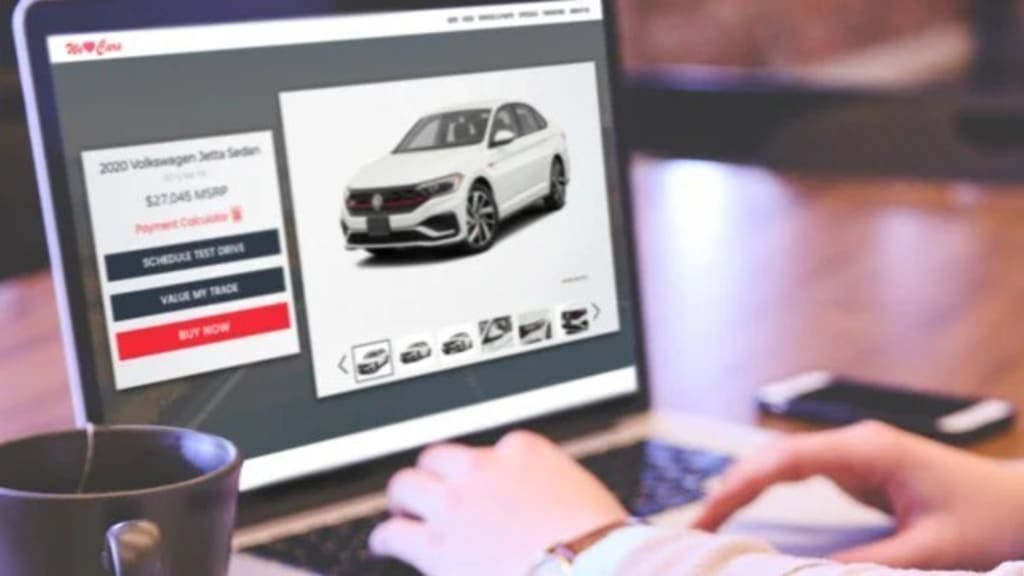
According to IMARC Group's latest research, the Saudi Arabia online car buying market was valued at USD 3.5 Billion in 2025 and is projected to reach USD 7.8 Billion by 2034, growing at a CAGR of 9.25% from 2026 to 2034. That near-doubling of market value over less than a decade reflects something more fundamental than just a retail channel shift — it signals a structural transformation in how Saudi consumers research, compare, finance, and ultimately own vehicles.
The timing makes sense. Saudi Arabia's overall vehicle market gained 3.7% in 2025, with Toyota, Hyundai, and Kia leading sales volumes. The country's internet penetration stands at 99%, mobile connections exceed 48 million (surpassing the total population), and 60% of Saudi car buyers now say they prefer online platforms for their purchase journey. Add to that a young, digitally-native population increasingly entering the workforce and making major financial decisions, and the pull toward digital car buying becomes entirely logical.
Saudi Arabia Online Car Buying Market Growth Drivers
- Rising Demand for Convenience Among Time-Pressed Buyers
Car buying in Saudi Arabia used to mean spending weekends across multiple dealerships — a process most buyers would rather skip. Online platforms have changed that calculus entirely. Buyers can now compare dozens of models, read real owner reviews, check live inventory, and lock in financing — all before leaving the house. This is particularly compelling for working professionals and younger consumers under 35, who represent a fast-growing share of the market. Platforms that add home delivery of the purchased vehicle remove the last remaining reason to visit a showroom, and that full end-to-end convenience is now a genuine buying trigger, not just a differentiator.
- Smartphone Penetration and Near-Universal Internet Access
Saudi Arabia's digital infrastructure removes every meaningful barrier to online car buying. With 99% internet penetration, 48.1 million mobile connections, and median mobile download speeds of 124.61 Mbps, the experience of browsing a full vehicle catalogue, watching walkaround videos, and completing a finance application on a smartphone is genuinely frictionless. Platforms like Syarah, YallaMotor, and Haraj have invested in mobile-first design, fast-loading listings, and Arabic-language interfaces that meet buyers exactly where they are. By 2025, 60% of Saudi car buyers stated a preference for online channels — a number that climbs further among urban consumers and residents under 40.
- Shifting Demographics and the Women Driver Effect
Two demographic shifts are quietly expanding the addressable market for online car buying. First, Saudi Arabia's population now exceeds 37 million with a median age under 30, and this cohort has grown up with e-commerce as the default purchase mode. Second, since driving restrictions for women were lifted, female licence holders are expected to surpass 3 million by end of 2025. Studies consistently show female buyers prefer online research and purchase channels — favoring fuel efficiency, affordability, and hybrid options — all of which are easier to filter and compare digitally than in a traditional showroom setting. Together, these two demographic currents are structurally expanding demand.
Saudi Arabia Online Car Buying Market Trends
- Growing Popularity of AI-Powered Digital Car Showrooms
Virtual showrooms have moved from novelty to expectation. In April 2025, a leading Saudi automotive e-commerce platform launched an AI-driven virtual showroom giving buyers access to 360-degree interior and exterior views, real-time specification comparisons, and interactive configuration tools — entirely online. Platforms like Syarah use AI valuation engines that factor in mileage, condition, and live market demand to generate pricing that buyers trust. For used cars in particular, AI-based fraud detection and vehicle history verification tools are actively reducing the trust deficit that previously kept cautious buyers in showrooms. As these features become standard, the gap in confidence between buying a car online versus in person continues to narrow rapidly.
- Rise of Integrated Financing and Home Delivery Services
The bundling of car loans and doorstep delivery into the online purchase journey is one of the most commercially significant trends in the market. Multiple Saudi online car platforms now partner directly with banks and fintech lenders to offer instant finance approvals — structured with personalised terms based on the buyer's profile and presented transparently during checkout. Several major marketplaces reported a significant uptick in sales in March 2025, directly attributing growth to this integrated model. Home delivery of purchased vehicles, once a premium add-on, is increasingly standard on leading platforms. This complete digitisation of the purchase cycle — browse, finance, insure, and receive delivery — removes every step that previously required a physical visit.
- Electric Vehicle Adoption Accelerating Online Buying Behaviour
Saudi Arabia's EV market went from 779 units sold to over 24,000 in a single year — a jump that has direct implications for online car buying. EV buyers are overwhelmingly research-intensive, spending significant time comparing range, charging times, total cost of ownership, and incentive programmes before committing. Online platforms are uniquely suited to this behaviour, offering side-by-side comparisons, eco-ratings, and calculators that physical dealerships simply cannot match at scale. Brands like Ceer Motors, Lucid, and Hyundai's EV lineup are all expanding their Saudi presence, and the government's target of 30% electric vehicles in Riyadh by 2030 — backed by 5,000 planned fast chargers — is creating sustained purchase interest that digital channels are best positioned to capture.
How Vision 2030 Is Transforming the Saudi Arabia Online Car Buying Market
Vision 2030 is creating the conditions under which online car buying almost inevitably thrives. The programme's push to triple the non-oil economy is generating new private sector employment and salary growth, particularly in Riyadh, Jeddah, and Dammam — three cities that together account for the bulk of online car purchase activity. Higher urban incomes translate directly into first-time car purchases and upgrade cycles, both of which increasingly originate online.
The government's investment in digital infrastructure — broadband expansion, 5G rollout, and the broader e-commerce regulatory framework — gives platforms the connectivity and legal certainty they need to operate confidently. The Saudi Traffic Department has enabled online ownership transfers, and the national Absher digital platform has simplified title documentation — reducing the administrative friction that previously required in-person visits. Vision 2030's commitment to localise automotive manufacturing, through ventures like Ceer Motors and Lucid's Jeddah plant, is also expanding the range of vehicles available for digital retail, giving buyers more reasons to browse and buy online. Taken together, these structural investments make the online car buying market one of the clearest direct beneficiaries of Saudi Arabia's broader digital economic transformation.
Recent News and Developments in the Saudi Arabia Online Car Buying Market
- April 2025: A leading automotive e-commerce platform in Saudi Arabia launched a fully AI-driven virtual showroom, enabling buyers to explore vehicles through 360-degree views, interactive specification comparisons, and personalised configuration tools — all without visiting a physical outlet. The launch reflects growing platform investment in immersive digital retail experiences and signals a clear move toward replicating — and in some respects improving on — the in-dealership buying experience.
- March 2025: Multiple online car marketplaces across Saudi Arabia reported significant sales increases, directly attributing growth to investments in digital infrastructure, streamlined user journeys, and integrated financing products. The data reinforces a broader market pattern: platforms that eliminate friction at checkout — through instant loan approvals, transparent pricing, and home delivery — are converting browsers into buyers at meaningfully higher rates than traditional channels.
- 2025 Market Milestone: Saudi Arabia's overall vehicle market grew 3.7% in 2025, with Toyota maintaining market leadership at 28.6% share, followed by Hyundai and Kia gaining 6.5% and 9.3% respectively year-on-year. EV sales — a key driver of online research and purchase behaviour — reached approximately 24,092 units in 2024, up from just 779 units previously, with Chinese automotive brands recording 150% year-on-year demand growth in the SUV category, fuelling new online search and purchase activity.
Note: If you require specific details, data, or insights that are not currently included in the scope of this report, we are happy to accommodate your request. As part of our customization service, we will gather and provide the additional information you need, tailored to your specific requirements. Please let us know your exact needs, and we will ensure the report is updated accordingly to meet your expectations.
About the Creator
Kishan Kumar
My name is Kishan Roy and I am a market analyst having 5 years of experience and a skilled researcher with a keen eye for consumer trends and data-driven insights.
Keep reading
More stories from Kishan Kumar and writers in Futurism and other communities.
Saudi Arabia Cryptocurrency Exchange Market: Digital Assets Adoption, Regulatory Evolution & Market Expansion
According to IMARC Group's latest research, the Saudi Arabia cryptocurrency exchange market was valued at USD 586.4 Million in 2025 and is projected to reach USD 5,417.9 Million by 2034, growing at a CAGR of 28.03% from 2026 to 2034. That near-tenfold expansion in under a decade tells you something important: this is not a niche market quietly ticking along. It is a high-velocity shift in how Saudi Arabia's financial ecosystem relates to digital assets, blockchain infrastructure, and the future of money.
By Kishan Kumarabout 18 hours ago in Futurism
The Fears of AI And How Much Fun It Can Be
ChatGPT has come a long way, as has AI in general. There are those people who are scared of it, and for understandable reasons. People fear that as technologies advance, they’ll be replaced in the workforce. Then, there are the fears that AI could evolve into something that brings us to the brink of extinction.
By Jason Morton4 days ago in Futurism
Scones
Alright, let's not fuck about - here is what you need: Ingredients: 350g self raising flour 90g butter pinch of salt tsp of baking powder 3 tbsp caster sugar (or just normal white sugar would probably be fine) 175ml milk a squeeze of lemon a drop of vanilla an egg fresh strawberries, if they're in season Extra flour Even more flour Dried fruit (I consider this completely optional and usually leave it out)
By L.C. Schäfer5 days ago in Feast


Comments
There are no comments for this story
Be the first to respond and start the conversation.