
Saudi Arabia Cloud Kitchen Market: Digital Dining, Delivery Boom & Scalable Growth
How rapid digital adoption, food delivery platform growth, and evolving consumer preferences for convenience are driving virtual brands, cost-efficient operations, and scalable business models across the Saudi Arabia cloud kitchen market.

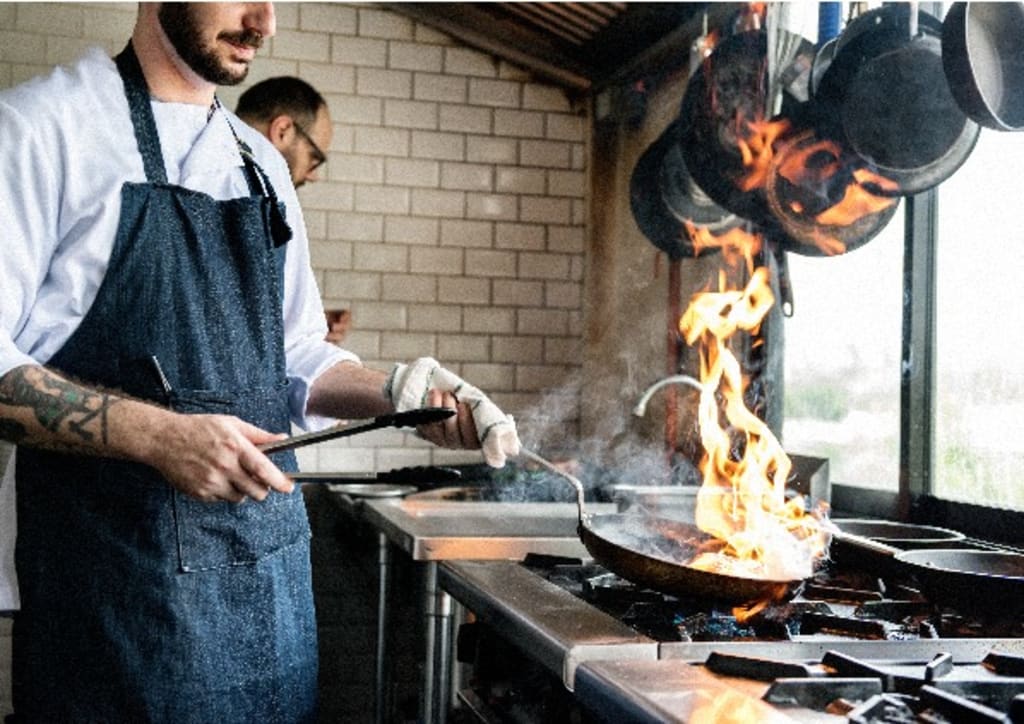
The Saudi Arabia cloud kitchen market size reached USD 1,085.7 Million in 2025. Looking forward, IMARC Group expects the market to reach USD 2,799.4 Million by 2034, exhibiting a growth rate (CAGR) of 11.10% during 2026-2034. The industry is fueled by surging demand for food delivery services, growing smartphone penetration, and expanding urban population. Online ordering, convenience, and cost-efficient business models for restaurant operators are also significant drivers boosting the Saudi Arabia cloud kitchen market growth.
Saudi Arabia's cloud kitchen market is one of the most compelling food service stories in the region right now. The Kingdom has 99% internet penetration, 92% smartphone adoption, and a median population age of just under 30 — which essentially means the country's core consumer base grew up ordering things digitally. Add to that a 92% urbanization rate and cities like Riyadh, Jeddah, and Dammam experiencing relentless population growth, and you have the perfect environment for delivery-only food businesses to thrive. Cloud kitchens — no dining rooms, no walk-in traffic, just food moving from kitchen to doorstep — are tailor-made for this market.
Saudi Arabia Cloud Kitchen Market Growth Drivers:
- Explosive Growth in Online Food Delivery Platforms
Food delivery in Saudi Arabia has moved from convenience to habit. Platforms like Talabat, HungerStation, Jahez, and Uber Eats collectively process millions of orders monthly, and the entry of Keeta — Meituan's international division — as the third-largest delivery service just four months after its Saudi Arabia launch in early 2025 shows how fast this space is moving. Riyadh alone, with nearly 8 million residents, accounts for roughly 40% of national delivery orders. For cloud kitchen operators, these platforms eliminate the need for storefront investment entirely, slashing overhead by up to 60% compared to conventional restaurant setups.
- Vision 2030, Youth Demographics, and Urbanization
Saudi Arabia's Vision 2030 has made digital entrepreneurship a national priority, with regulatory reforms simplifying business licensing and lowering barriers for food service startups significantly. The government's push to diversify beyond oil has positioned foodtech as a strategic growth sector. With over 60% of the population under 35 and urban centers expanding rapidly — Saudi Arabia's population grew from 32.2 million to 35.3 million between 2022 and 2024 — demand for quick, diverse, affordable delivered meals is structural rather than cyclical. This is a market being shaped by demographics as much as by technology.
- Cost Efficiency and Multi-Brand Scalability for Operators
The economics of cloud kitchens simply work better in Saudi Arabia's current commercial property environment. Without the overhead of a dine-in fitout, operators can launch a new food brand for a fraction of traditional restaurant capital. More importantly, a single cloud kitchen facility can host multiple virtual brands simultaneously — one kitchen running a burger concept, a pasta menu, and a healthy bowl offering at the same time — maximizing revenue per square metre. Independent cloud kitchens hold approximately 45% of the Saudi market, reflecting strong appetite from both first-time entrepreneurs and established F&B groups expanding their delivery footprint.
Saudi Arabia Cloud Kitchen Market Trends:
- Rise of Multi-Brand and Commissary Kitchen Models
Shared and commissary kitchens are rapidly gaining ground in Saudi Arabia as operators seek lower-cost entry points and greater flexibility. Startups and emerging food brands are co-locating in shared facilities to split infrastructure costs while maintaining separate brand identities. Kitopi, now a unicorn-valued regional player, has pioneered this commissary model across the Gulf, enabling dozens of restaurant brands to operate from a single kitchen hub. The multi-brand approach also allows operators to rapidly test new cuisines — Asian food commands roughly 40% of cloud kitchen orders in Saudi Arabia — and shut underperforming concepts without significant write-offs.
- AI, Automation, and Data-Driven Kitchen Operations
Technology is rapidly becoming a competitive differentiator among Saudi cloud kitchen operators. AI-powered order management systems, smart inventory tools, and automated food prep equipment are cutting order processing times and reducing food waste — a critical efficiency gain in a market where delivery speed directly affects customer ratings. Data analytics is allowing operators to predict peak demand windows, optimize staffing, and tailor menus to neighborhood-level preferences. Saudi Arabia's 35.1 million social media users are generating rich behavioral data that the sharpest operators are already using to drive repeat orders and personalized promotions at scale.
- Institutional Investment and International Brand Entry
The Saudi cloud kitchen sector is attracting serious capital. CloudKitchens — backed by a USD 400 million investment from the Public Investment Fund (PIF) — is exploring a dual listing in the UAE and Saudi Arabia, with Goldman Sachs and JPMorgan advising on the process. Meanwhile, Rebel Foods launched its first two Riyadh cloud kitchens in mid-2023, immediately targeting 60 virtual restaurant brands and rapid expansion to Jeddah, Dammam, and Khobar. These moves signal that global operators view Saudi Arabia not as an emerging market experiment but as a core, strategically important geography worth long-term investment.
Recent News and Developments in Saudi Arabia Cloud Kitchen Market:
- March 2026: Operators pilot IoT-enabled ovens and refrigerators, cutting energy use by around 15% while improving temperature control and food safety in high-volume Riyadh cloud kitchens.
- February 2026: Cloud kitchen equipment providers roll out AI-driven kitchen management dashboards, optimizing prep times and workstation loads to handle over 20% higher online order volumes.
- January 2026: Industry analysis highlights over 70% of Saudi cloud kitchen equipment demand concentrated in Riyadh, Jeddah, Dammam, reflecting dense delivery zones and advanced digital adoption.
- December 2025: Platforms increasingly bundle online branding, logistics, and data science, enabling local entrepreneurs to launch multi-brand virtual concepts from single facilities with lower fixed overheads.
- November 2025: New food-tech partnerships introduce autonomous delivery pilots and advanced route-optimization tools, significantly reducing last-mile times for cloud-kitchen-only brands across major Saudi cities.
Note: If you require specific details, data, or insights that are not currently included in the scope of this report, we are happy to accommodate your request. As part of our customization service, we will gather and provide the additional information you need, tailored to your specific requirements. Please let us know your exact needs, and we will ensure the report is updated accordingly to meet your expectations.
About the Creator
Kishan Kumar
My name is Kishan Roy and I am a market analyst having 5 years of experience and a skilled researcher with a keen eye for consumer trends and data-driven insights.
Keep reading
More stories from Kishan Kumar and writers in Futurism and other communities.
Saudi Arabia Heat Exchanger Market: Efficiency Optimization, Industrial Expansion & Energy Transition
The Saudi Arabia heat exchanger market size reached USD 187.1 Million in 2024. Looking forward, IMARC Group expects the market to reach USD 285.1 Million by 2033, exhibiting a growth rate (CAGR) of 4.79% during 2025-2033. The market is driven by rapid industrialization, expansion in oil and gas projects, rising investments in petrochemical infrastructure, and growing demand for energy-efficient thermal systems. The integration of heat exchangers in power generation, HVAC, and desalination applications further fuels consistent growth across multiple industrial sectors.
By Kishan Kumarabout 3 hours ago in Futurism
Petrochemicals Market Outlook: Industrial Demand Expansion and Chemical Manufacturing Growth Opportunities
According to IMARC Group's latest research publication, The global petrochemicals market size reached USD 675.7 Billion in 2025. Looking forward, IMARC Group expects the market to reach USD 996.1 Billion by 2034, exhibiting a growth rate (CAGR) of 4.40% during 2026-2034.
By James Whitmana day ago in Futurism




Comments
There are no comments for this story
Be the first to respond and start the conversation.