
Saudi Arabia Circuit Breaker Market: Energy Transition, Grid Modernization & Technological Advancements
How rising electricity demand, grid modernization initiatives, and renewable energy integration are driving innovation and strengthening reliability in the Saudi Arabia circuit breaker market.

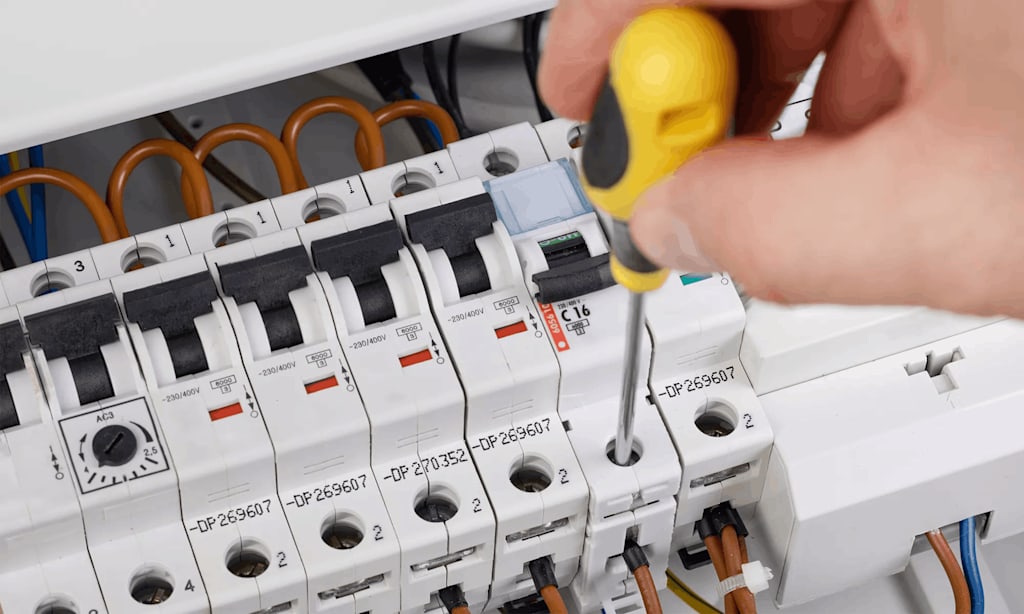
According to IMARC Group’s latest research, the Saudi Arabia circuit breaker market size reached USD 84.8 Million in 2025. Looking forward, IMARC Group expects the market to reach USD 110.0 Million by 2034, exhibiting a growth rate (CAGR) of 2.93% during 2026–2034.
The numbers tell a straightforward story: Saudi Arabia is electrifying at scale. From smart city zones and renewable energy farms to industrial parks, railways, and new residential districts, every major development underway in the Kingdom requires dependable electrical protection infrastructure. Circuit breakers sit at the heart of all of it — quietly ensuring that power flows safely, faults are isolated quickly, and the country’s ambitious modernisation programme doesn’t get derailed by electrical failures. The market’s steady trajectory reflects that structural, long-term demand.
Saudi Arabia Circuit Breaker Market Growth Drivers
- Vision 2030 and Rapid Infrastructure Expansion
Saudi Arabia’s SR 1.3 trillion (approximately USD 342.7 billion) national budget for spending, approved in November 2024, puts construction and infrastructure development front and centre. The Investment Ministry reported 3,800 new construction licences issued across the Kingdom in 2024 alone — each one representing a building, facility, or development that needs a complete electrical protection system. Projects like NEOM, Qiddiya, and the Red Sea Project aren’t just generating demand; they’re setting new benchmarks for electrical safety standards, pushing developers toward advanced vacuum and SF6 circuit breaker technologies that meet international performance specifications.
- Growing Demand for Renewable Energy Integration
Saudi Arabia’s National Renewable Energy Program (NREP) is targeting 130 GW of total capacity, including 58.7 GW from solar and 40 GW from wind. Connecting that volume of intermittent generation to a stable national grid requires high-capacity circuit protection at every integration point. Solar farms, battery energy storage systems, and wind installations all operate under variable load conditions that put real stress on grid infrastructure. Medium and high-voltage circuit breakers are essential for isolating faults instantly and keeping the grid stable — making them indispensable components as Saudi Arabia accelerates toward its 50% renewables target.
- Expansion of Industrial and Manufacturing Sectors
Non-oil sectors contributed 52% to Saudi Arabia’s real GDP in Q3 2024, according to Finance Minister Mohammed Al-Jadaan — a milestone that underlines how far economic diversification has come. The National Industrial Development and Logistics Program (NIDLP) is actively channelling investment into manufacturing, mining, and petrochemicals, all of which run high-powered machinery that demands robust electrical protection. Industrial circuit breakers designed for tough environmental conditions, high voltage loads, and continuous operation are standard requirements across these sectors. As more factories and processing facilities come online, demand for air, vacuum, and gas-insulated breakers keeps climbing.
Saudi Arabia Circuit Breaker Market Trends
- Vision 2030 and Infrastructure Expansion Driving Technology Upgrades
Large-scale construction activity isn’t just increasing the volume of circuit breaker installations — it’s raising the performance bar. Smart city developments and mixed-use megaprojects demand electrical systems that go beyond basic overcurrent protection. Automation-ready switchgear, digital monitoring interfaces, and circuit breakers compatible with building management systems are increasingly specified for premium commercial and public-sector projects. International electrical standards applied across Vision 2030 developments are effectively mandating the shift from older oil-type breakers to cleaner, more efficient vacuum and SF6 technologies, gradually upgrading the baseline across the Kingdom’s installed base.
- Growing Renewable Energy Driving Grid Modernisation
As solar and wind capacity scales to meet NREP targets, grid modernisation is accelerating in parallel. Distributed energy resources (DERs) and microgrid configurations are being deployed across industrial zones, new cities, and remote communities — each requiring dedicated fault protection and isolation systems. This decentralised generation model places new demands on circuit breakers: faster response times, higher fault current interruption ratings, and compatibility with bidirectional power flows. The integration of battery energy storage systems creates additional complexity at grid interconnection points, further reinforcing demand for advanced medium and high-voltage circuit protection technologies that can handle modern energy system architectures.
- Industrial Digitalisation and Automation Enhancing Circuit Breaker Demand
The push toward smart manufacturing and industrial automation under Vision 2030 is reshaping what industrial buyers expect from their electrical protection equipment. Digital circuit breakers with remote monitoring, predictive fault detection, and real-time load data are fast becoming the standard specification for new industrial facilities rather than a premium upgrade. Saudi manufacturers investing in Industry 4.0 capabilities need switchgear that integrates with their broader automation infrastructure. This shift toward intelligent circuit protection — enabling operators to detect potential failures before they cause outages — is adding a technology-upgrade dimension to the market that goes well beyond simple unit volume growth.
Recent News and Developments in Saudi Arabia Circuit Breaker Market
- March 2026: ABB launches AI-integrated circuit breakers for data centers and critical infrastructure, delivering real-time fault detection and enhanced grid resilience across Saudi projects.
- February 2026: Schneider Electric introduces IoT-enabled smart circuit breakers with remote monitoring via mobile apps, improving safety and operational efficiency in industrial facilities.
- January 2026: First eco-friendly SF6-free GIS circuit breakers deployed in power infrastructure, significantly cutting greenhouse gas emissions while maintaining high-voltage performance.
- December 2025: Siemens expands digital substation automation with advanced circuit breakers featuring automated monitoring and fault isolation for renewable energy integration.
- October 2025: Local manufacturers roll out high-sensitivity miniature circuit breakers with enhanced overload protection, boosting reliability in residential and commercial smart buildings.
Note: If you require specific details, data, or insights that are not currently included in the scope of this report, we are happy to accommodate your request. As part of our customization service, we will gather and provide the additional information you need, tailored to your specific requirements. Please let us know your exact needs, and we will ensure the report is updated accordingly to meet your expectations.
About the Creator
Kishan Kumar
My name is Kishan Roy and I am a market analyst having 5 years of experience and a skilled researcher with a keen eye for consumer trends and data-driven insights.
Keep reading
More stories from Kishan Kumar and writers in Futurism and other communities.
Real Estate Market in Saudi Arabia: Vision 2030, Smart Cities & Infrastructure Growth
According to IMARC Group’s latest research, the Saudi Arabia real estate market size was valued at USD 77.2 Billion in 2025. Looking forward, IMARC Group estimates the market to reach USD 141.6 Billion by 2034, exhibiting a CAGR of 6.73% during 2026–2034.
By Kishan Kumar3 days ago in Futurism
The Fears of AI And How Much Fun It Can Be
ChatGPT has come a long way, as has AI in general. There are those people who are scared of it, and for understandable reasons. People fear that as technologies advance, they’ll be replaced in the workforce. Then, there are the fears that AI could evolve into something that brings us to the brink of extinction.
By Jason Morton3 days ago in Futurism
Sea Salt Market Significant Growth at 3.7%
Overview The global sea salt market is poised for steady growth over the next decade, driven by rising demand across food, wellness, and industrial applications. The Global Sea Salt Market is expected to be worth around USD 28.0 billion by 2034, up from USD 19.5 billion in 2024, and is projected to grow at a CAGR of 3.7% from 2025 to 2034. Increasing consumer preference for natural, mineral-rich salts and expanding use in gourmet and specialty products are expected to support this consistent market expansion worldwide.
By Hayden Kulasabout 11 hours ago in Futurism


Comments
There are no comments for this story
Be the first to respond and start the conversation.