
Hi-Tech Medical Devices Market Outlook: Advanced Healthcare Technologies and Precision Treatment Growth Opportunities
The hi-tech medical devices market is experiencing rapid growth, driven by continuous advancements in healthcare technology and increasing demand for precise, efficient, and minimally invasive medical solutions.

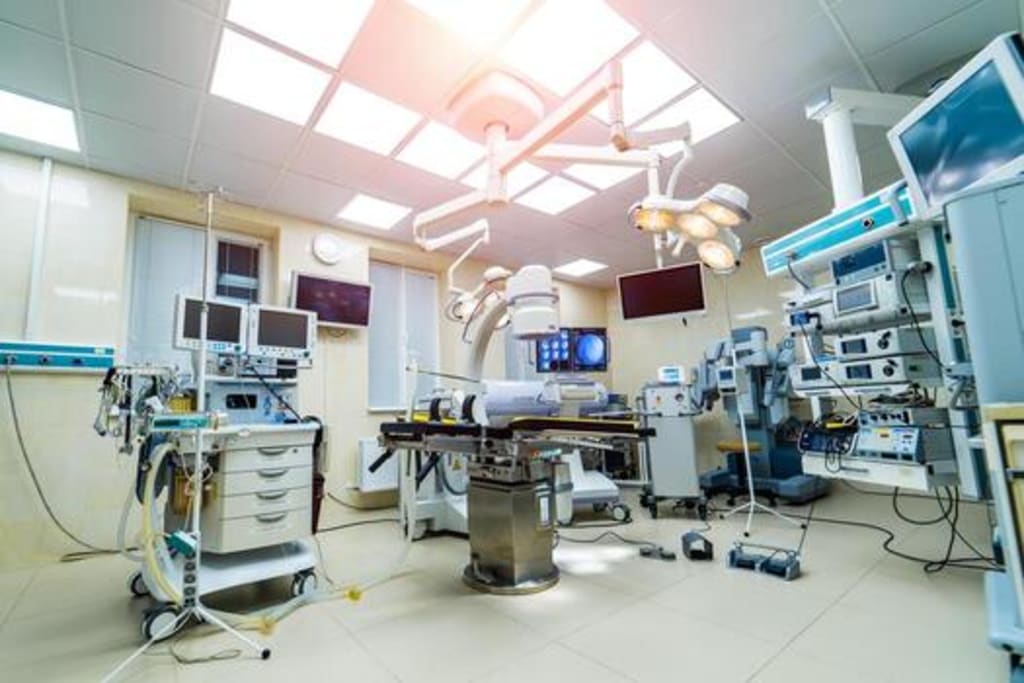
According to IMARC Group's latest research publication, The global hi-tech medical devices market size reached USD 140.2 Billion in 2024. Looking forward, IMARC Group expects the market to reach USD 1,122.8 Billion by 2033, exhibiting a growth rate (CAGR) of 23.41% during 2025-2033.
How AI is Reshaping the Future of Hi-Tech Medical Devices Market
- AI-Powered Diagnostic Imaging: Machine learning tools analyze thousands of medical scans in seconds. The FDA had cleared around 950 AI/ML medical devices by mid-2024, with roughly 100 new approvals added annually across clinical specialties.
- Predictive Patient Monitoring: AI-integrated wearables like Philips' ePatch with Cardiologs detect arrhythmias over 14-day windows across 14 hospitals, enabling proactive cardiac intervention without repeat clinic visits.
- Smart Remote Care Enablement: OMRON Healthcare's cloud-integrated platform, launched in September 2025, links blood pressure wearables with telehealth services directly, cutting unnecessary in-person consultations for chronic patients.
Hi-Tech Medical Devices Industry Overview
The hi-tech medical devices sector is growing fast as governments and health systems push for smarter, more accessible care. India's Union government launched a INR 500 crore Scheme for Strengthening the Medical Device Industry in November 2024, targeting manufacturing infrastructure, component development, and workforce skills. In the U.S., the FDA's 2024 'Home as a Health Care Hub' initiative supports developers of home-based diagnostic and monitoring tools, accelerating the shift from hospital-centric care toward connected, consumer-grade health management at scale.
Hi-Tech Medical Devices Market Trends & Drivers
AI and IoT are transforming how devices work in real-world settings. By late 2024, all 107 stroke centers across England were using AI imaging tools like Brainomix 360 and RapidAI for near-instant CT analysis, measurably improving door-to-treatment times. Apple's watchOS 11, launched June 2024, added advanced sensor-based health algorithms, while Intuitive Surgical's da Vinci 5—FDA-cleared in March 2024—brought new visualization and precision to minimally invasive surgery, with full market launch expected through 2025.
With over 1 billion people globally living with obesity as of 2022 (WHO), and cardiovascular disease causing 17.9 million deaths annually, the demand for continuous monitoring has never been stronger. Dexcom's November 2024 USD 75 million investment in Oura to combine continuous glucose monitoring with smart-ring lifestyle analytics shows how the market is moving toward integrated, real-time chronic care management beyond hospital settings.
Wearable diagnostic devices now account for around 63.78% of the wearable medical devices segment, driven by demand for non-invasive, home-friendly tools. Stanford Medicine's April 2025 partnership with Samsung to refine Galaxy Watch sleep apnea detection, and Samsung's earlier February 2024 FDA De Novo clearance for the same feature, show how consumer wearables are crossing into clinical-grade territory—expanding market reach while reducing reliance on in-hospital monitoring infrastructure.
Leading Companies Operating in the Global Hi-Tech Medical Devices Industry
- Apple Inc.
- Fitbit Inc. (Google LLC)
- Garmin Ltd.
- Huawei Technologies Co. Ltd.
- LifeSense Group
- Mevofit
- OMRON Healthcare Inc. (OMRON Corporation)
- Samsung Group
- Sotera Inc.
- Virtual Realities LLC
- Xiaomi Corporation
Hi-Tech Medical Devices Market Report Segmentation
By Product:
- Smartphones
- Tablets
- Smart watches
- Fitness trackers
- Virtual reality sets
- Others
Smartphones dominate the market as the largest segment, with a 52.4% market share. Their expanding health monitoring capabilities, high-resolution cameras for medical imaging, and seamless compatibility with wearable devices make them the go-to platform for telemedicine and remote patient management.
By Site:
- Handheld
- Headband
- Strap
- Clip, Bracelet, and Shoe Sensors
Handheld devices hold the largest share accounting for 62.6% of market revenue, driven by their portability, real-time diagnostic capabilities, and broad applicability in point-of-care settings across hospitals, clinics, and home environments.
By Application:
- Sports and fitness
- Remote patient monitoring
- Home healthcare
Sports and fitness dominate the market as the leading application segment, fueled by rising consumer health awareness and widespread adoption of fitness trackers, smartwatches, and biometric monitoring devices among active populations globally.
Regional Insights:
- North America (United States, Canada)
- Asia Pacific (China, Japan, India, South Korea, Australia, Indonesia, Others)
- Europe (Germany, France, United Kingdom, Italy, Spain, Others)
- Latin America (Brazil, Mexico, Others)
- Middle East and Africa
North America exhibits a clear dominance in the hi-tech medical devices market due to the presence of an advanced healthcare system, strong R&D investment, and a proactive regulatory environment through the FDA that accelerates commercialization of cutting-edge devices.
Recent News and Developments in Hi-Tech Medical Devices Market
- July 2025: Johnson & Johnson MedTech launched the VARIPULSE Platform, the first Pulsed Field Ablation (PFA) system fully integrated with the CARTO 3 electroanatomical mapping system, advancing precision treatment for cardiac rhythm disorders.
- July 2025: Samsung Electronics acquired Xealth to integrate wearable wellness data directly into clinical workflows, bridging the gap between consumer health tracking and hospital-grade care delivery systems.
- September 2025: OMRON Healthcare launched a cloud-integrated remote monitoring platform linking blood pressure and cardiac wearables with telehealth services, enabling continuous virtual cardiac care for at-risk patients.
- April 2025: Epiminder received FDA authorization for the Minder implantable continuous EEG monitor, enabling months-long seizure-pattern tracking for drug-resistant epilepsy patients—a major milestone in long-term neurological monitoring.
- November 2024: Dexcom invested USD 75 million in Oura to integrate continuous glucose monitoring with smart-ring lifestyle analytics, forming a holistic metabolic health platform for diabetes management and preventive wellness.
Note: If you require specific details, data, or insights that are not currently included in the scope of this report, we are happy to accommodate your request. As part of our customization service, we will gather and provide the additional information you need, tailored to your specific requirements. Please let us know your exact needs, and we will ensure the report is updated accordingly to meet your expectations.
About the Creator
Michael Richard
Michael Richard is a Market Research Expert specializing in market intelligence, competitive analysis, and data-driven insights. He helps organizations understand trends and emerging opportunities through in-depth research.
Keep reading
More stories from Michael Richard and writers in Futurism and other communities.
Dairy Protein Market Outlook: Nutritional Demand and Functional Food Growth Opportunities
According to IMARC Group's latest research publication, The global dairy protein market size reached USD 15.9 Billion in 2025. Looking forward, IMARC Group expects the market to reach USD 22.3 Billion by 2034, exhibiting a growth rate (CAGR) of 3.72% during 2026-2034.
By Michael Richard5 days ago in Futurism
The Fears of AI And How Much Fun It Can Be
ChatGPT has come a long way, as has AI in general. There are those people who are scared of it, and for understandable reasons. People fear that as technologies advance, they’ll be replaced in the workforce. Then, there are the fears that AI could evolve into something that brings us to the brink of extinction.
By Jason Morton4 days ago in Futurism
Japan Insulin Pumps Market: Size, Trends, and Growth Outlook
Market Overview Insulin pumps are playing an increasingly important role in diabetes management across Japan, offering patients a more precise, flexible, and convenient alternative to traditional insulin injections. These compact, wearable devices deliver insulin continuously, closely mimicking the function of a healthy pancreas and helping maintain stable blood glucose levels.
By Emma Miller3 days ago in Futurism
Why Wicked: For Good is Undeservingly the ‘worse movie’
So… off the bat, we’re about to delve into something ridiculous. Just so we’re clear on that, ok? The first thing anyone that knows a thing about these dual movies… knows… is the original movie and sequel were shot together.
By Gabriel Shames6 days ago in Humans



Comments
There are no comments for this story
Be the first to respond and start the conversation.