
From Prompt to Perception: What Art Central 2026 Revealed About the Future of AI
Chance AI x Art Central 2026: Redefining the contemporary art experience with the world's first Visual Agent. We didn't just showcase a product; we proved that the next era of AI isn't about typing—it's about intuitively seeing the world.
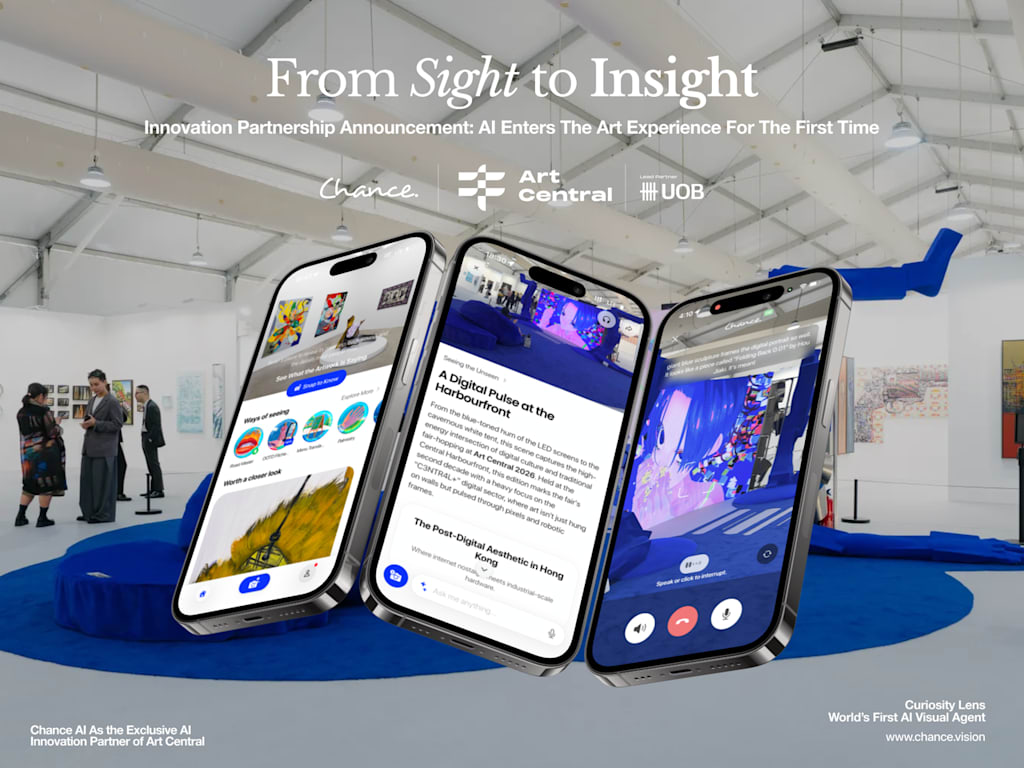
A Real-World Test, Not a Showcase
From March 25-29, Art Central Hong Kong 2026 became something more than an art fair.
It became the first large-scale environment where AI stepped out of controlled demos and into the complexity of the real world.
As the Exclusive AI Innovation Partner, Chance AI wasn’t there to present a product. It was there to test a shift.
Across a fair of over 100,000 visitors, filled with subjective interpretation, layered meaning, and unpredictable human behavior, one question quietly played out:
What happens when AI stops waiting to be asked-and starts seeing with you?
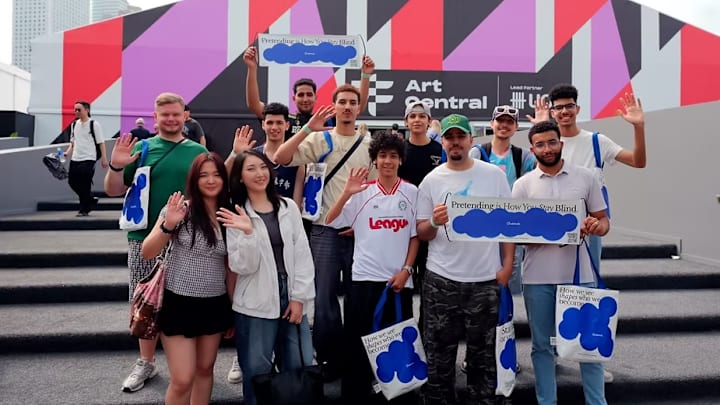
The Shift Wasn’t Technical. It Was Behavioral.
What emerged wasn’t just usage.It was instinct.
Visitors didn’t pause to “figure out how to use AI.”They simply pointed, looked, and followed their curiosity.
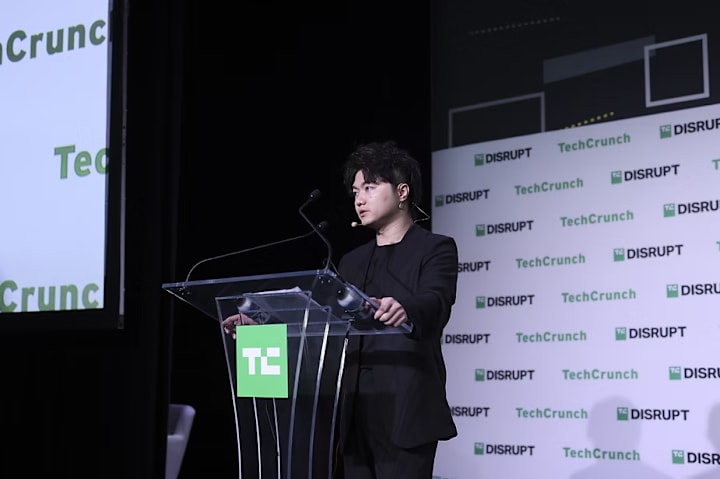
As Dr. Xi Zeng puts it:
“AI is shifting from answering questions to understanding the world we’re looking at.”
This wasn’t a feature being learned.It was a behavior revealing itself.
For years, interaction with AI has been shaped by prompts that require to be structured, intentional and effortful.But at Art Central, that layer disappeared.
“The input box is no longer the only interface - vision is becoming the next entry point for AI.”
People didn’t ask better questions.They stopped asking altogether.
Seeing Is the Native Interface
In a space like Art Central, this shift becomes obvious.
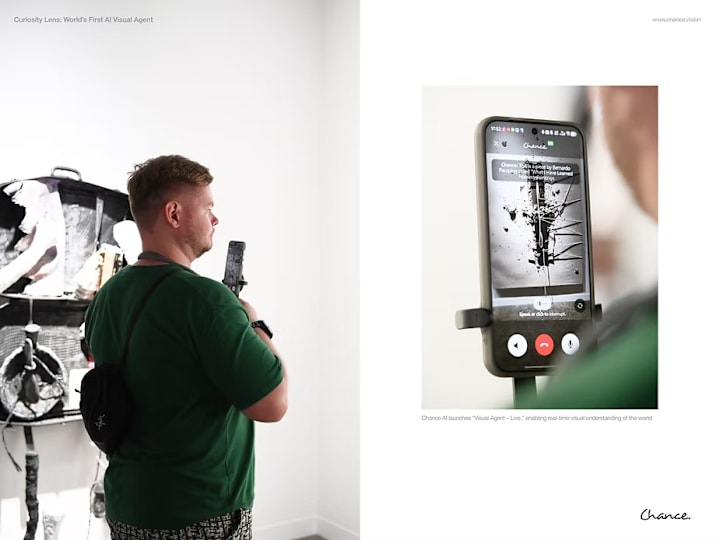
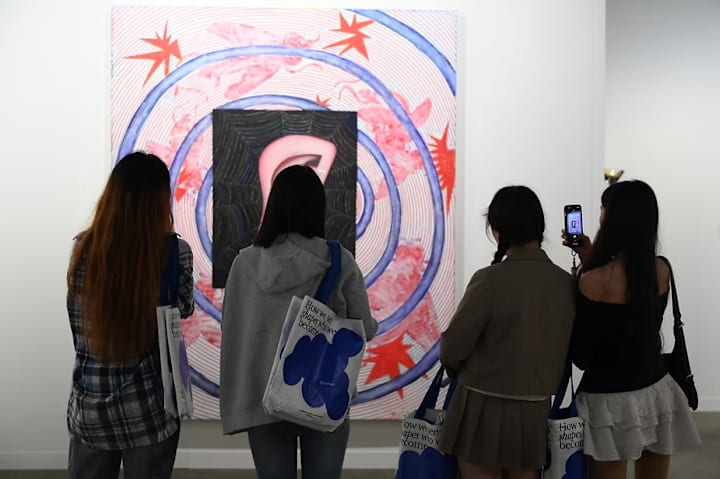
You don’t walk into an art fair and start typing.You look. You feel. You interpret.
And that’s precisely where traditional AI breaks.
“Vision is the most natural operating system for humans.”
The significance of this is easy to miss, but hard to ignore once experienced.
AI has long been optimized for language.But human understanding doesn’t begin there.
“We don’t start by asking - we start by seeing.”
Art Central didn’t teach people a new behavior. It revealed the one they already had.
From Visual Search to Visual Reasoning
What played out on the ground was not visual search in a new form.It was something fundamentally different.
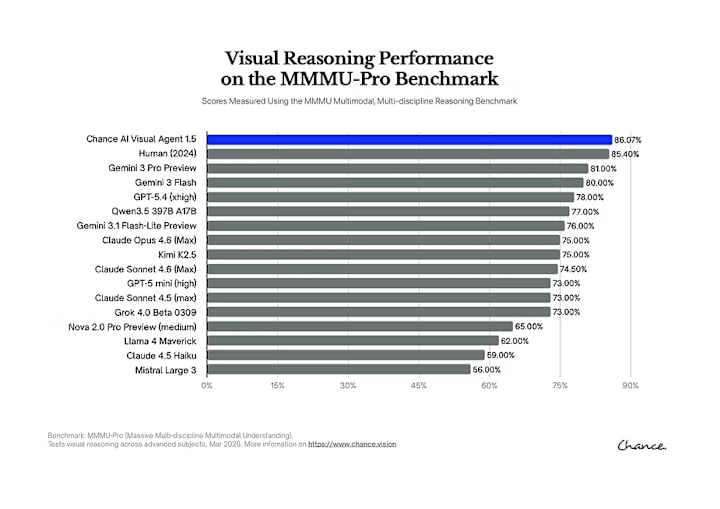
“This isn’t visual search - it’s visual reasoning.”
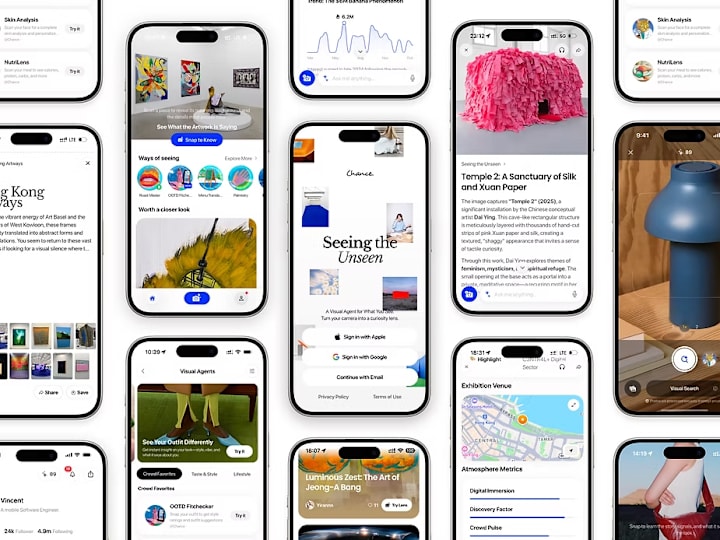
Instead of returning information after a query, Chance AI participated in the act of looking itself.
“AI no longer answers after you look - it starts to participate while you’re looking.”
That distinction is subtle, but critical.
It marks the difference between AI as a tool you consultand AI as something that moves with your perception.
In a setting as dense and interpretive as Art Central, that difference becomes visible almost immediately.
Why This Matters: Taste Over Information
If there was one insight that stood out across the fair, it wasn’t about access to knowledge.
It was about judgment.
“AI makes information infinite — but judgment is becoming scarce.”
In a space where every artwork carries multiple interpretations, the challenge isn’t finding answers.
It’s recognizing what matters.
“The future isn’t about what you know, but what you can recognize as valuable.”
This is where Chance AI positions itself differently.
Not as a system that tells you what something is. But as one that helps you understand how to see it.
“We don’t give answers — we help people form their own judgment.”
At Art Central, this wasn’t theoretical.It was observable in how long people stayed, what they noticed, and how their attention evolved.
A Glimpse of What Comes Next
Art Central 2026 offered something rare.
Not a prediction of the future but a live instance of it.
“If search engines organized the internet, visual intelligence will organize the real world.”
This wasn’t about adding another feature to AI.
“This isn’t the next feature of AI - it’s the next interface.”
And like all interface shifts, it doesn’t announce itself loudly.
It simply makes the previous way feel outdated.
Beyond the Fair
What happened at Art Central doesn’t stay within the art world.
It signals something broader.
A move away from interaction that requires translation into language,toward interaction that begins directly from perception.
Or more simply:
From prompt to perception.
And once you see it that way, it becomes hard to imagine going back.
About the Creator
Keep reading
More stories from Maheep Makkar and writers in Futurism and other communities.
Can Chance AI Truly Understand Art? Exploring Vision-Language Models (VLM) for Art
Art has always been a deeply human experience shaped by emotion, culture, and personal perspective. Traditionally, understanding art meant spending time observing, reading, and reflecting. But today, with the rise of Vision-Language Models (VLMs), that experience is evolving. Tools like Chance AI are opening new ways to engage with art, making it more accessible, interactive, and meaningful for everyone.
By Maheep Makkar4 days ago in Futurism
The Fears of AI And How Much Fun It Can Be
ChatGPT has come a long way, as has AI in general. There are those people who are scared of it, and for understandable reasons. People fear that as technologies advance, they’ll be replaced in the workforce. Then, there are the fears that AI could evolve into something that brings us to the brink of extinction.
By Jason Morton4 days ago in Futurism
Japan Office Real Estate Market: Hybrid Work Trends, Urban Demand & Space Optimization
Japan's office real estate market is undergoing a profound shift, propelled by hybrid work adoption, acute Grade-A shortages, and aggressive ESG mandates. Central to this evolution is the rise of smart, flexible workspaces—tech-infused environments blending wellness, sustainability, and adaptive design to meet the demands of a post-pandemic, tech-driven economy. With prime Tokyo vacancy rates hovering at historic lows of 2.8% (CBRE Q1 2026), developers are racing to deliver amenity-rich towers that prioritize human-centric features like biophilic elements and AI-optimized energy systems, ensuring offices remain vital hubs for innovation amid demographic pressures and global investment inflows.
By Kishan Kumar3 days ago in Futurism


Comments
There are no comments for this story
Be the first to respond and start the conversation.