
AI in Procurement Market to hit USD 22.6 Billion by 2033
Increasing adoption of AI-driven spend analytics and supplier management solutions is improving procurement efficiency and decision-making across enterprises


The global AI in procurement market is projected to reach approximately USD 22.6 billion by 2033, rising from USD 1.9 billion in 2023, reflecting a strong compound annual growth rate of 28.1% during the forecast period from 2024 to 2033. This growth is being driven by the increasing need for automation, cost optimization, and data-driven decision-making in procurement processes. In 2023, North America held a dominant market position, capturing more than 38% share and generating around USD 0.7 billion in revenue, supported by early adoption of AI technologies and advanced enterprise systems.
AI is transforming procurement by enabling intelligent sourcing, supplier analysis, contract management, and spend optimization. Organizations are leveraging AI tools to automate repetitive tasks, reduce procurement cycle times, and improve accuracy in decision-making. The increasing complexity of global supply chains and supplier networks is further driving the adoption of AI-powered procurement solutions. As businesses focus on efficiency and transparency, AI is becoming a critical component of modern procurement strategies.
Key Takeaways
- The market is expected to grow from USD 1.9 billion in 2023 to USD 22.6 billion by 2033, reflecting a strong 28.1% CAGR.
- North America dominated in 2023 with over 38% share, generating approximately USD 0.7 billion in revenue.
- The software segment led the market, accounting for 69.5% share, driven by demand for AI-enabled procurement platforms.
- Cloud-based deployment held a dominant position with 72% share, supported by scalability and ease of integration.
- Machine Learning (ML) accounted for more than 43.4% of the market, enabling improved analytics and decision-making.
- Retail and e-commerce emerged as the leading application sector, capturing over 23.1% share due to high procurement volumes and cost optimization needs.
How AI in Procurement is Reshaping the Future?
AI is reshaping procurement by enabling automated and intelligent sourcing processes. AI systems analyze supplier data, pricing trends, and market conditions to identify optimal sourcing strategies. This reduces procurement cycle time and improves decision accuracy. As a result, organizations can achieve better cost efficiency and supplier performance.
In addition, AI is enhancing supplier relationship management through predictive insights and risk assessment. AI tools monitor supplier performance, detect potential risks, and recommend mitigation strategies. This improves supply chain resilience and ensures continuity. Over time, AI is enabling more strategic and proactive procurement functions.
Scope and Research Methodology
The scope of the AI in procurement market includes solutions that use artificial intelligence technologies such as machine learning, natural language processing, and predictive analytics to optimize procurement processes. It covers applications such as supplier management, contract analysis, spend analytics, and sourcing optimization. The analysis includes deployment across industries such as retail, manufacturing, healthcare, and logistics. Both cloud-based and on-premises solutions are considered.
The research methodology is based on the evaluation of procurement trends, AI adoption patterns, and enterprise digital transformation initiatives. Publicly available data and observed implementation of AI solutions have been analyzed. Data validation is supported by usage trends and technological advancements. A structured approach ensures consistency and reliability.
Key Forces Driving Market Expansion
One of the primary forces driving market growth is the increasing demand for cost reduction and operational efficiency in procurement. Organizations are focusing on optimizing procurement processes and reducing unnecessary spending. AI enables automation and data-driven insights that improve efficiency. This is encouraging adoption.
Another key force is the growing complexity of supplier networks and global supply chains. Managing multiple suppliers and contracts requires advanced tools for analysis and monitoring. AI provides capabilities for real-time insights and risk management. This is contributing to market growth.
Emerging Trends Analysis
A major trend is the adoption of AI-powered procurement platforms with integrated analytics and automation capabilities. These platforms provide end-to-end visibility into procurement processes. This improves decision-making and operational efficiency. The trend is gaining traction across enterprises.
Another emerging trend is the use of AI for contract intelligence and compliance management. AI tools analyze contract data to identify risks, ensure compliance, and optimize terms. This enhances transparency and reduces legal risks. The trend is expanding across industries.
Driver Analysis
A key driver is the dominance of AI-driven software solutions, which accounted for 69.5% of the market share. These solutions enable automation, analytics, and improved procurement workflows. This is driving market growth.
Another driver is the strong adoption of machine learning technologies, which held more than 43.4% share. ML improves forecasting, supplier analysis, and decision-making processes. This is encouraging widespread adoption.
Restraint Analysis
One of the major restraints is the high cost of implementing AI solutions in procurement systems. Advanced platforms require investment in infrastructure and expertise. This can limit adoption among smaller organizations.
Another restraint is concerns related to data security and privacy. Procurement systems handle sensitive supplier and financial data. Ensuring secure data management is critical. These concerns may impact adoption.
Opportunity Analysis
A significant opportunity lies in the expansion of AI adoption in retail and e-commerce, which accounted for over 23.1% of the market share. These sectors require efficient procurement systems to manage high transaction volumes. AI provides tools to optimize processes and reduce costs.
Another opportunity is the growth of cloud-based procurement solutions, which held 72% share. Cloud platforms enable scalability, flexibility, and easier integration with existing systems. This supports broader adoption.
Challenge Analysis
A key challenge is integrating AI solutions with existing procurement systems and legacy infrastructure. Many organizations face difficulties in adopting new technologies. This requires investment and technical expertise.
Another challenge is the shortage of skilled professionals with expertise in AI and procurement processes. Implementing and managing AI systems requires specialized knowledge. This can impact adoption and effectiveness.
Competitive Analysis
The competitive landscape is characterized by increasing investment in AI-driven procurement platforms and solutions. Companies are focusing on developing advanced analytics tools and automation capabilities to enhance procurement efficiency. Innovation in machine learning and cloud-based platforms is a key differentiator. This is intensifying competition in the market.
In addition, organizations are engaging in partnerships and collaborations to expand their capabilities and market reach. The focus is on delivering scalable and secure solutions that meet evolving business needs. Competitive strategies also include improving user experience and integration capabilities. This is shaping a dynamic competitive environment.
Conclusion
The AI in procurement market is experiencing rapid growth, driven by the increasing demand for automation, efficiency, and data-driven decision-making. Organizations are leveraging AI technologies to optimize procurement processes, improve supplier management, and reduce costs. The integration of advanced analytics and automation is transforming procurement functions. This is creating new opportunities for growth.
Despite challenges related to cost, data security, and system integration, the overall outlook remains highly positive. Continued advancements in AI technologies and increasing adoption across industries are expected to support long-term growth. As procurement systems evolve, AI will play a central role in shaping the future of enterprise operations. The market is positioned for strong expansion with significant impact on global procurement practices.
About the Creator
Roberto Crum
I am blogger, digital marketing pro since 4.5 years and writes for Market.us. Computer Engineer by profession. I love to find new ideas that improve websites' SEO. He enjoys sharing knowledge and information about many topics.
Keep reading
More stories from Roberto Crum and writers in Futurism and other communities.
Generative AI In Robotics Market to hit USD 23,343.7 Million by 2033
The global generative AI in robotics market is projected to reach approximately USD 23,343.7 million by 2033, rising from USD 1,161.0 million in 2023, reflecting a strong compound annual growth rate of 35% during the forecast period from 2024 to 2033.
By Roberto Cruma day ago in Futurism
The Fears of AI And How Much Fun It Can Be
ChatGPT has come a long way, as has AI in general. There are those people who are scared of it, and for understandable reasons. People fear that as technologies advance, they’ll be replaced in the workforce. Then, there are the fears that AI could evolve into something that brings us to the brink of extinction.
By Jason Morton4 days ago in Futurism
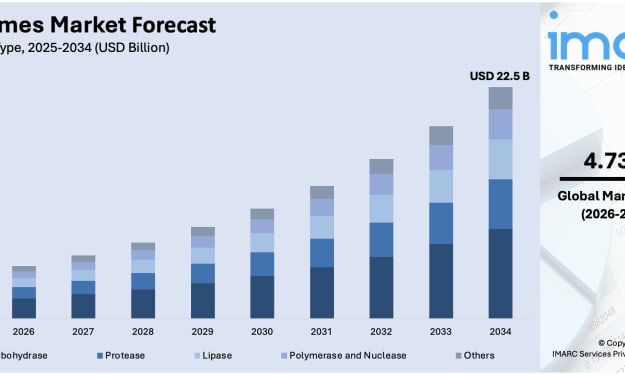
Enzymes Market Trends: Biofuel Production Demand, Renewable Energy Push & Industry Forecast to 2034
Rising demand for sustainable industrial processes, advancements in biotechnology, and the increasing integration of biocatalysts in food and pharmaceutical sectors are driving the global enzymes demand. Supported by green chemistry initiatives, protein engineering, and expanding applications in biofuels and waste management, the market is witnessing significant transformation. According to IMARC Group’s latest data, the global enzymes market size was valued at USD 14.7 Billion in 2025. Looking forward, IMARC Group estimates the market to reach USD 22.5 Billion by 2034, exhibiting a CAGR of 4.73% from 2026-2034.
By Andrew Sullivan4 days ago in Futurism



Comments
There are no comments for this story
Be the first to respond and start the conversation.