
The Secret I Hid for Years Finally Came Out
A Story About Silence, Survival, and the Courage to Finally Be Seen

For most of my life, I was known as the “strong one.”
The reliable friend.
The responsible sibling.
The quiet overachiever who never complained.
People admired how calm I seemed during chaos. They said I was mature beyond my years. They said I had everything figured out.
What they didn’t know was that I had built my entire identity around hiding one secret.
And secrets, no matter how carefully buried, have a way of growing roots.
I was thirteen when the secret first took shape.
It started small — just a harmless lie to avoid embarrassment. A teacher asked why my grades had suddenly dropped. I shrugged and said I’d been “busy.” My friends asked why I never invited them over. I joked that my house was “too boring.”
The truth was heavier than I could admit.
At home, things weren’t stable. Arguments echoed through thin walls. Some nights dinner was silent. Some nights it was loud. I learned early how to read moods the way other kids read comic books. I knew when to stay invisible.
I became an expert at smiling in public.
At school, I performed the role of the unbothered student. I laughed at jokes. I helped classmates with homework. I volunteered for group projects. If I was useful enough, maybe no one would look closely enough to notice the cracks.
But at night, when the house finally grew quiet, the weight of pretending settled on my chest.
I felt alone — not because people weren’t around, but because no one knew the real story.
And I was terrified of what would happen if they did.
As years passed, the secret changed shape.
It wasn’t just about my home anymore. It became about my feelings — the anxiety that twisted my stomach before presentations, the panic that hit me when my phone buzzed unexpectedly, the exhaustion of constantly being “fine.”
I told myself everyone felt this way.
I told myself I was just dramatic.
I told myself I should be grateful because other people had it worse.
Gratitude became another mask.
The strange thing about hiding is that you get good at it. Too good.
You learn which topics to avoid.
You perfect your “I’m just tired” voice.
You redirect conversations like a professional magician.
And every time someone said, “You’re so strong,” I felt both proud and fraudulent.
Because strength wasn’t the right word.
I was surviving.
The secret almost slipped out the first time during my second year of college.
I had stayed up all night studying. My hands shook as I tried to hold a pen during an exam. My chest felt tight, and the room spun slightly. After class, my friend Maya caught up with me.
“Are you okay?” she asked.
I gave my usual answer. “Yeah, just didn’t sleep much.”
She didn’t look convinced.
“You don’t have to be okay all the time,” she said quietly.
The words hit something fragile inside me. For a second, I considered telling her everything — about the constant pressure, the fear of failing, the chaos I’d grown up with, the way my mind never seemed to rest.
But the habit of silence was stronger.
I smiled. Changed the subject. Walked away.
That night, I cried harder than I had in years — not because things were terrible, but because I realized I had pushed away the first real opportunity to be honest.
The secret was isolating me more than it was protecting me.
The breaking point came unexpectedly.
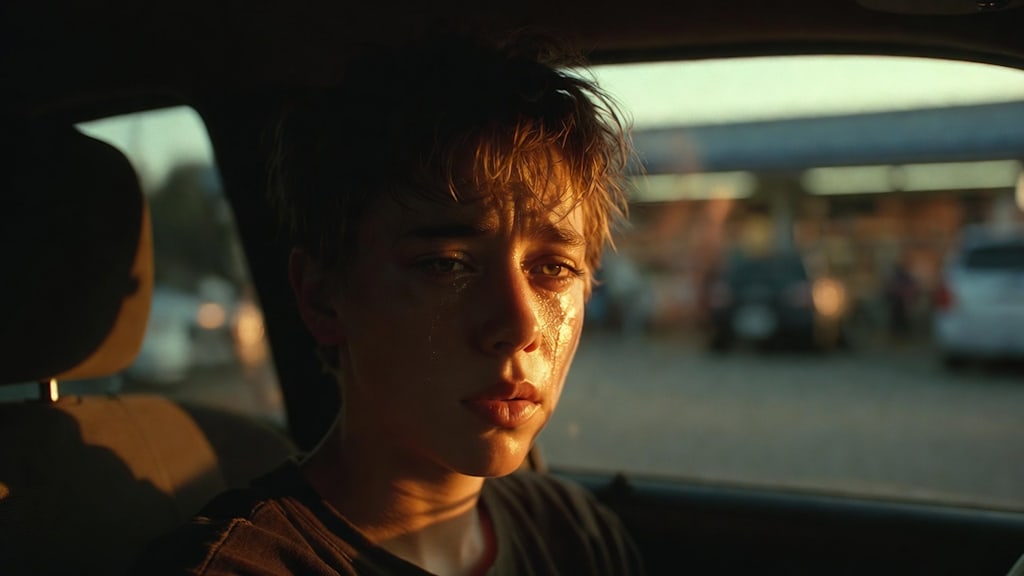
It was a regular afternoon. Nothing dramatic. I was sitting in my car in a grocery store parking lot, staring at the steering wheel. I had planned to run errands, answer emails, call my mom back.
Instead, I couldn’t move.
Tears came without warning — silent at first, then uncontrollable. The kind that make your shoulders shake.
I wasn’t crying about one specific thing.
I was crying because I was tired.
Tired of pretending.
Tired of minimizing my feelings.
Tired of carrying everything alone.
For the first time, I said the truth out loud — even though no one else was there to hear it.
“I’m not okay.”
The words felt foreign. Dangerous.
But also relieving.
That evening, I called Maya.
My voice trembled. “Can we talk?”
There was no dramatic confession. No perfectly structured explanation. Just messy honesty.
I told her about my childhood — about the instability I’d never described. I told her how anxiety had followed me like a shadow. I admitted that I didn’t know how to ask for help because I had spent years convincing myself I didn’t need it.
There was a long pause after I finished.
Then she said something I’ll never forget.
“I wish you had told me sooner. Not because I’m mad — but because you deserved support this whole time.”
Deserved.
The word cracked something open inside me.
I had always seen vulnerability as weakness. As burden. As something to hide so others wouldn’t see me differently.
But in that moment, nothing about her tone suggested disappointment.
Only care.
Telling one person made telling others easier.
Not everyone reacted perfectly. Some didn’t know what to say. Some tried to fix things too quickly. A few brushed it off.
But something had shifted inside me.
The secret no longer owned me.
I started therapy a few months later. Walking into that office for the first time felt like stepping into bright light after years in a dim room. Uncomfortable. Exposing.
Necessary.
For the first time, I explored how constantly being “the strong one” had shaped me. How chaos had taught me hyper-independence. How silence had become survival.
And slowly, I learned that strength doesn’t mean carrying everything alone.
It means knowing when to put things down.
When the secret finally came out fully — when my family and closest friends understood the real story — I expected shame.
Instead, I felt lighter.
Not because my past disappeared.
Not because anxiety magically vanished.
Not because life became perfect.
But because I was no longer performing.
I could say, “I’m overwhelmed,” without apologizing.
I could admit, “I need help,” without feeling defective.
I could exist without the exhausting pressure of perfection.
The irony is that the thing I feared most — being seen as fragile — made my relationships stronger.
People trusted me more, not less.
They opened up in return.
My honesty gave them permission to drop their masks too.
Looking back, I understand why I hid for so long.
As a teenager, silence felt safe. Control felt necessary. If I kept everything contained, nothing could spiral further.
But secrets don’t just protect you.
They isolate you.
They convince you that your pain is unique and therefore shameful.
They whisper that you are alone.
And they are wrong.
Today, I’m still learning.
I still have moments where my instinct is to say “I’m fine” even when I’m not. Old habits don’t disappear overnight.
But now, I pause.
I breathe.
And I choose honesty more often than I choose hiding.
The secret I hid for years didn’t destroy me when it came out.
It freed me.
If you’re carrying something heavy — something you’ve convinced yourself is too messy, too complicated, too embarrassing to share — I hope you know this:
You don’t have to reveal everything to everyone.
But you deserve at least one safe space where you can be real.
You deserve support.
You deserve understanding.
And you deserve to live a life that isn’t built on pretending.
Because sometimes, the bravest thing you can say isn’t “I’m strong.”
It’s “I need help.”
And that’s not weakness.
That’s the beginning of healing.
About the Creator
Keep reading
More stories from imtiazalam and writers in Fiction and other communities.
Earrings
April truly is the cruelest month, especially in Augusta during the first full week, breeding dogwoods and azaleas into dreams of a green jacket on Sunday. I won’t go into it about badges; suffice to say my family received. I was dating some loser the year I was twenty-two or -three, and I was taking him to the Par 3. At least I was until the night before.
By Harper Lewisabout 13 hours ago in Writers



Comments
There are no comments for this story
Be the first to respond and start the conversation.