
How the Protestant Work Ethic Rewired Global Capitalism
From Religious Discipline to the Rise of Modern Wealth, Business, and Endless Work Culture

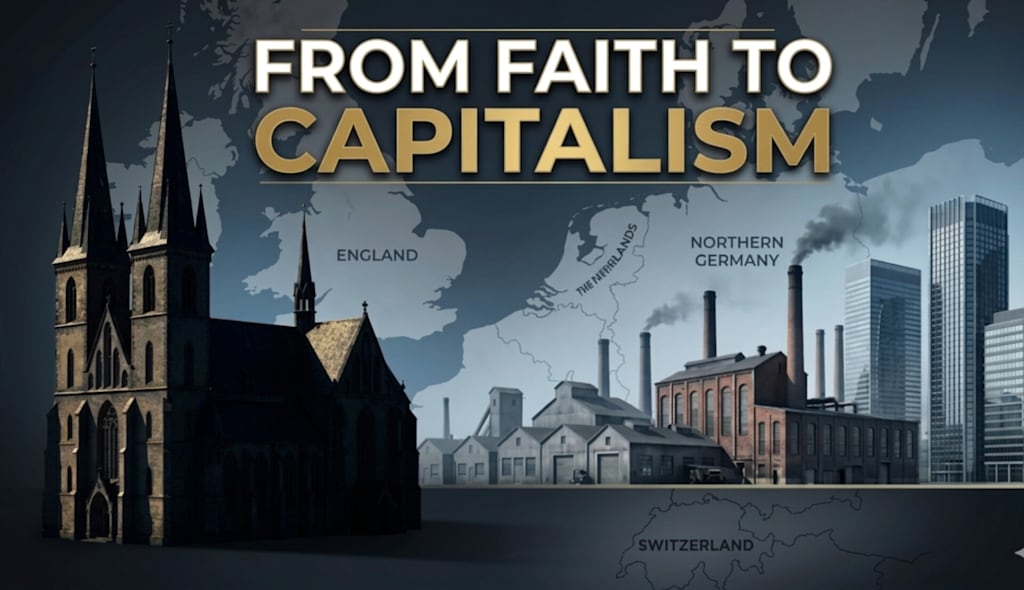
In the early 1500s, most people in Europe lived simple lives. Farmers worked on land owned by nobles. Craftsmen made goods by hand. Merchants traded in local markets. Life moved slowly, and money was not the center of everything.
Then something began to change.
A religious movement called the Protestant Reformation spread across Europe. Men like Martin Luther and John Calvin challenged the old ways of the Church. They believed that people should live disciplined lives, work hard, avoid wasting money, and stay honest in business.
At first, these ideas seemed connected only to religion. But over time, they changed how people thought about work itself.
Before this period, many people saw work as something necessary for survival. Rich people often believed that real success meant living comfortably without working too hard. But Protestant communities started teaching something different.
They believed that hard work was a sign of discipline and good character. They encouraged people to save money instead of spending it on luxury. They believed time should not be wasted. Laziness became something to avoid, while discipline became something to respect.
This way of thinking slowly created a new type of society.
In cities across England, the Netherlands, Germany, and later the United States, people began building businesses with a new attitude. Shop owners opened earlier and closed later. Workers became more organized. Merchants kept careful records of profits and losses. Families saved money and invested it into trade, factories, and land.
Because people spent less on pleasure and more on business, wealth started growing faster.
Banks became stronger. Trade routes expanded. Factories appeared. New industries were born.
Over time, these habits helped create what we now call capitalism.
Capitalism is an economic system where businesses, markets, private property, and profit play the biggest role. While capitalism did not come only from Protestant ideas, many historians believe the Protestant work ethic helped it grow much faster.
A German thinker named Max Weber became famous for explaining this connection. In 1905, he wrote a book called The Protestant Ethic and the Spirit of Capitalism. Weber argued that Protestant values shaped the behavior needed for modern business.
He believed people became more focused on discipline, punctuality, saving, and constant work. These habits made businesses more successful and economies stronger.
Weber did not say religion created capitalism by itself. Trade, technology, exploration, and politics also mattered. But he believed Protestant culture gave people a mindset that fit perfectly with the rise of modern business.
You can still see this mindset today.
In many countries, people admire those who work long hours, wake up early, stay busy, and build successful careers. People often believe that success comes from effort alone. A person who works all day is usually respected more than someone who rests.
Many companies reward workers who sacrifice personal time for their jobs. Some people even feel guilty when they take breaks.
This idea did not appear from nowhere.
It grew from centuries of cultural beliefs about discipline, work, and money.
But the Protestant work ethic also has a darker side.
Many people today feel trapped by endless pressure to succeed. Workers often face stress, burnout, and anxiety. In some countries, people spend more time working than enjoying life with family and friends.
Some critics argue that modern capitalism has taken the idea of hard work too far. They believe society now measures people only by money, productivity, and career success.
As a result, many people are starting to ask new questions.
Is success only about earning more money?
Should people work all the time?
Can a person live a meaningful life without becoming rich?
These questions matter because the world is changing again.
Technology is replacing some jobs. Younger generations want more balance in life. Many people now care about happiness, freedom, and mental health as much as money.
The Protestant work ethic helped build the modern economy. It changed how people think about work, time, success, and money.
But in the future, people may decide that life should be about more than just working harder.
Maybe the next great change in capitalism will not come from learning how to work more.
Maybe it will come from learning when to stop.
About the Creator
Keep reading
More stories from JAMES NECK and writers in Fiction and other communities.
The Moment Empires Stop Following the Rules
The empire had lasted for more than three hundred years. People in the capital liked to say it was eternal. Children learned its history in school. Old men in tea houses repeated the same line again and again: empires survive because they follow rules.
By JAMES NECK about 23 hours ago in Fiction



Comments
There are no comments for this story
Be the first to respond and start the conversation.