
City of plague:A New Yorker’s pandemic chronicle Pt 17.
The Restaurant Owner
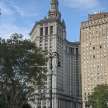
Directly across the street from the building where I worked stood an old commercial property that had quietly witnessed decades of Manhattan’s restless life.
It was not a tall building by New York standards—only five stories high—but its appearance made it impossible to ignore.
Tour buses often slowed down when passing the intersection. Sometimes the double-decker sightseeing buses carrying tourists would even pause for a moment so passengers could take pictures.
The building looked almost theatrical.
Its window frames were decorated with colorful painted arches. The rooftop had carved stone ornaments that reminded people of European architecture. Along the edges of the roofline were glazed tiles that shimmered faintly when sunlight touched them.
The walls themselves were made of ordinary red bricks, but time had softened their color. Decades of rain and wind had washed the surface into a muted tone that gave the building a nostalgic charm.
From a distance, the top floor even resembled a small castle tower.
Although the building had only five floors, its location made it extremely valuable. It stood at a corner on Broadway in Manhattan—one of the most expensive commercial areas in the city, where every square foot of space could cost a fortune.
Inside the building, the second through fifth floors were divided into more than thirty small offices. Each office measured between ten and twenty square meters. Small consulting firms, travel agencies, accountants, and independent professionals rented these rooms.
The rent collected from these offices alone was already a considerable income.
But the real attraction of the building was the street-level storefront.
That space was rented by a restaurant.
And that restaurant had always been busy.
The restaurant’s owner was a man named Kevin.
Kevin was the kind of businessman who seemed to thrive in the chaos of Manhattan.
From morning until late evening, the restaurant was usually filled with customers. Office workers came during lunch breaks, tourists wandered in after sightseeing, and neighborhood residents stopped by for casual dinners.
The place was rarely quiet.
Kevin loved it that way.
He was always standing near the entrance, greeting customers with a wide smile.
“Welcome, welcome! Sit anywhere you like!”
His face always looked shiny, as if permanently coated with a thin layer of oil from the kitchen. His body was round and slightly swollen, like a loaf of bread that had risen too much in the oven.
But his cheerful personality made people like him instantly.
He laughed easily.
He talked loudly.
And he treated customers with surprising warmth.
Sometimes he would even clap a customer on the shoulder like an old friend.
Business was so good that Kevin’s happiness seemed to radiate from him.
But success can also attract unwanted attention.
The building’s owner had been watching the restaurant closely for years. As Kevin’s business continued to grow, the landlord’s attitude gradually changed.
Every year, the rent increased.
Not a small increase—but a significant one.
The landlord never asked politely.
The message was simple:
Take it or leave it.
For Kevin, it felt like being harvested like a field of leeks—cut again and again without mercy.
Each year Kevin would complain loudly about the rising rent.
“Ah! This rent is killing me!” he would shout dramatically.
Yet when the lease renewal arrived, he always signed it again.
He never seriously threatened to close the restaurant.
Business was simply too good.
I personally visited Kevin’s restaurant quite often.
Especially during hot summer days.
The dining hall was always filled with cool air from powerful air conditioners. The moment you stepped inside, the outside heat disappeared.
Cold drinks, chilled air, the smell of freshly cooked food—it made lunchtime feel like a small vacation.
After several months of eating there regularly, Kevin and I gradually became familiar with each other.
He began greeting me whenever he saw me.
“Hey, Kaide! Your usual?”
Sometimes he even slapped my palm in a friendly high-five or wrapped an arm around my shoulder like an old buddy.
One afternoon, while I was finishing lunch, Kevin suddenly leaned closer and said something unexpected.
“Kaide,” he said, lowering his voice slightly, “three months from now, you won’t be able to eat our food anymore.”
I looked up in surprise.
“Kevin, what do you mean? What happened?”
The restaurant’s food was genuinely good. Many customers returned again and again, and no one seemed tired of the menu.
Without realizing it, I had grown emotionally attached to the place.
Kevin sighed.
“The landlord won’t renew our lease,” he said.
“We have to close.”
I frowned.
“Is it because the rent is too low?” I asked casually.
Kevin shook his head.
“No. If it were just rent, we could negotiate.”
He paused for a moment.
“The landlord is selling the building.”
Now I understood.
If the property was being sold, there would be no room for negotiation.
Kevin was simply a tenant.
A small tenant in a city where property owners held enormous power.
For some reason, after hearing that news, I suddenly felt an urge to buy two lunches that day.
It was as if I wanted to show support for the restaurant before it disappeared.
Kevin was around my age, and his cheerful smile made him surprisingly charming. For a strange moment, I even joked to myself that if we were the same age and if I were attracted to men, perhaps I might have fallen in love with him.
But that thought only made me laugh awkwardly.
Fortunately, I was not a homosexual.
So the idea disappeared as quickly as it came.
Still, as I walked back to work, I felt a quiet sense of regret.
It was sad to think that the restaurant would soon disappear.
But there was nothing anyone could do.
If a building owner wanted to sell property and invest somewhere else, a small restaurant owner like Kevin had no power to stop it.
It was similar to an employee whose boss suddenly decided to close a company and retire.
You simply had to pack up and leave.
At best, you might apply for unemployment benefits and hope for the best.
Soon after 2020 began, I found myself visiting Kevin’s restaurant less frequently.
It wasn’t because I wanted to save money.
And it wasn’t because I wanted to avoid emotional attachment before the restaurant closed.
The real reason was something else entirely.
The virus.
The coronavirus had begun spreading rapidly in New York.
I was afraid of getting infected.
Not only would the illness bring suffering to myself, but I might also unknowingly infect my family or coworkers.
The consequences could be serious.
Perhaps I was being overly cautious.
But many customers in Kevin’s restaurant were Chinese immigrants like me. Others were Americans who loved traveling to Europe.
Who could guarantee that none of them had been exposed to the virus?
Who could guarantee that one of them wouldn’t become an unsuspecting carrier?
Because of that fear, I started bringing lunch from home.
And slowly, I stopped visiting the restaurant.
Apparently, I wasn’t the only one.
The number of customers began to decline.
One afternoon, I ran into Kevin on the street.
“Kaide!” he called out immediately. “I haven’t seen you buying lunch lately.”
I forced a smile.
“My appetite hasn’t been great,” I said. “I’ve been bringing lunch from home.”
Kevin sighed deeply.
“I don’t know what’s happening,” he said. “Business has been terrible lately. We’re barely breaking even.”
Then he suddenly added something that sounded half like a joke.
“Maybe everyone already knows my restaurant is closing.”
I didn’t respond.
I worried that Kevin might suspect I had told others about the lease ending.
When a wall begins to collapse, people often rush to push it down faster.
I didn’t want to become the villain in his eyes.
So I simply nodded vaguely and changed the subject before saying goodbye.
Two weeks later we met again.
But this time Kevin was smiling.
“Kaide, I’m actually lucky,” he said.
“Lucky?” I asked.
“Yes,” he replied. “The landlord canceled my lease early. Otherwise I would have renewed it and suffered even more losses.”
By that time the pandemic in New York had become extremely serious.
I was already wearing two masks when I went outside.
When I saw that Kevin wasn’t wearing one at all, I instinctively kept a six-foot distance between us.
“My business has collapsed,” Kevin continued.
“At least now I’m free from the lease. I might lose money for a couple months, but I can walk away.”
I nodded quietly.
Inside my mind, I was thinking about something else.
Distance.
I wanted to stand farther away from him.
About a month later, the restaurant finally closed.
Even though I had expected it, I still felt a small wave of sadness.
For several years that place had been part of my daily routine.
Seeing it dark and empty felt strange.
A few days later Kevin suddenly appeared at my workplace.
“Kaide!” he said excitedly. “I’ve been looking for you everywhere!”
“What’s going on?” I asked.
“I still have a lot of kitchen equipment left in the restaurant,” he said. “Things that families can use. If you want any of them, I’ll give them to you for free.”
I was surprised.
“Why don’t you keep them?” I asked. “Aren’t you planning to open another restaurant somewhere else?”
Kevin shook his head.
“No,” he said calmly.
“I’ve decided to retire.”
“I’m moving back to California.”
Transporting all those kitchen tools would cost too much money.
“My home kitchen doesn’t need them,” he added with a smile.
“You can take whatever you like.”
I hesitated.
“Your restaurant has so many things,” I said. “I couldn’t possibly carry them all. You should give them to someone else.”
“I already gave a lot to my employees,” Kevin replied. “But there’s still plenty left.”
“If nobody takes them, they’ll just end up in the trash.”
I shook my head again.
“Honestly, my home doesn’t need those kitchen items,” I said.
But inside my mind, another thought was forming.
Who would dare accept second-hand kitchen tools used by countless customers during a pandemic?
What if the virus was still lingering on those surfaces?
This was no longer a question of saving money.
It was a question of safety.
Kevin sighed softly.
“That would be such a waste,” he murmured.
He repeated the sentence twice before saying goodbye.
A few days later, New York entered lockdown.
Because my job was considered essential, I still had to go to work.
One day Kevin appeared again.
“Kaide,” he said quietly, “I’m leaving.”
“Thank you for supporting my restaurant all these years.”
I felt slightly embarrassed.
“Don’t mention it,” I said.
But inside I knew the truth.
In the end, I had not been the loyal customer I once believed myself to be.
Kevin looked around the quiet street.
“I never imagined the virus would be this serious,” he said.
“So many people have already died in New York.”
Fear was clearly visible on his face.
For a moment neither of us spoke.
Finally I said the only thing I could think of.
“Kevin… you should wear a mask.”
“It really helps prevent infection.”
He wasn’t wearing one.
Again.
“Goodbye,” I added, stepping backward slightly.
Kevin sighed.
“It’s not that I don’t want to wear one,” he said.
“I just can’t find any masks to buy.”
Then he waved and hurried away down the street.
I watched him disappear into the empty avenue, feeling a strange mixture of relief and sadness.
The city had changed.
And so had we.
About the Creator
Peter
Hello, these collection of articles and passages are about weight loss and dieting tips. Hope you will enjoy these collections of dieting and weight loss articles and tips! Have fun reading!!! Thank you.
Pandora’s Burden
“My brother warned me to not accept gifts from the one who commissioned you,” said Epimetheus to the woman clad in silvery raiments standing at the entrance to the temple. Her silver tiara and the silver rings on her fingers and toes glinted in the firelight cast by torches set on either side of the doorway. Lingering in the shadows, beyond the reach of the flames as she was, he could not tell what she held in her hands. At first what appeared to be a box was perhaps a funerary urn, or maybe merely an apple.
By J. Otis Haas5 days ago in Fiction


Comments
There are no comments for this story
Be the first to respond and start the conversation.