
Supreme Court Clears Path for Steve Bannon to Seek Dismissal of Contempt Conviction
Supreme Court vacates appeals ruling, opening the door for Steve Bannon to seek dismissal of his Jan. 6 contempt conviction

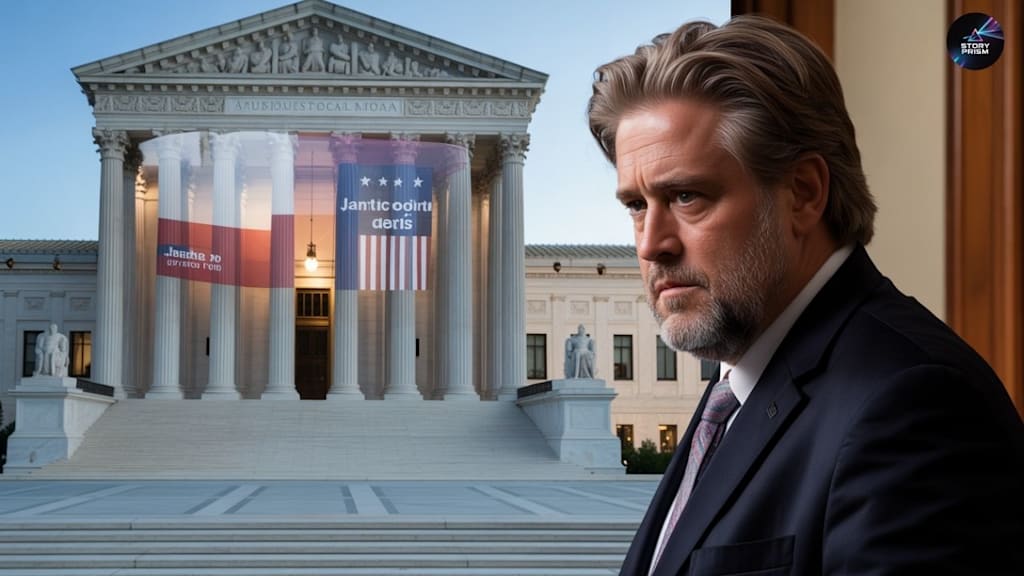
The U.S. Supreme Court made a significant ruling on April 6, 2026, in the high-profile legal saga of former Trump adviser Steve Bannon, clearing the procedural path for him to seek the dismissal of his criminal contempt-of-Congress conviction. This development comes nearly four years after Bannon was originally convicted for refusing to comply with subpoenas issued by the House committee investigating the January 6, 2021, Capitol attack. The Supreme Court’s brief, unsigned order vacated the appellate court ruling that had upheld Bannon’s conviction and remanded the case for reconsideration in light of a motion to dismiss filed by the Department of Justice under the Trump administration.
Background of Bannon’s Contempt Case
Steve Bannon, who served as a senior adviser to former President Donald Trump, was indicted in 2022 on two misdemeanor counts of contempt of Congress. The charges stemmed from his refusal to appear before the House select committee investigating the January 6 attack and his failure to provide documents requested by the committee. A jury found Bannon guilty, and he was sentenced to four months in prison along with a $6,500 fine, which he served in 2024. Despite completing his sentence, Bannon’s legal team continued to fight the conviction, citing claims of executive privilege and legal advice that allegedly justified his noncompliance with the congressional subpoenas.
The case drew national attention due to Bannon’s high-profile status, his close association with former President Trump, and the broader implications for congressional oversight, executive privilege, and accountability in the wake of the January 6 attack. At the time of his conviction, legal analysts described the case as a pivotal test of Congress’s power to enforce subpoenas against former administration officials, particularly in politically sensitive contexts.
Supreme Court Action
On April 6, the Supreme Court issued a concise order, vacating the appellate court decision that had upheld Bannon’s conviction. The order did not include a written opinion explaining the Court’s reasoning, nor were any dissents noted. By remanding the case to the lower courts, the Supreme Court allowed a federal judge to consider the Department of Justice’s motion to dismiss the charges “in the interests of justice.” This procedural maneuver does not immediately erase the conviction, but it provides a clear legal pathway for Bannon to have the charges formally dismissed and his record cleared.
The DOJ motion to dismiss reflects a shift in the federal government’s position. While the case was originally prosecuted under the Biden administration, the Trump-led Justice Department filed the motion, asserting that dismissal serves the public interest and aligns with justice. This intervention by the DOJ is part of a broader pattern of reassessing or reversing prosecutions involving high-profile Trump allies.
Legal and Political Implications
Bannon’s case illustrates the complex intersection of law and politics in high-profile investigations. The central legal questions involved the extent of congressional authority to enforce subpoenas, the applicability of executive privilege to former administration officials, and what constitutes willful defiance of a congressional mandate. At trial, Bannon’s lawyers argued that he relied on legal advice and assertions of executive privilege, but these claims were rejected by the jury and the appellate court.
With the Supreme Court’s recent order, the legal focus now shifts to the lower federal courts, which will determine whether the DOJ’s motion to dismiss should be granted. If the judge approves the motion, Bannon’s conviction and indictment could be formally removed from his record, symbolically restoring his legal standing, even though he has already served the prison sentence.
The ruling also underscores the Supreme Court’s role in procedural oversight rather than substantive legal determinations in this instance. By vacating the appellate decision and remanding the case, the Court did not weigh in on the merits of Bannon’s executive privilege arguments or the broader constitutionality of congressional subpoenas; instead, it focused on the procedural mechanism that allows a lower court to evaluate the DOJ’s dismissal request.
Context Within Broader January 6 Investigations
The Bannon case is just one of several high-profile legal proceedings stemming from the January 6 Capitol attack. Multiple former Trump allies and officials have faced legal scrutiny for their actions before, during, and after the events of that day. The case has been closely monitored for its precedent-setting potential regarding congressional oversight and the accountability of former administration officials.
Legal analysts note that the procedural outcome of Bannon’s case could influence other ongoing investigations, particularly in cases where the Justice Department under a new administration may seek to modify the prosecution’s stance. The DOJ’s motion to dismiss, now facilitated by the Supreme Court’s order, highlights how administrative changes can impact ongoing legal cases, especially those intertwined with politically charged issues.
Public and Media Response
The decision sparked widespread media coverage and political commentary. Supporters of Bannon and Trump allies have hailed the Supreme Court’s order as a victory for justice and executive discretion, while critics argue that it undermines congressional authority and accountability mechanisms. The ruling has also drawn attention to the role of the DOJ in influencing outcomes of politically sensitive cases, as well as the Supreme Court’s capacity to affect procedural developments without issuing substantive opinions.
Media outlets like NBC News, ABC News, The Washington Post, and SCOTUSblog have emphasized that while the Supreme Court’s order does not itself dismiss the conviction, it represents a critical step toward that outcome. The remand allows federal judges to evaluate the DOJ’s dismissal motion, potentially erasing the legal record of Bannon’s conviction in the coming months.
Potential Outcomes and Future Implications
If the lower court grants the DOJ’s motion to dismiss, the conviction would be formally vacated, symbolically clearing Bannon’s record. While this would not reverse the time he served in prison, it could bolster his public image and reinforce claims of legal vindication. The dismissal could also set a procedural precedent for other cases where the Justice Department seeks to withdraw charges post-conviction, particularly for politically sensitive defendants.
The Bannon case underscores the ongoing tension between legal accountability, political influence, and the mechanisms of government oversight. The Supreme Court’s procedural intervention highlights the judiciary’s role in balancing these interests while maintaining a neutral stance on substantive political controversies.
Legal experts caution, however, that while Bannon’s procedural victory is significant, it does not resolve the broader questions about congressional authority and executive privilege that his case raised. Future cases may continue to test these boundaries, particularly as other figures associated with the January 6 investigation face legal challenges.
Conclusion
The Supreme Court’s April 6, 2026, ruling marks a pivotal moment in Steve Bannon’s legal journey. By vacating the appellate court’s decision and remanding the case for dismissal consideration, the Court has enabled the DOJ under the Trump administration to pursue the formal removal of Bannon’s contempt-of-Congress conviction. While the outcome may be largely symbolic given Bannon has already served his sentence, the decision has substantial legal and political implications, signaling how procedural rulings can affect high-profile cases tied to national events like the January 6 attack.
As federal judges review the DOJ’s motion to dismiss, the case will remain under close public and media scrutiny, reflecting its ongoing significance in debates over congressional oversight, executive privilege, and the interplay between law and politics in the United States. The procedural pathway established by the Supreme Court’s order ensures that Bannon has an opportunity to have his conviction formally vacated, a development that will likely attract continued attention from both legal analysts and political commentators nationwide.
About the Creator
Keep reading
More stories from Story Prism and writers in Feast and other communities.
Carmen Electra’s Journey from Playboy Icon to Online Fan Platforms
Carmen Electra, born Tara Leigh Patrick in 1972, has been a prominent figure in entertainment for more than two decades. Known for her modeling, acting, and pop culture influence, Electra has continuously reinvented herself to stay relevant in a changing media landscape. From her early days as a musician signed to Prince’s Paisley Park Records to her iconic television role on Baywatch, Electra has consistently leveraged her talent and charisma to connect with audiences.
By Story Prism2 months ago in 01
Foraging Appalachia’s Wild Edibles
It's that time of year again and Appalachia offers a remarkable abundance for anyone willing to learn its seasonal gifts and practice careful gathering. Across ridges, holler's, stream-side's, and meadows, edible plants, berries, roots, and fungi appear through every part of year. Knowledge is key and teaches not only what can be eaten, but also how to gather with respect so that these resources remain available far into future.
By Tim Carmichael14 days ago in Feast
Bacon
Satan, laughing, spreads his wings. He launches into an atmosphere riddled with smoke, soot, and ash. He feels the radiation from a thousand fallen nukes. For humanity, it’s certain death. For him, it’s like bathing in a sauna. He laughs again at the thought.
By C. Rommial Butler3 days ago in Fiction




Comments
There are no comments for this story
Be the first to respond and start the conversation.