
Maxim Chubik on Approaches to Veteran Trauma Rehabilitation in Ukraine
How does Maxim Chubik understand trauma recovery, short-term rehabilitation, and veteran self-perception in Ukraine?

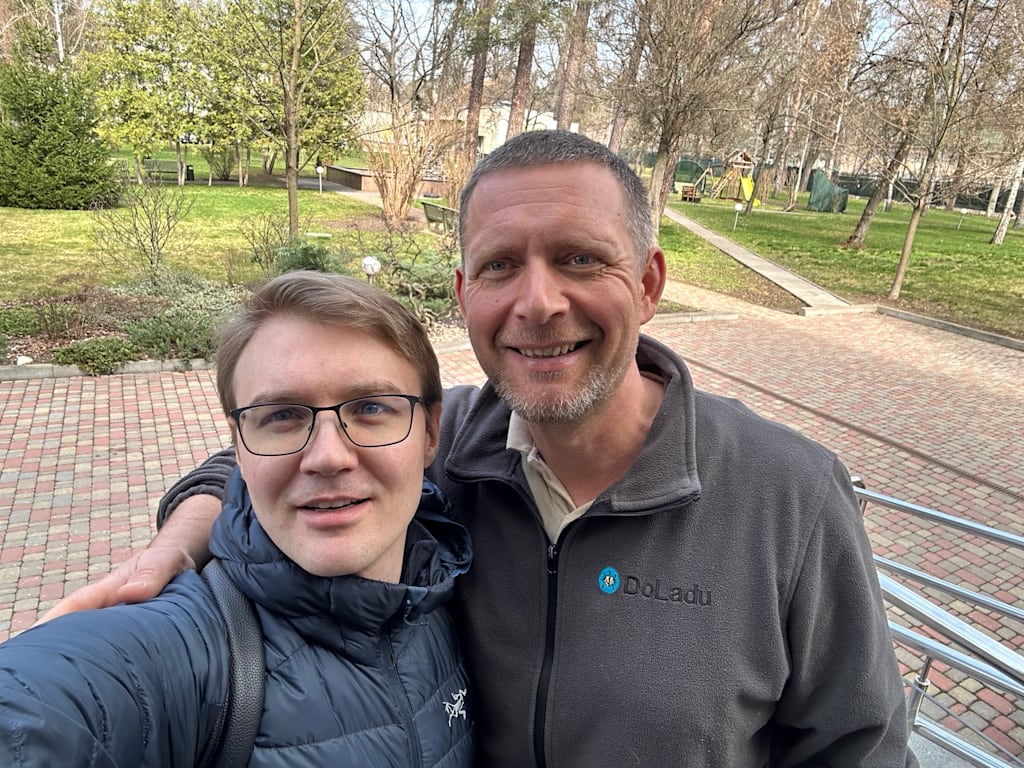
Maxim Chubik is a Ukrainian military psychologist, psychotherapist, veteran of the Armed Forces of Ukraine, and trainer-psychologist with DoLadu Camp, focused on veteran rehabilitation and psychological recovery. He is a specialist in psychodrama, group and individual psychological support, and veteran and family rehabilitation camps. He has also been identified as a veteran and psychologist with the psychological support line for military personnel and their loved ones through the nationwide #VARTOZHYTY initiative. Chubik’s work centers on trauma recovery, communication between veterans and civilians, family reintegration, and practical pathways for sustained psychological support after intensive rehabilitation programs.
In this interview, Scott Douglas Jacobsen speaks with Maxim Chubik, a Ukrainian military psychologist, trainer-psychologist with DoLadu Camp, and psychologist with the #VARTOZHYTY support line, about trauma care for veterans returning from the frontline. Chubik explains his use of psychodrama, cognitive approaches, and client-centered therapy in rehabilitation settings, emphasizing that short intensive programs can spark motivation even if they cannot fully transform a life. He outlines common challenges facing veterans, including family strain, communication barriers with civilians, depression, anxiety, aggression, and disrupted work identity. He also discusses follow-up care, peer support, and the complex self-perception of veterans who legally return as civilians but still identify as military.
Scott Douglas Jacobsen: What school of psychology do you specialize in and use here?
Maxim Chubik: My specialization is psychodrama. I am a certified psychotherapist. I have a degree in medical psychology, and I am also studying practical psychology at another university in Ukraine. I also work with cognitive therapy and client-centered therapy. I have completed additional training in these approaches. The method that has influenced me most is client-centered therapy, but I also use psychodrama and cognitive behavioral therapy in rehabilitation work with veterans.
Jacobsen: What tends to be effective for individuals with severe trauma, including complex PTSD and PTSD?
Chubik: From my experience, all the methods I mentioned can be effective in practice. Psychodrama can work well. Cognitive behavioral therapy also works well and is one of the main approaches used in trauma-focused work. I also value client-centered therapy because it focuses directly on the client and the client’s problems. There are many other methods, but I do not use them because I am not certified in them. EMDR is also considered effective, but I do not practice it myself.
Jacobsen: For those returning from the frontline, what are the most common core issues?
Chubik: It depends on the individual, but some patterns are common. Communication difficulties between veterans and civilians are frequent. Family problems are also common, especially in relationships with wives and children. Many veterans struggle with motivation around work, including whether to return to work or change careers. Some try to move away from the kind of work they did before the war. Depression is a major concern. Many also have questions about how to manage aggression. Worry and anxiety are also common. These are the main challenges I see.
Jacobsen: How much can realistically be achieved in a four-day or condensed rehabilitation period?
Chubik: At the beginning of each camp, I say that four days will not change a person’s life completely or dramatically. However, four days can be enough to create the desire to change one’s life. It is enough to build motivation. It is enough to begin the process of change.
Four days are enough to develop the desire to change something in your life. This may relate to physical activity, mental well-being, work, relationships, or other areas. Some participants can begin making changes during the program itself. However, many changes occur after the camp. After each program, we offer individual psychological consultations. Participants also have the opportunity to join peer-to-peer online support groups and other follow-up programs that we provide.
Jacobsen: What cannot be done in rehabilitation within such a short period?
Chubik: It is very difficult to help someone who does not want to receive help or support. Sometimes there are one or two participants who demonstrate strong psychological defense mechanisms. In such cases, four days may not be enough. It is more effective when I have already worked individually with someone and then recommend group therapy or peer-to-peer support. This combination tends to produce better results. If this is a person’s first experience with psychological rehabilitation, it can be challenging for them. In general, many things can be done, but we cannot help someone who does not want help.
Jacobsen: How do veterans who have survived war see themselves? What is their self-perception?
Chubik: Officially, according to legislation, they are civilians. However, many of them feel and think of themselves as military. If asked whether they are civilian or military, most will say they are military. They often see themselves as a distinct group, separate from civilians, with different values and principles. Because of this, some reduce or end relationships with friends and even family members.
Many find it difficult to communicate with civilians. This can sometimes lead to increased irritation or aggression in interactions with others. At the same time, they often view themselves as strong, but also as individuals who carry problems—some physical, some psychological. Many feel they are injured, either mentally or physically. In this sense, some may also perceive themselves as weakened because of these injuries, even while maintaining a strong identity as veterans.
Jacobsen: Thank you very much for the opportunity and your time, Max.
Scott Douglas Jacobsen is a blogger on Vocal with over 130 posts on the platform. He is the Founder and Publisher of In-Sight Publishing (ISBN: 978–1–0692343; 978–1–0673505) and Editor-in-Chief of In-Sight: Interviews (ISSN: 2369–6885). He writes for International Policy Digest (ISSN: 2332–9416), The Humanist (Print: ISSN, 0018–7399; Online: ISSN, 2163–3576), Basic Income Earth Network (UK Registered Charity 1177066), Humanist Perspectives (ISSN: 1719–6337), A Further Inquiry (SubStack), Vocal, Medium, The Good Men Project, The New Enlightenment Project, The Washington Outsider, rabble.ca, and other media. His bibliography index can be found via the Jacobsen Bank at In-Sight Publishing,, comprising more than 10,000 articles, interviews, and republications across more than 200 outlets. He has served in national and international leadership roles within humanist and media organizations, held several academic fellowships, and currently serves on several boards. He is a member in good standing in numerous media organizations, including the Canadian Association of Journalists, PEN Canada (CRA: 88916 2541 RR0001), Reporters Without Borders (SIREN: 343 684 221/SIRET: 343 684 221 00041/EIN: 20–0708028), and others.
Photo Credit: Scott Douglas Jacobsen.
About the Creator
Scott Douglas Jacobsen
Scott Douglas Jacobsen is the publisher of In-Sight Publishing (ISBN: 978-1-0692343) and Editor-in-Chief of In-Sight: Interviews (ISSN: 2369-6885). He is a member in good standing of numerous media organizations.
Keep reading
More stories from Scott Douglas Jacobsen and writers in Education and other communities.
Matthew Scillitani on High-Range Psychometrics, Validity, and Test Security
Matthew Scillitani is a psychometrics practitioner at Neurolus Psychometrics focused on developing supervised, time-limited high-range ability examinations. He co-launched The Mental Inventor with Paul Cooijmans as an empirical testbed for a central measurement question: whether performances can be validly differentiated in the extreme right tail under proctored conditions. His approach emphasizes procedural integrity—identity verification, approved proctoring, and rule enforcement—alongside cautious claims about interpretation until reliability and validity evidence is established. He highlights emerging threats to unsupervised testing, including AI-assisted responding and large-scale collaboration, and advocates peer review before formal reclassification.
By Scott Douglas Jacobsen3 days ago in Education
Planting Progress: How Agriculture Creates a Sustainable Future Without Hunger
Hunger continues to affect millions worldwide, yet agriculture offers a powerful and lasting solution when properly developed. By focusing on long-term food security, communities can build systems that consistently provide access to nutritious food. Agriculture does more than feed people because it strengthens economies, creates jobs, and promotes self-reliance. When farming systems are supported and modernized, they become reliable sources of both income and nourishment. Ultimately, agriculture lays the foundation for a future where hunger is reduced through sustainable growth.
By Convoy of Hope8 days ago in Education
The Cost of Confusion: Why Complex Lending Needs Better Transparency
Modern lending has made access to money easier than ever. With just a few clicks, people can apply for personal loans, credit cards, or financing options for major purchases. Yet behind this convenience lies a growing problem: many lending products have become too complex for the average borrower to understand fully. This confusion often leads to poor financial decisions, unexpected costs, and long-term stress. Transparency in lending is not just a feature—it is a necessity.
By Eric Kleiner8 days ago in Education
Watching The End Of The World From The Diner
Introduction I am not sure how to approach this. Guy Peellaert was an amazing artist who created iconic fantasy images of famous people, usually musicians or politicians, as well as creating commissioned album covers such as "It's Only Rock'n'Roll" by The Rolling Stones and David Bowie's "Diamond Dogs" which you can read more about below.
By Mike Singleton 💜 Mikeydred 7 days ago in Art


Comments
There are no comments for this story
Be the first to respond and start the conversation.