
How the Iran Conflict Is Making Life More Expensive in Europe
Fuel prices, food costs, flights, and household bills are already under pressure as Europe braces for a longer energy shock.

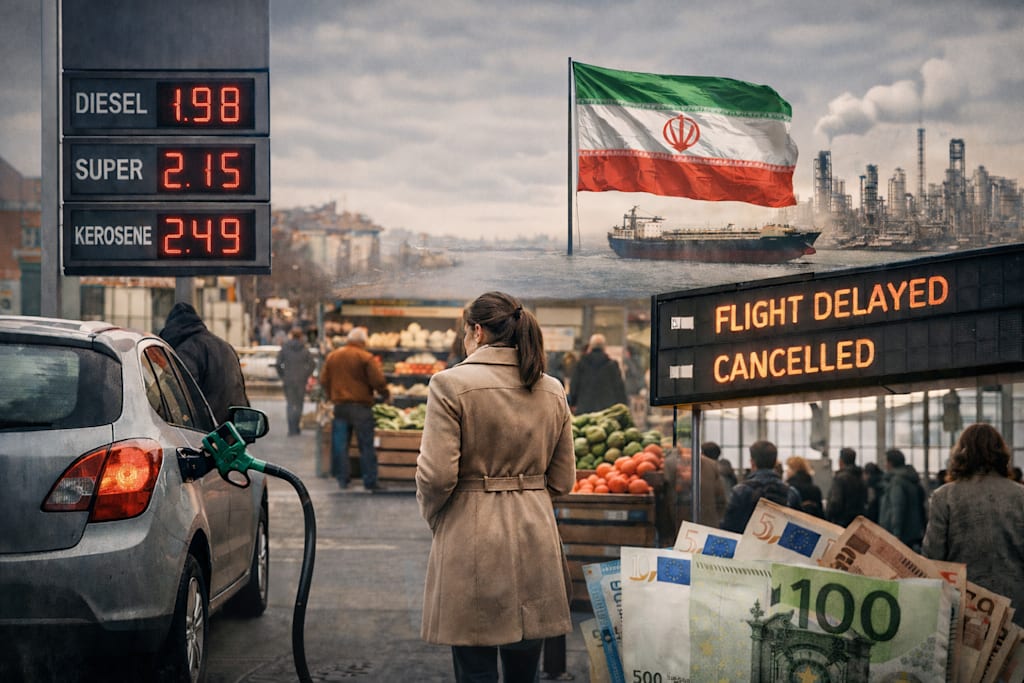
For a lot of people in Europe, the Iran conflict still feels far away.
It sounds like the kind of story that belongs on TV: missiles, oil tankers, military warnings, and world leaders talking about escalation. Serious, yes. But still far away. Still separate from normal life.
That is usually how these things look at first.
How the Impact Starts: From Conflict to Daily Costs
Then the cost starts to show up in ordinary places: at the fuel station, in flight prices, in supermarket bills, in delivery fees, and in the quiet feeling that the same paycheck no longer stretches the way it did before.
That is why this conflict matters to Europe right now. Not just because it is dangerous, but because it is already becoming expensive.
The warning signs are real. On April 1, the International Energy Agency said disruptions from the Middle East were expected to grow in April and begin hitting Europe’s economy. More than 12 million barrels had already been lost, and April could be roughly twice as bad as March. There were also warnings about shortages of diesel and jet fuel, which are especially important because they keep trucks moving, planes flying, and supply chains working.
That part matters more than many people realize.
Why Fuel Matters More Than People Think
This is not only about crude oil or some abstract market story. It is about the fuels that touch daily life. Diesel helps power road freight, farming, and delivery networks across Europe. Jet fuel affects air travel, tourism, and air cargo. When those fuels get tighter or more expensive, the pressure spreads. It moves through transport, then through business costs, and finally into the prices people pay every day.
And Europe is clearly not treating this like a short-term scare.
Europe Is Already Preparing for a Longer Crisis
The European Union has already considered reviving some of the emergency-style energy measures it used during the 2022 crisis. EU Energy Commissioner Dan Jorgensen said member states should prepare for a prolonged disruption, not just a temporary shock. He also pointed to refined products like diesel and kerosene as weak spots and urged countries to delay non-essential refinery maintenance to protect supplies. That is not the language officials use when they think the market will calm down in a few days. It suggests Europe is preparing for a longer squeeze.
The political response is getting stronger too.
Germany, Italy, Spain, Portugal, and Austria have called for an EU-wide windfall tax on energy companies to help fund relief for consumers. EU energy prices have jumped sharply since late February 2026. Governments do not start discussing special taxes and consumer relief unless they think people and businesses are about to feel serious pressure. That tells you a lot on its own.
Rising Prices Are Already Showing in the Data
The inflation numbers are already pointing in the same direction. Annual inflation in the euro area rose to 2.5% in March 2026, up from 1.9% in February. Energy inflation jumped to 4.9% after being negative 3.1% the month before. In simple terms, energy stopped helping prices cool down and started pushing them higher again. Once that happens, the impact usually spreads beyond energy itself. Transport gets more expensive. Production gets more expensive. Services become harder to keep affordable. Then everyday spending starts to feel tighter.
Why People Feel It Without Understanding the Cause
Most people do not follow oil markets, and honestly, they should not have to.
But they still end up paying for what happens there.
That is the frustrating part of a crisis like this. You do not need to understand refinery output, tanker routes, or shipping chokepoints to feel the consequences. You feel it when food prices creep up because transport costs more. You feel it when flights become less affordable. You feel it when companies quietly add surcharges or pass on higher costs without saying much. A conflict can stay far away on the map and still land right in the middle of daily life.
There is also another problem: Europe can replace some lost supply, but replacement supply is rarely cheap.
U.S. refined fuel exports hit a record in March as Europe and other regions tried to replace disrupted Middle Eastern supplies. That might sound reassuring at first, but it is also a sign that the normal system is under strain. Europe is buying more fuel from farther away because the usual flow has been disrupted. When that happens, extra costs tend to move down the chain. Businesses absorb some of them first. Consumers usually absorb the rest later.
A Crisis That Feels Normal Until It Doesn’t
What makes this moment easy to underestimate is that life can still look normal on the surface.
Supermarkets are open. Flights are still running. Deliveries are still arriving. Nothing looks dramatic enough yet to make people think a major cost shock is building. But underneath that normal picture, the pressure is already there. EU officials are warning about a prolonged disruption. Energy prices have surged. Inflation has turned back up. That is usually how this kind of problem works: first it looks distant, then it becomes expensive, and only after that does everyone fully notice.
Final Thought: Europe Is Already Paying the Price
The truth is simple.
Europe is already paying for the Iran conflict. Through fuel prices. Through food costs. Through flights. Through household bills.
And if the disruption continues, life across Europe is likely to get more expensive before it gets easier.
Source:
- https://www.reuters.com/business/energy/middle-east-oil-supply-disruptions-rise-april-hit-europe-iea-chief-says-2026-04-01/
- https://www.reuters.com/business/energy/eu-tells-members-prepare-prolonged-disruption-energy-markets-iran-war-2026-03-31/
- https://www.reuters.com/sustainability/boards-policy-regulation/five-eu-finance-ministers-call-windfall-profit-tax-energy-companies-2026-04-04/
- https://ec.europa.eu/eurostat/web/products-euro-indicators/w/2-31032026-ap
- https://www.reuters.com/business/energy/us-fuel-exports-hit-record-march-asia-europe-sought-replace-middle-east-supplies-2026-04-01/
- https://offerdiscoveryhubx.top/resources/community-guidelines%3C/em%3E%3C/li%3E%3C/ol%3E%3Cstyle data-emotion-css="14azzlx-P">.css-14azzlx-P{font-family:Droid Serif,Georgia,Times New Roman,Times,serif;font-size:1.1875rem;-webkit-letter-spacing:0.01em;-moz-letter-spacing:0.01em;-ms-letter-spacing:0.01em;letter-spacing:0.01em;line-height:1.6;color:#1A1A1A;margin-top:32px;}
About the Creator
Viorel Secareanu
I share thoughts on photography and life, mostly lessons learned around things I’ve been dealing with the last few years, managing time, finding focus, and being happy.
Thanks for stopping by. I hope you find something inspiring here!
Keep reading
More stories from Viorel Secareanu and writers in Education and other communities.
Europe’s Cost of Living Is Rising Again as Inflation and Energy Prices Climb
For a while, it looked like Europe had moved past the worst of the inflation squeeze. The panic had faded, the headlines felt calmer, and many people assumed the pressure on household budgets was finally easing. But the latest numbers point in a different direction. Euro area inflation rose to 2.5% in March 2026, up from 1.9% in February. Energy prices climbed 4.9% year over year, while services inflation reached 3.2% and food, alcohol, and tobacco rose 2.4%. It does not look like a crisis yet. But it does look like life is getting more expensive again.
By Viorel Secareanuabout 11 hours ago in Education
The Power of Service: Impacting Communities and Beyond
Service is at the heart of many religious and community-oriented practices, but its significance transcends spiritual realms. Living a life of service, whether inside or outside the church, is a pathway to creating meaningful change and fostering a more compassionate world. From volunteering at local shelters to offering support within the community, service plays a transformative role in shaping both individual lives and society as a whole. This article explores how service, both religious and secular, can leave a lasting impact on individuals and communities, urging people to engage in selfless acts that build trust, support, and unity.
By Mike Signorelli5 days ago in Education



Comments
There are no comments for this story
Be the first to respond and start the conversation.