
The Role of Pyrolysis Oil (PPO/TPO) in a Circular Plastics Economy
How Pyrolysis Technology Converts Plastic and Tire Waste into Industrial Resources, Reducing Dependence on Virgin Petroleum

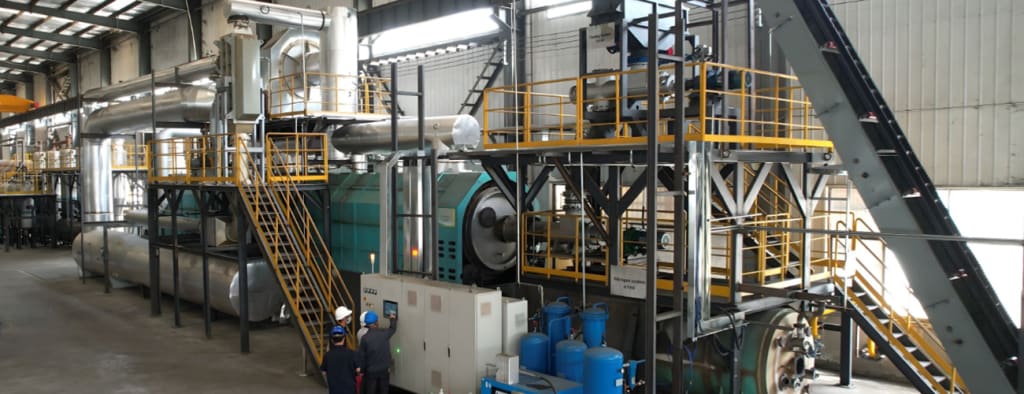
The dual challenge of plastic pollution and fossil fuel dependency is among the most pressing global environmental issues today. Every year, millions of tons of plastic waste and end-of-life tires accumulate in landfills, incinerators, and oceans, posing risks to ecosystems, human health, and climate. At the same time, industries worldwide rely heavily on crude oil for the production of plastics, fuels, and other chemical products.
One of the most promising technological solutions to address both issues is pyrolysis—a thermal decomposition process that converts plastic and tire waste into pyrolysis oil, often referred to as Plastic Pyrolysis Oil (PPO) or Tire Pyrolysis Oil (TPO). This approach not only diverts waste from disposal but also provides an alternative industrial feedstock, thereby reducing dependence on virgin petroleum.
Understanding Pyrolysis and Its Products
Pyrolysis is a process in which organic materials are thermally decomposed at high temperatures (350–600°C / 662–1112°F) in the absence of oxygen. The process breaks down long polymer chains in plastics and rubber into smaller hydrocarbons, producing three main outputs:
- Liquid Pyrolysis Oil (PPO/TPO) – Hydrocarbon-rich oil suitable for refining into fuels or chemical feedstocks.
- Syngas (Synthetic Gas) – Combustible gases like hydrogen, methane, and carbon monoxide, which can power the pyrolysis process itself or be used as industrial fuel.
- Char (Solid Residue) – Carbon-rich solid material that can serve as an adsorbent, soil amendment, or fuel.
Plastic Pyrolysis Oil (PPO)
PPO is typically derived from polymers such as polyethylene (PE), polypropylene (PP), polystyrene (PS), and mixed plastics. Its hydrocarbon composition is similar to that of diesel or naphtha, making it suitable for industrial fuel applications or chemical recycling.
Tire Pyrolysis Oil (TPO)
TPO is produced from end-of-life tires and contains heavier hydrocarbons along with small amounts of sulfur and metals. After refining, TPO can be used as fuel for cement kilns, steel production, or other high-temperature industrial processes.
By converting waste into these products, pyrolysis equipment acts as a bridge between waste management and sustainable industrial energy supply, aligning with circular economy principles.
The Role of Pyrolysis in a Circular Plastics Economy
A circular plastics economy seeks to keep materials in use, minimize waste, and reduce reliance on virgin resources. Pyrolysis contributes to this vision in several ways:
- Waste Diversion – Plastic and tire waste that is difficult or uneconomical to recycle mechanically can instead be converted into valuable pyrolysis oil.
- Resource Recovery – PPO and TPO serve as substitutes for fossil fuels in industrial processes, lowering extraction pressure on petroleum reserves.
- Carbon Loop Closure – Carbon embedded in plastics is reused instead of being lost to incineration or landfill decomposition, reducing the net carbon footprint.
- Economic Value Creation – Pyrolysis creates new revenue streams for recycling companies, while reducing operational costs for industries using refined PPO/TPO instead of crude oil.
Case Studies: Global Implementation
Japan: Advanced Plastic-to-Fuel Programs
In Japan, advanced pyrolysis plants process mixed plastic waste into PPO, which is then used as industrial fuel in cement and steel production. Rigorous quality control ensures consistent oil composition, reducing operational risks and environmental impact.
India: Tire-to-TPO Conversion
India has pioneered small- and medium-scale tire pyrolysis plants. TPO is refined and utilized as industrial fuel in cement kilns, effectively replacing a portion of coal and crude oil consumption. These projects demonstrate a dual benefit: waste management and alternative fuel production.
Europe: Integrated Circular Economy Models
Germany and the Netherlands are integrating pyrolysis with recycling and chemical recovery plants. By combining mechanical recycling for clean plastics and pyrolysis for mixed or contaminated waste, they achieve near-zero waste processing and reduced reliance on imported crude oil.
Conclusion: Bridging Waste and Energy Sustainability
Pyrolysis oil (PPO/TPO) represents a strategic solution for circular plastics and tire management, simultaneously reducing waste, lowering fossil fuel dependency, and creating economic opportunities. With technological advancements, regulatory support, and public engagement, pyrolysis could become a cornerstone of sustainable industrial practice, turning environmental challenges into industrial opportunities.
About the Creator
Bestonpyrolysis
Engaged in waste plastic/tyre/rubber recycling, oil sludge treatment, biomass recycling, sewage sludge management and paper recycling…
https://bestonpyrolysisplant.com/
Keep reading
More stories from Bestonpyrolysis and writers in Earth and other communities.
Biochar Carbon Removal: A Mature Technology with Promising Applications
As climate change accelerates, humanity faces an urgent challenge: reducing atmospheric carbon dioxide (CO₂) levels while maintaining healthy ecosystems. One promising solution that has been gaining attention worldwide is biochar—a form of charcoal derived from biomass that can lock carbon in the soil for decades or even centuries. Beyond carbon removal, biochar improves soil health, enhances crop productivity, and even purifies water. This article explores how biochar works, its mature applications, real-world success stories, challenges, and future prospects.
By Bestonpyrolysis11 days ago in Earth
Leopard Hunting Prey
When people watch a leopard hunt, they usually react with emotion first. Some feel awe. Some feel discomfort. Some cannot stop thinking about the prey. Others become completely absorbed by the leopard itself — the silence, the patience, the precision, the sudden explosion of force. A moment like that does not leave many people untouched.
By Edward Smith5 days ago in Earth




Comments
There are no comments for this story
Be the first to respond and start the conversation.