

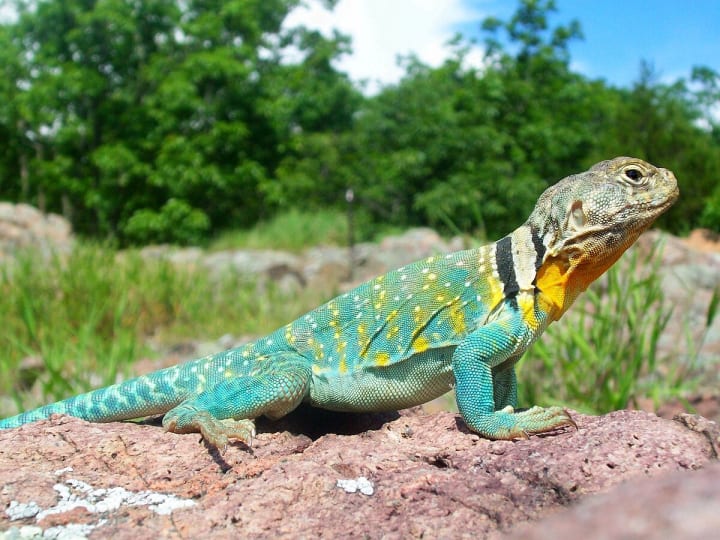
Inhabiting the southwestern US, collared lizards are known for their vibrant color and their characteristic black “collar” mark around their necks. These lizards have quick movement and impressive speed. Collared lizards are primarily insectivorous, meaning their diet mainly consists of insects. They are known for their hunting skills, often pouncing on prey after displaying tail movements.
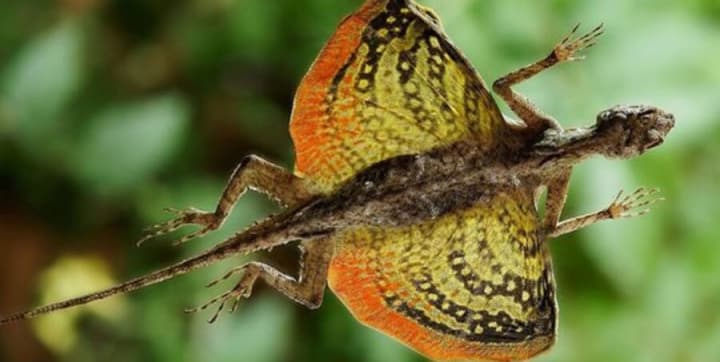
Native to Southeast Asia, flying dragons are known for their amazing ability to glide through the air using flaps of skin found along their ribs that resemble wings. They travel among trees in search of food or to escape predators. Flying dragons primarily eat insects, with a focus on ants and termites.
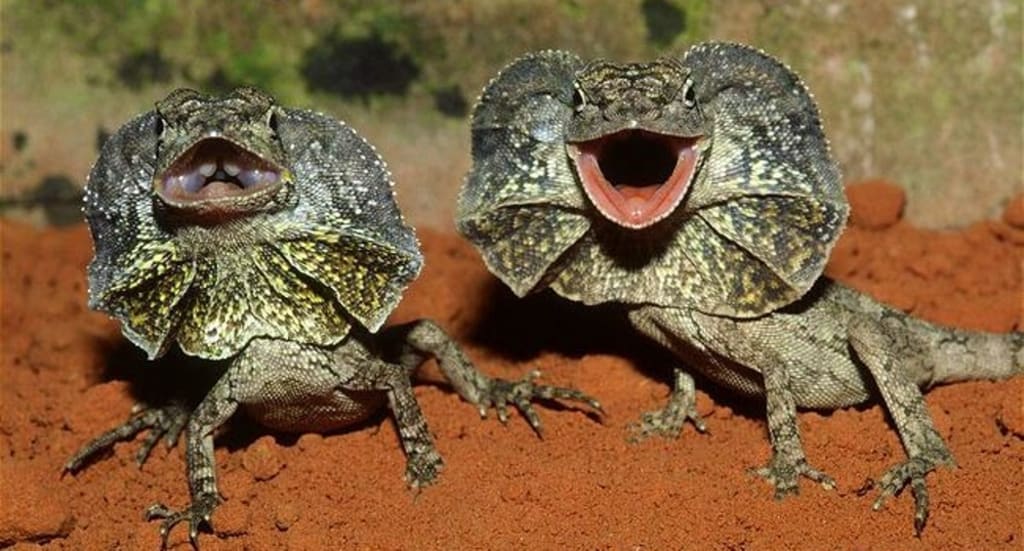
Native to northern Australia and New Guinea, frilled lizards were named for the large, frill-like flaps of skin around their necks. (pictured above) They raise the frill when they are threatened or intimidated. These lizards can run on their hind legs in short bursts. Frilled lizards primarily eat insects and small vertebrates.
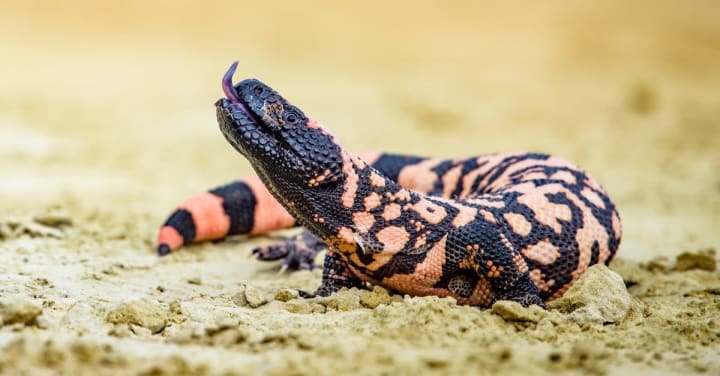
Found in the deserts of the southwestern US and Mexico, Gila monsters are slow-moving lizards with stocky bodies and bright orange or pink markings on their black scales. These lizards have venomous bites that immobilize their prey and protect themselves from predators. They are also known for their ability to store fat in their tails, which allows them to survive in arid environments for extended periods without food. Gila monsters have a varied diet primarily consisting of small mammals, birds, and eggs.
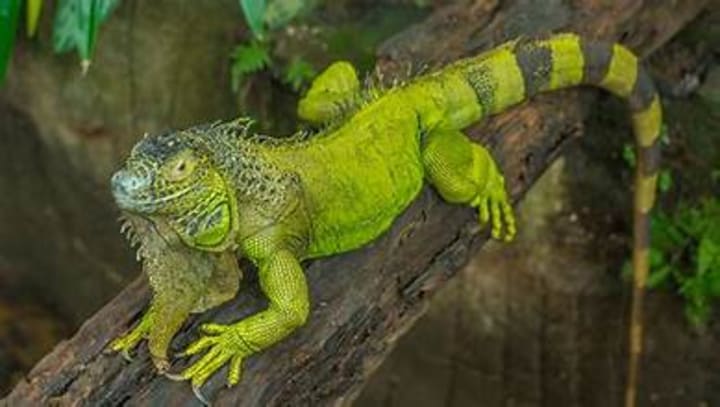
Green iguanas are large, herbivorous lizards known for their vibrant green color so they blend in with the tropical trees and bushes of Central and South America. They can grow up to 6 feet long, including their tails. They have sharp claws and powerful jaws for climbing and defending themselves. Their diet consists of leaves and fruits.
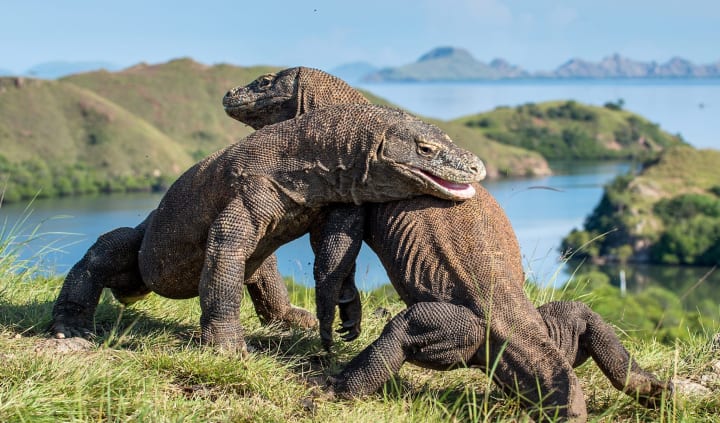
Komodo dragons are the largest living lizards, growing up to 10 feet long and weighing over 300 pounds. These lizards are native to a few Indonesian islands. They have sharp claws and a venomous bite to hunt large prey like wild boar and deer. Komodo Dragons are stealthy hunters ambushing their prey with incredible speed and force.
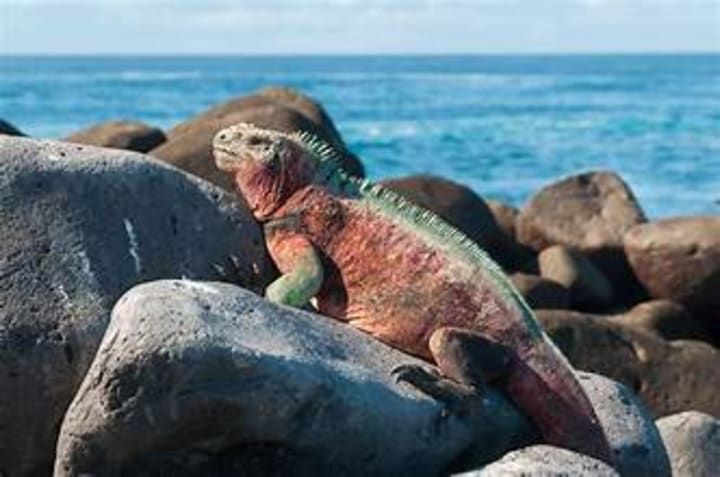
Marine iguanas are the only sea-going lizards in the world that dive into the ocean to feed on algae. Their flattened tails aid in swimming; and their dark skin absorbs sun rays so their body temperature is maintained after diving into cold water. Marine iguanas are exclusively found in the Galápagos Islands. They inhabit rocky shores in the intertidal zone, as well as marshes, mangrove swamps, and beaches across the archipelago.
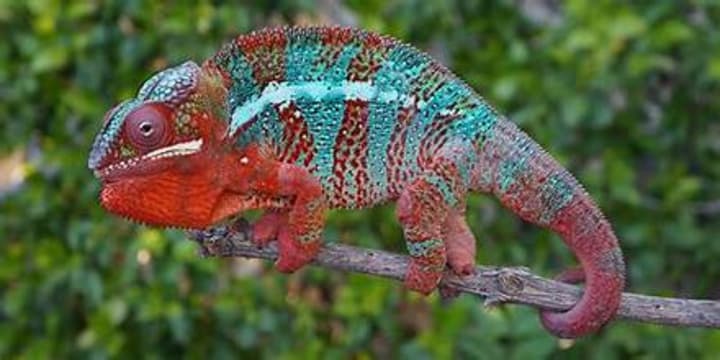
Native to Madagascar, panther chameleons are colorful with bright hues of blue, red, green, and yellow, making them one of the most visually striking lizards in the world. These lizards are also known for changing their color. Panther chameleons are primarily found in Madagascar. They inhabit the tropical rainforests and coastal areas, particularly in the eastern and northern regions of the island. These chameleons thrive in dense vegetation, which allows them to camouflage effectively and hunt for insects.
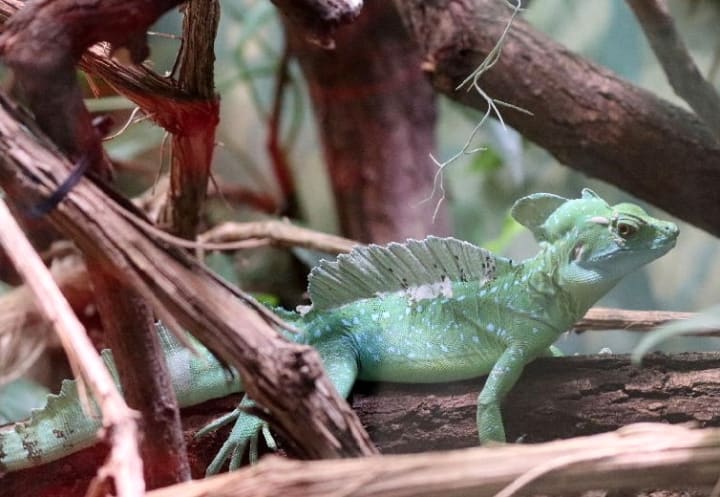
Inhabiting Central and South America, plumed basilisks are often called “Jesus Christ lizards" due to their ability to “walk” across the surface of water for short distances. They have a crest of skin on their heads and necks, giving them a distinctive appearance. They primarily consume insects such as crickets, grasshoppers, and beetles, and as they mature, their diet can include small rodents, birds, and amphibians.
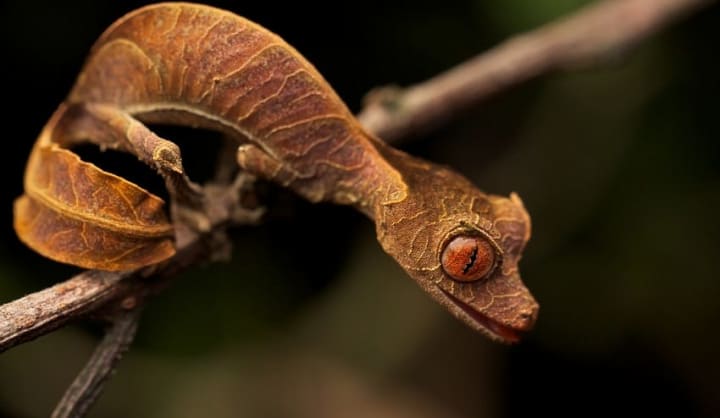
Native to Madagascar, satanic leaf-tailed geckos are experts at camouflage and can mimic dead leaves. Their skin has a mottled pattern of browns, grays, and rust with hues of purple or orange. Their tails are flattened and leaf-like, and they have long spines on their heads and bodies. Satanic leaf-tailed geckos primarily eat insects.
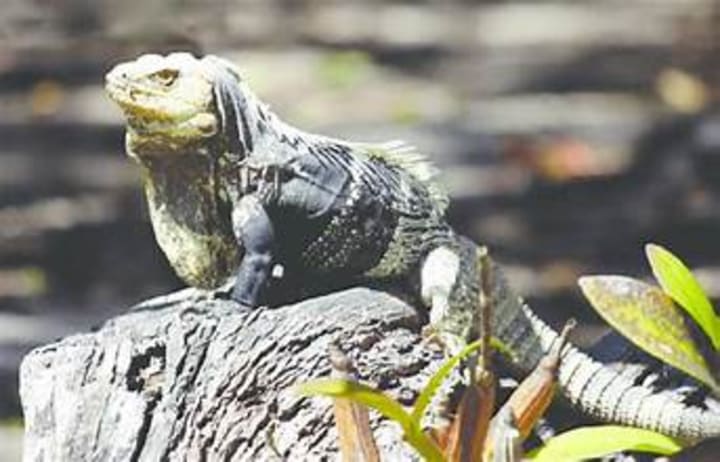
Spiny-tailed iguanas are primarily found in Central America and parts of Mexico and thrive in hot, rocky environments, while some iguanas of this species prefer humid climates with access to trees and crevices. They are known for their rugged, spiky tails and mainly consume a variety of leafy greens, flowers, and fruits.
About the Creator
Rasma Raisters
My passions are writing and creating poetry. I write for several sites online and have four themed blogs on Wordpress. Please follow me on Twitter.
Keep reading
More stories from Rasma Raisters and writers in Earth and other communities.
Biochar Pyrolysis and Sustainable Development: For a Carbon-Smart Future
As global populations grow and industrial activities expand, sustainable solutions for energy, agriculture, and carbon management are becoming increasingly urgent. Biochar pyrolysis—the process of thermally decomposing organic biomass in an oxygen-limited environment to produce biochar—has emerged as a versatile strategy that addresses multiple environmental and societal challenges simultaneously. By transforming agricultural residues, forestry waste, and other biomass into stable carbon-rich material, biochar not only contributes to soil enhancement but also plays a role in climate change mitigation, renewable energy production, and sustainable development goals (SDGs).
By Bestonpyrolysis4 days ago in Earth
Boy Meets Squirrel
What is the line that Hugh Grant says at the beginning of Love, Actually? "Whenever I get gloomy with the state of the world, I think about the arrivals gate at Heathrow Airport." He loves seeing the friends and family members expressing their love for one another after returning from a trip. It's a nice notion. Perhaps, thinking about the airports doesn't help everyone to remove their gloom-- and especially not when thinking about airports in the U.S. in March of 2026-- so, what else could do it?
By Stephen Kramer Avitabile4 days ago in Earth



Comments
There are no comments for this story
Be the first to respond and start the conversation.