
Trump Threatens Iran’s Power Plants & Bridges Over Hormuz Deadline
Trump warns Iran of strikes on critical infrastructure if Strait of Hormuz remains closed, raising international tensions and legal concerns.

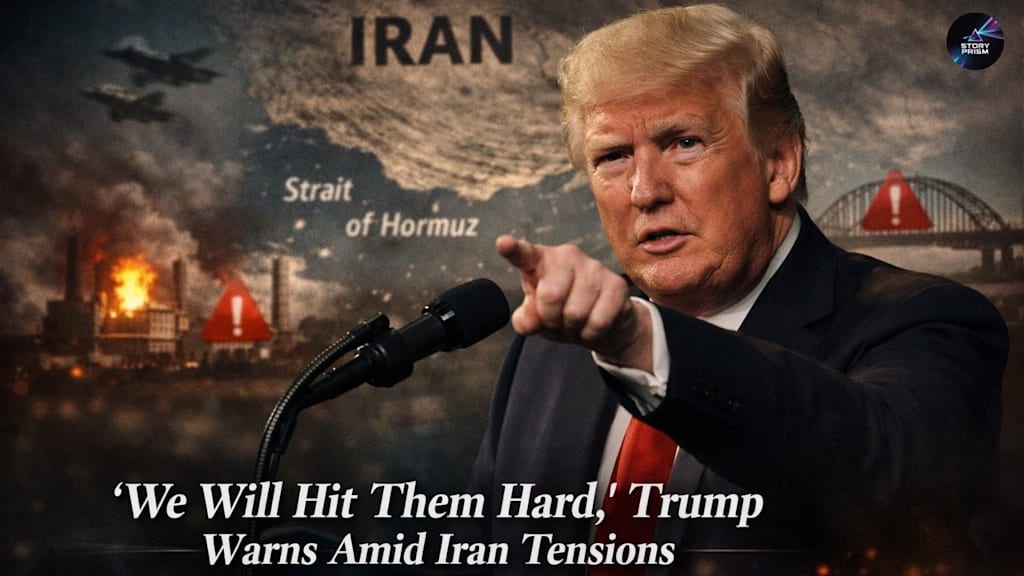
U.S. President Donald Trump has once again escalated his rhetoric toward Iran, reiterating threats to bomb the country’s power plants and bridges unless Tehran agrees to reopen the strategically vital Strait of Hormuz by a hard deadline this week.
At a White House press conference on April 6, 2026, Trump made blunt comments about potential military action against Iranian infrastructure as part of a broader conflict that has already entered its sixth week. He warned that if Iran did not accept terms that include free passage of oil through the Strait of Hormuz by Tuesday at 8 p.m. ET, the U.S. could strike civilian power facilities and transportation networks.
“Every bridge in Iran will be decimated by 12 o’clock tomorrow night … and every power plant in Iran will be out of business, burning, exploding and never to be used again,” Trump told reporters, although he added that the U.S. does not want that outcome. This marks a continuation of his profane ultimatum issued on social media, where he labeled the upcoming Tuesday as “Power Plant Day and Bridge Day” if Iran fails to meet U.S. demands — an appeal that drew intense international reaction.
The Strait of Hormuz is one of the world’s most important maritime chokepoints, through which approximately 20 % of global oil supplies transit. Its closure due to the U.S.–Israel–Iran conflict has already contributed to global economic disruptions and spiking energy prices. Trump’s threat comes amid mediated ceasefire proposals from countries such as Pakistan, Egypt, and Turkey, suggesting a temporary halt to hostilities. While Trump described the proposal as a “significant step,” he underscored that any agreement must include free traffic of oil and full reopening of the strait. Press reports indicate that oil prices surged in response to the heightened tensions as markets priced in the risk of broader disruption to Middle Eastern energy exports.
Trump’s warnings have drawn strong international criticism. Iranian officials, including the deputy foreign minister, condemned the rhetoric as tantamount to war crimes, especially if strikes target civilian sites such as power plants and bridges — infrastructure that is typically protected under international humanitarian law if not directly linked to military operations. Legal experts argue that deliberately destroying civilian infrastructure can violate the Geneva Conventions and customary international law, raising questions about the legality of such threats and military action. Analysts point out that while military forces can target certain infrastructure deemed to provide a clear military advantage, broad plans to dismantle all bridges or power generation facilities without distinction would conflict with established war time norms.
The response is not limited to Iran. The Kremlin warned that the Middle East was “on fire” due to the intensifying conflict, expressing concern over the risk of broader regional escalation. In Tehran, military sources warned that devastating and widespread retaliation could follow if civilian targets are struck, suggesting the possibility of a further widening of hostilities. Neighboring and global powers are closely watching developments, with diplomatic efforts continuing alongside the unfolding military standoff. Critics of Trump’s approach have called for renewed focus on diplomacy to avoid catastrophic humanitarian and economic outcomes.
Observers note mixed signals from the U.S. administration about the direction of the conflict. While Trump has insisted that efforts to end the war are underway and has touted the successful rescue of a downed U.S. airman as evidence of military capability, his statements have alternated between pressing for a negotiated settlement and threatening severe escalation. Asked directly whether he was concerned that attacks on power plants and bridges might be unlawful, Trump said, “No. I hope I don’t have to do it,” a remark that drew further criticism from legal scholars and global rights advocates.
As the deadline approaches, world leaders and markets remain on edge. Analysts say that the next 48 hours could be pivotal — either reinforcing or defusing tensions that could have far reaching consequences for regional stability and the global economy. For the public, the deepening crisis raises pressing questions about the future of U.S. foreign policy, the human cost of war, and the role of international law in modern conflicts.
About the Creator
Keep reading
More stories from Story Prism and writers in Criminal and other communities.
Nancy Guthrie Update Today: FBI Intensifies Search for Savannah Guthrie’s Missing Mother
Nancy Guthrie Update Today: Latest Developments in the Search The disappearance of Nancy Guthrie, mother of NBC Today show co-anchor Savannah Guthrie, remains an active and highly publicized investigation. As of February 13, 2026, authorities continue to comb the Catalina Foothills and surrounding areas in Tucson, Arizona, searching for any leads that could lead to her safe return. With nearly two weeks passed since she was last seen, the case has captured national attention, drawing public tips, forensic analysis, and family appeals.
By Story Prism2 months ago in Criminal
The Most Dangerous Job in Crime
The Port of Antwerp is not just a shipping hub; it is a metallic continent that never sleeps. Spanning over 11,000 hectares—larger than the city of Paris—it is a landscape of towering steel cliffs and endless canyons formed by millions of shipping containers. Throughout the night, the ground trembles with the weight of rolling trucks and massive cranes shifting cargo. But amidst this industrial symphony, a different kind of work is happening.
By Edge Words3 days ago in Criminal
Bacon
Satan, laughing, spreads his wings. He launches into an atmosphere riddled with smoke, soot, and ash. He feels the radiation from a thousand fallen nukes. For humanity, it’s certain death. For him, it’s like bathing in a sauna. He laughs again at the thought.
By C. Rommial Butler2 days ago in Fiction


Comments
There are no comments for this story
Be the first to respond and start the conversation.