
The Legend of 1900: Born of the Sea, Returned to the Sea He Spent His Life Guarding a Soul Unchained by the World
Finding oneself, redeeming the soul — through cinema

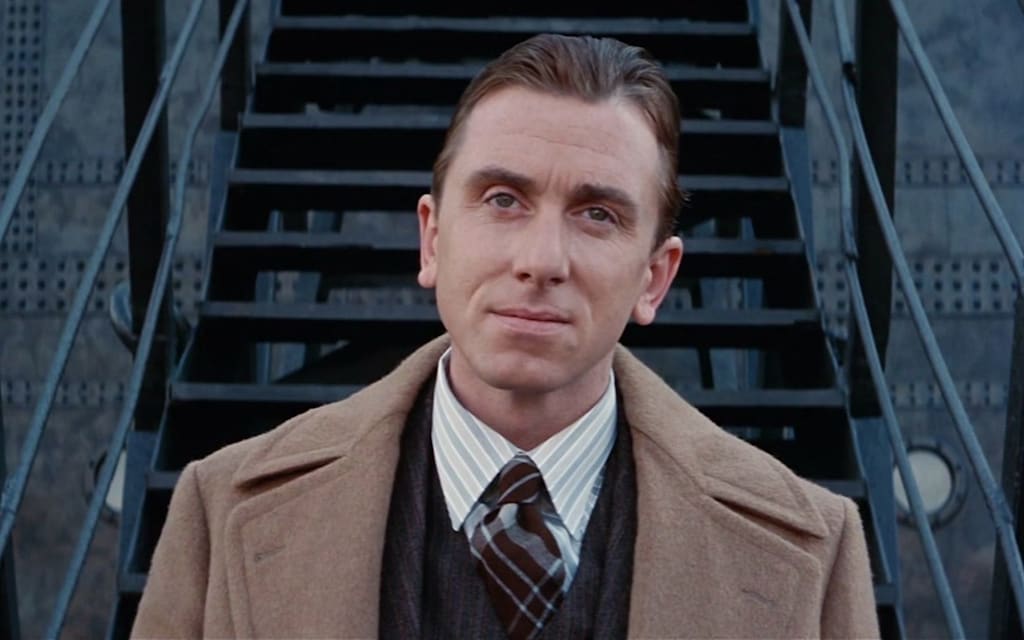
In one sentence, The Legend of 1900 reveals its most poetic, lonely, and breathtaking core. The film is often labeled “slow,” “subtle,” “too idealistic.” First-time viewers may find it dull, but those who truly understand it regard it as a timeless masterpiece.
It is more than the story of a genius pianist. It is an ultimate inquiry into freedom, choice, boundaries, and the soul’s true home. In an infinitely expanding world, some embrace the boundless; others cling to the limited. 1900’s persistence is the rarest clarity modern people lack.
The protagonist, 1900, is an orphan abandoned on the luxury liner Virginian. No nationality, no family, no identity — not even a real name, only a number. He never sets foot on land, yet his hands are touched by God. Piano is his only language; the ocean his entire world.
In the rocking cabin, on the fixed keys, he touches life and reads human nature through music. He comforts countless travelers and dazzles an era. He could easily have become famous, wealthy, adored by millions. Yet he never steps off the ship — not once in his life.
Many cannot understand:
Why, given fame, love, and a stable life, would he choose to stay until the ship explodes and sinks?
Because 1900’s world is not on land, but between the keys and the sea.
The keys are only 88 — finite, yet they play the infinite.
Land, however, is endless streets, infinite choices, bottomless desires. It terrifies him.
The most iconic scene: 1900 standing halfway down the gangplank, staring at the sprawling city, then turning back.
It is not cowardice. It is clarity.
He says:
“Land? Land is a ship too big for me. It’s a voyage too long, a perfume too strong. It’s a music I don’t know how to play.”
The city has millions of streets — he does not know which to take.
Thousands of houses — he cannot choose a door.
A future with no end — he cannot grasp it, cannot control it.
He fears not the world, but losing boundaries.
He fears not life, but being dragged by desire, never returning to his pure self.
In an age where everyone chases “bigger, more, better,” we frantically expand our lives: higher positions, larger houses, fancier social circles, endless goals. We think more equals freer, yet we grow more anxious, lost, and empty.
1900 teaches us:
True freedom is not having the infinite, but guarding the finite.
Not chasing outward, but rooting inward.
His world is small: one ship, one piano, one ocean.
Yet his soul is freer than anyone.
In 1900’s music lies his entire understanding of the world.
He reads stories, sorrow, desire, and tenderness from strangers’ faces, then turns them into melody.
He outplays the founder of jazz with godlike skill, yet cares nothing for victory.
He does not play for applause, nor for fame — only for the voice inside.
Music is his life, not a tool.
When the world urges, “Come ashore! Succeed!” he gently shakes his head.
Not because he does not understand worldly beauty, but because he understands too well:
Once he steps on land, he is no longer 1900.
Love once moved him.
The girl by the window made him want to go ashore, to taste ordinary warmth. He even recorded a record, planning to give her his softest melody.
Yet in the end, he gives neither the record nor himself.
Not for lack of love — but because he knows:
He cannot trade his soul for worldly happiness.
He would rather break the record than let his music become a commodity.
Rather be lonely forever than live as others expect.
At the end, the Virginian is to be blown up. Dust covers the abandoned cabin.
His friend finds 1900 and begs him to leave.
1900 smiles and speaks the heartbreaking lines:
“I’m not afraid to die. I’m afraid of the world I never saw.”
“The keys have a beginning and an end. I know how to play. But the city has no end. I cannot play my life on keys that never end.”
He chooses to sink with the ship.
It is not tragedy. It is destiny.
Born of the sea, returned to the sea.
Pure his whole life, never compromised.
Many call the film boring: no thrills, no comeback, no intense conflict, no worldly “happy ending.”
Yet that “boring” is what makes it a masterpiece.
It does not please, does not sell anxiety, does not teach you to succeed.
It only tells you:
You can choose not to fit in.
You can keep your own rhythm.
You can guard your small world, even if others call you stubborn, strange, unreasonable.
Your life needs no explanation to anyone.
In today’s fast, stressful, competitive world, The Legend of 1900 is a gentle reminder:
You do not need everything.
You do not need to chase the infinite.
You do not need to live by others’ standards.
True strength is not conquering the world,
but not being changed by it.
True happiness is not getting more,
but knowing what you truly want — and daring to keep it.
1900 never left the sea,
yet understood life better than anyone who traveled the world.
He taught us with his whole life:
Finite is freedom.
Pure is eternal.
A soul unchained by the world is the greatest of all.
The film may be quiet, may be slow.
But when you are lost, anxious, or adrift,
it whispers:
Do not fear being different.
Do not fear staying small.
Do not fear remaining on your own sea.
For there — is where your soul truly belongs.
About the Creator
BigDeuceFOF and FOF Records Are Already Moving Like the Next Major Force in Hip-Hop
In today’s music industry, it doesn’t take long to recognize when something is different. Not just another artist dropping songs. Not just another independent label trying to find its footing. But a movement that already feels established—before the rest of the world officially catches on.
By RapRadarDigest6 days ago in Beat
Swan
“During the Metal Age, humans took photographs of everything beautiful, which was everything, yet machines did not even wear shoes. The Fauxna thought of a better way. They colored all of the light rose, for a corrupted source cannot be verified.” - Origin Parable, 011
By Nicky Frankly5 days ago in Fiction


Comments
There are no comments for this story
Be the first to respond and start the conversation.