
Cast Away: After a Thousand Twists and Turns, the Light Finally Dawns
Inspired by a Classic Film — For Those Who Feel Lost

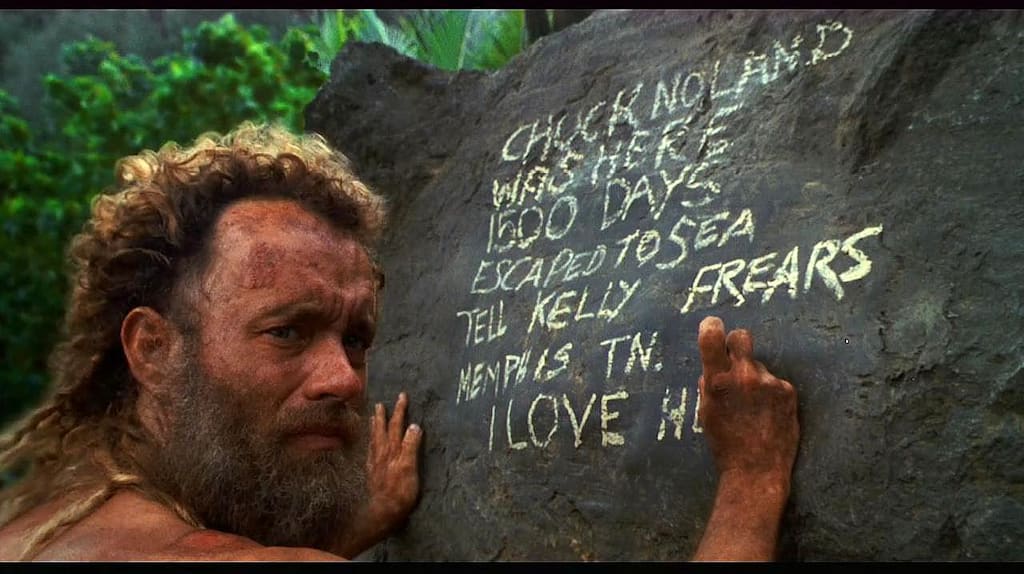
"After a thousand twists and turns, the light may just be around the corner." This line is the most tender and resilient footnote to Cast Away. With no dazzling special effects, no dense plot twists, nor forced sentimentality, the film lays bare the truest face of life through a man's entire struggle for survival in despair: collapse, loneliness, despair, perseverance, and rebirth. Ostensibly a desert-island survival story, it is in fact a long journey of life, hope, and self-redemption, offering strength to stand up again to anyone struggling, weary, or ready to give up in life.
The protagonist, Chuck Noland, is a FedEx systems engineer ruled by urgency and efficiency. His life is consumed by work, a pace so relentless he believes life can be planned and controlled—until a plane crash shatters everything. Plunging from the sky, adrift in the ocean, he awakens on a deserted island, where all trappings of civilization vanish. No signal, no tools, no companions—only endless sea, dense, eerie jungle, and death looming at every turn. Water, fire, food, shelter—things he once took for granted—now demand his life to obtain.
Desperation is the truest test of human nature. Chuck's first reactions are fear, panic, and cries for help. He screams at the sky, waves at the ocean, pinning hope on passing ships—only to be met with endless silence. When every attempt to be rescued fails, when reality cruelly tells him "you are all alone here," he is forced to accept: to live, he can only rely on himself.
And so begins his primal, grueling fight for survival. He gathers shellfish, drinks rainwater, cracks coconuts with stones, and tries endlessly to start a fire by rubbing sticks. His hands blister, he fails time and again, smoke stinging his eyes and throat—yet he does not stop. When the first spark ignites, he trembles and weeps before the flame: it is not merely fire, but light in darkness, proof of will to live, hope breaking through despair.
Loneliness is a fiercer enemy than hunger or danger. For years, Chuck has no one to talk to, his mind teetering on collapse. To fight isolation, he draws a face on a volleyball, names it "Wilson," and treats it as his only companion. He speaks to it, confides in it, rages, cries—even fights to protect it in storms. Wilson is no mere ball; it is his mental anchor, the last straw he clings to in boundless darkness. People endure despair not for strength alone, but for something to hold onto, a reason "not to fall."
The film's most heart-wrenching moments are Chuck's repeated brushes with collapse. Wounded, sick, desperate to suicide—standing on a cliff, noose around his neck—he finally backs down from a flicker of defiance. He roars at the sea: "I'm gonna keep surviving, no matter what!" In that moment, we see not a hero, but an ordinary man backed into a corner by life yet refusing to surrender.
Life is often like that desert island. We face sudden blows: unemployment, heartbreak, failure, illness, loss... The world collapses in an instant, all support gone, leaving us alone to face darkness. We feel lost, pained, helpless—even ready to quit. But Cast Away teaches us: despair is not the end, but a place that forces growth.
Four years—over a thousand days and nights—Chuck transforms from a suited urbanite into a weathered, scarred wilderness survivor. He masters every survival skill, and finally understands what truly matters: not time, efficiency, or work, but life itself, companionship, love, and the hope to keep living.
When he finally builds a raft and risks all to sail, braving storms, circling sharks, losing Wilson, nearly sinking in despair—a cargo ship appears. He is rescued.
But the real test has only just begun.
Returning to civilization, he finds everything changed. Time passes, the world moves on; his once-beloved has built a new family, everyone around him lives new lives. He is an outsider, a traveler from the past—alive, yet seemingly abandoned by the world again.
Many think rescue is a happy ending. But Cast Away's depth lies in rejecting fairy tales. The greatest desert island in life is not an uninhabited isle, but inner loss and disorientation.
Chuck stands at a crossroads, staring blankly in all directions. He has survived death, yet still does not know where to go next.
Then the film gives its tenderest, most powerful answer—
He picks up a lost package painted with wings. He smiles, at peace, and turns toward the unknown path.
The final line says it all:
"I know what I have to do now. I've got to keep breathing. Because tomorrow, the sun will rise. Who knows what the tide could bring?"
After a thousand twists and turns, the light is finally at hand.
This light is not necessarily success, recovery of what was lost, or a perfect ending.
It is:
Dawn after the darkest night,
Rebirth after despair,
Calm after pain,
Hope after tribulation.
We all struggle on our own "desert islands":
Hustling for life, suffocating under pressure, clinging to regrets, anxious about the future.
We think we cannot go on, that darkness will never end.
But Cast Away tells us simply:
As long as you breathe, there is no true despair.
As long as you refuse to quit, light will come.
No matter how hard, bitter, lonely, or long—
Keep walking; after twists and turns, a turning point awaits.
The film is a classic not for thrills or spectacle, but for being raw, true, and close to every ordinary life. It does not preach or sugarcoat; it quietly shows a man holding onto hope in despair, moving on after collapse, believing in tomorrow despite losing everything.
It teaches us:
No step in life is taken in vain; every hardship counts.
The nights you endured alone will become light to pave your way.
The hurdles you thought insurmountable are, in hindsight, medals of growth.
Whatever you face now:
Low points, confusion, pain, loss, loneliness, despair...
Always remember Cast Away's lesson:
Hold on a little longer.
Take one more step forward.
After a thousand twists and turns, the light is at hand.
And you are far stronger than you think.
About the Creator
Meek Mill calls out ‘propaganda’ about his career, highlights successes, including impact on justice reform
What Meek Mill needs is a boost. He needs a power boost. After headlines issued by Lenard McKelvy saying that his career has stalled following the lost battle with Drake.
By Skyler Saundersabout 17 hours ago in Beat
Swan
“During the Metal Age, humans took photographs of everything beautiful, which was everything, yet machines did not even wear shoes. The Fauxna thought of a better way. They colored all of the light rose, for a corrupted source cannot be verified.” - Origin Parable, 011
By Nicky Frankly2 days ago in Fiction


Comments
There are no comments for this story
Be the first to respond and start the conversation.