
The Future of District Energy Systems: Sharing Heat, Cooling, and Power Across Urban Communities
Brook Lang

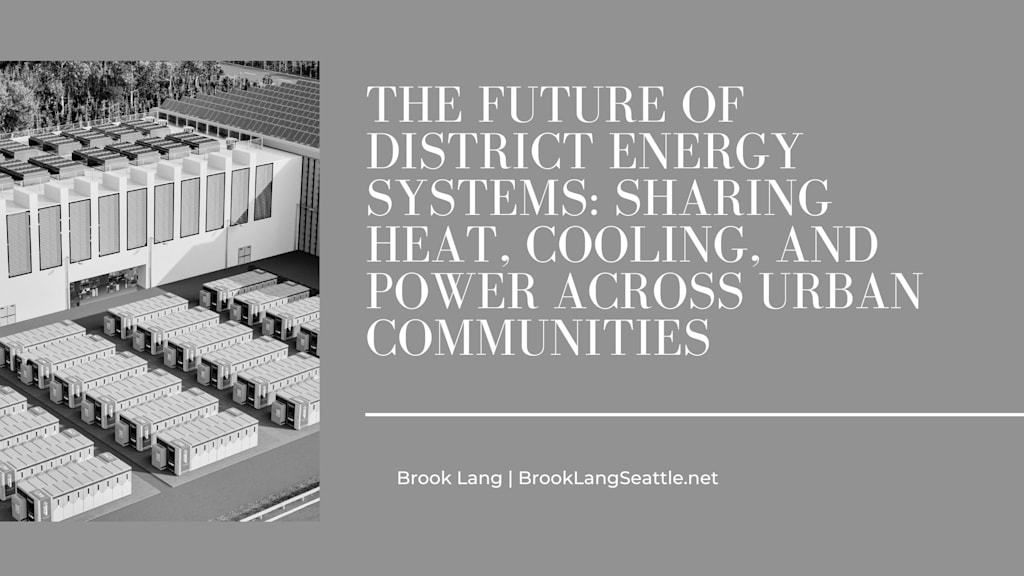
As cities grow denser and energy demands increase, traditional building-by-building energy systems are becoming less efficient and more costly to operate. Heating, cooling, and electricity are often generated separately for each structure, leading to wasted energy and higher emissions. District energy systems offer a smarter alternative by centralizing energy production and distributing it across multiple buildings. This shared approach is transforming how urban communities manage power, heat, and cooling.
What Are District Energy Systems?
District energy systems generate thermal energy, such as hot water, steam, or chilled water, at a central facility and distribute it through a network of insulated pipes to multiple buildings. These systems can provide heating in winter, cooling in summer, and even electricity when combined with cogeneration or combined heat and power (CHP) technologies.
By serving entire neighborhoods or districts, these systems achieve economies of scale that individual buildings cannot match. They can also integrate a variety of energy sources, including renewables, waste heat, and industrial byproducts.
Efficiency Through Shared Resources
One of the biggest advantages of district energy is efficiency. Centralized systems can optimize energy production, reduce redundancy, and capture heat that would otherwise be wasted. For example, excess heat from power plants, data centers, or industrial facilities can be reused to warm nearby buildings.
District cooling systems are equally effective. Instead of each building running its own air conditioning units, chilled water is distributed from a central plant, significantly reducing electricity consumption and peak demand on the grid.
Integrating Renewable and Low-Carbon Energy
Modern district energy systems are increasingly powered by renewable and low-carbon sources. Geothermal energy, solar thermal systems, and biomass can all feed into district networks. In some cities, wastewater heat recovery systems extract thermal energy from sewage systems to provide heating.
This flexibility allows district energy to play a key role in decarbonizing urban environments. By transitioning the central energy source to cleaner options, entire neighborhoods can reduce their carbon footprint without requiring individual building upgrades.
Enhancing Urban Resilience
District energy systems also improve resilience. Centralized plants are easier to maintain and upgrade, and they can be designed with backup systems to ensure continuous operation during disruptions. When combined with microgrids and energy storage, district systems can provide reliable power and thermal energy even during extreme weather events or grid outages.
Economic and Community Benefits
For cities and developers, district energy systems offer long-term cost savings through improved efficiency and reduced fuel consumption. They also lower maintenance requirements for individual buildings, as complex heating and cooling equipment is centralized.
From a community perspective, district energy supports cleaner air, quieter neighborhoods, and more consistent indoor comfort. It also creates opportunities for local job growth in system design, construction, and operation.
Challenges to Adoption
Despite their advantages, district energy systems require significant upfront investment and careful planning. Retrofitting existing urban areas can be complex, and coordination among multiple stakeholders is essential. Regulatory frameworks and financing models must also evolve to support widespread implementation.
Powering the Cities of Tomorrow
District energy systems represent a forward-thinking approach to urban energy management. By sharing resources across communities, they reduce waste, lower emissions, and improve efficiency at scale.
As cities strive to become more sustainable and resilient, district energy will play an increasingly important role. It offers a vision of urban living where energy is not just consumed individually but shared intelligently, creating cleaner, smarter, and more connected communities.
Originally posted on http://brooklangseattle.net/
About the Creator
Brook Lang Seattle
Brook Lang Seattle is a Senior Level Technology Executive. To learn more about him, be sure to check out his websites!
Keep reading
More stories from Brook Lang Seattle and writers in 01 and other communities.
Circular Construction: How Recycled Materials and Modular Design Are Reducing Building Waste
The construction industry is one of the largest contributors to global waste and carbon emissions. Traditional building practices follow a linear model: extract raw materials, build, and eventually demolish—sending vast amounts of debris to landfills. As sustainability becomes a priority, the industry is shifting toward a circular construction model that emphasizes reuse, recycling, and resource efficiency. By integrating recycled materials and modular design, circular construction is redefining how buildings are created and deconstructed.
By Brook Lang Seattleabout 11 hours ago in 01
I Tried 5 Different eCommerce App Development Companies — Only One Actually Built What I Needed
This is a true account. Names of the companies have been changed — not to protect them, but because this is not about any specific company. It is about the patterns I encountered, which are systematic and repeatable across the industry.
By Aarti Jangid3 days ago in 01
Elderly Woman Behind the Table in a Large Town
The glass of Absinthe sat before me. It’s quite amazing how despite such terror rendered upon their stones in the preceding decades, these streets still held the beauty I first read about as a girl. I never dreamed I’d set foot on these cobbles, at least not safely.
By Matthew J. Fromm2 days ago in Art




Comments
There are no comments for this story
Be the first to respond and start the conversation.