
Tennis Court Flooring & Basketball Court Flooring: Complete Guide (2026)
Tennis Court Flooring & Basketball Court Flooring
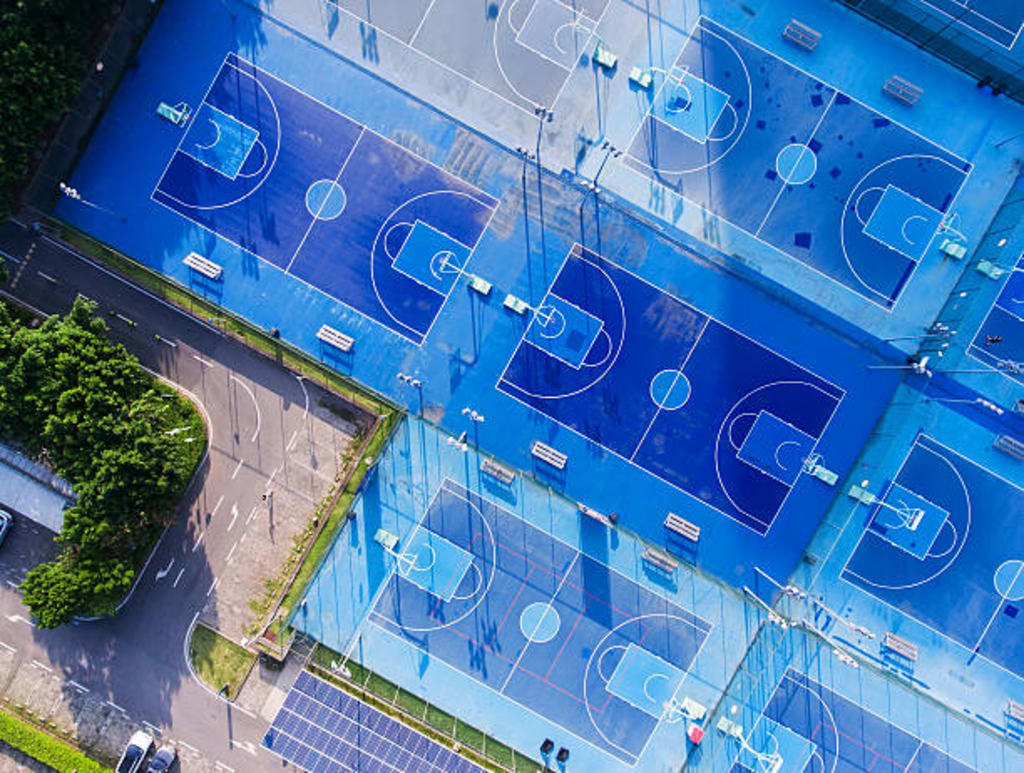
Sports flooring plays a crucial role in performance, safety, durability, and maintenance costs. Whether you are building a professional facility, school court, or residential sports area, choosing the right flooring can significantly impact gameplay and long-term investment.
In this guide, we’ll explore everything you need to know about tennis court flooring and basketball court flooring, including types, materials, benefits, costs, and how to choose the best option.
1. Tennis Court Flooring: Complete Guide
What is Tennis Court Flooring?
Tennis court flooring refers to the surface material and layered system used to construct a tennis court. It directly influences:
Ball speed and bounce
Player comfort and safety
Court durability
Maintenance requirements
The choice of surface defines the style of play—fast, medium, or slow.
Types of Tennis Court Flooring
1. Acrylic Hard Court Flooring (Most Popular)
Acrylic courts are widely used across schools, academies, and tournaments.
Key Features:
Multi-layer acrylic coating on concrete/asphalt
Medium to fast gameplay
Consistent ball bounce
UV and weather resistant
Advantages:
Low maintenance
Cost-effective
Long lifespan (5–10 years)
Best For:
Clubs, schools, government facilities
2. Cushioned Acrylic Flooring
An advanced version of acrylic flooring with shock-absorbing layers.
Benefits:
Reduces joint stress
Improves player comfort
Ideal for high-performance training
3. Synthetic Turf (Artificial Grass)
Made from polyethylene fibers filled with sand or rubber.
Features
Softer playing surface
Lower maintenance
Natural feel
Dawbacks:
Less suitable for professional tournaments
4. Clay Court Flooring
Constructed using crushed brick or stone.
Characteristics:
Slow gameplay
High ball bounce
Encourages long rallies
Pros:
Excellent for training and endurance
Cons:
High maintenance (watering, rolling)
5. Polyurethane (PU) Flooring
Mostly used for indoor courts.
Advantages:
High flexibility
Shock absorption
Seamless surface
Tennis Court Flooring Cost in India (2026)
Flooring Type
Price Range (₹/sq ft)
Acrylic
₹180 – ₹300
PU Flooring
₹350 – ₹650
Synthetic Turf
₹250 – ₹500
Costs vary depending on base preparation, location, and quality.
Key Factors to Consider
Climate: Synthetic surfaces perform better in Indian weather
Usage: Professional vs recreational
Budget: Acrylic = economical, PU = premium
Maintenance: Clay requires the highest upkeep
Best Tennis Court Flooring (Quick Summary)
Best Overall: Acrylic
Best for Comfort: Cushioned Acrylic / PU
Best for Low Maintenance: Synthetic Turf
Best for Training: Clay
2. Basketball Court Flooring: Complete Guide
What is Basketball Court Flooring?
Basketball flooring is designed to provide:
Shock absorption
High traction
Ball rebound consistency
Injury prevention
Unlike tennis, basketball requires uniform bounce and grip across the entire court.
Types of Basketball Court Flooring
1. Wooden (Hardwood) Flooring
The official surface used in professional leagues like the NBA.
Materials: Maple wood
Features:
Excellent ball bounce
Premium finish
Indoor use only
Advantages:
Professional-grade performance
High durability
Disadvantages:
Expensive
Requires maintenance
2. Synthetic Acrylic Flooring
Common for outdoor courts.
Benefits:
Weather-resistant
Slip-resistant
Affordable
Best For:
Schools, parks, outdoor courts
3. Polyurethane (PU) Flooring
Used in indoor multi-purpose sports halls.
Features:
Seamless surface
Shock absorption
Durable
4. Rubber Flooring
Made from recycled rubber or EPDM.
Advantages:
High impact absorption
Anti-slip
Safe for players
Best For:
Training courts, gyms, schools
5. Modular Interlocking Tiles
Popular modern solution.
Features:
Easy installation
Portable
Weather resistant
Best For:
Outdoor courts, temporary setups
Basketball Court Flooring Cost (India)
Flooring Type
Price Range (₹/sq ft)
Hardwood
₹800 – ₹1500
Acrylic
₹150 – ₹300
PU Flooring
₹350 – ₹700
Rubber
₹200 – ₹500
Modular Tiles
₹250 – ₹600
Key Factors to Consider
Indoor vs Outdoor: Hardwood (indoor), Acrylic (outdoor)
Budget: Acrylic and rubber are economical
Usage Frequency: High-use courts need durable surfaces
Player Safety: Shock absorption is critical
Best Basketball Flooring (Quick Summary)
Best Overall (Indoor): Hardwood
Best Outdoor Option: Acrylic
Best for Safety: Rubber / PU
Best Budget Option: Modular tiles
Tennis vs Basketball Flooring: Key Differences
Feature
Tennis Court
Basketball Court
Surface Impact
Affects game speed
Affects ball bounce
Popular Material
Acrylic
Hardwood
Indoor/Outdoor
Both
Mostly indoor
Maintenance
Varies by type
Moderate
Shock Absorption
Medium
High priority
Conclusion
Choosing the right sports flooring depends on performance requirements, budget, and usage conditions.
For tennis, acrylic synthetic flooring dominates due to its durability and low maintenance.
For basketball, hardwood remains the gold standard indoors, while acrylic and modular systems are ideal for outdoor courts
Investing in high-quality flooring ensures:
Better gameplay
Reduced injuries
Long-term cost savings
About the Creator
Keep reading
More stories from Kashif Khan and writers in 01 and other communities.
How to Optimize Your Website for Voice Search in 2026
Voice search is no longer the future—it’s here. With the rise of smart speakers, AI assistants, and mobile voice commands, more users are asking questions verbally instead of typing them. In 2026, optimizing your website for voice search is essential to stay visible and competitive. At Digital Tribunes, we often get asked how seo vs google ads fits into this strategy. While both remain important, voice search introduces unique opportunities for organic SEO that paid ads alone can’t fully capture.
By Kashif Khan20 days ago in 01




Comments
There are no comments for this story
Be the first to respond and start the conversation.